2025 marks a major turning point for Atlassian. The company is not just releasing new features but rebuilding its Cloud platform to make teamwork smarter, faster, and more automated, with Artificial Intelligence (AI) at the core.
This shift affects how teams use Jira, Confluence, and the wider Atlassian ecosystem. From AI-driven work to Cloud-only innovation, Atlassian is redefining how modern teams plan, build, and collaborate.
Below are 6 major changes shaping the future of teamwork on Atlassian Cloud.
1. Rovo and Agents: The AI Brain, Central to Work
Rovo is Atlassian’s unified AI solution designed to act as a shared knowledge layer across all tools. Powered by the Teamwork Graph, it connects data from Jira, Confluence, and third-party apps to deliver context-aware work experiences.
-
Smart search allows teams to use natural language queries such as “find design tickets blocking engineering.” Rovo Search delivers results that are 78% more accurate than legacy search tools across Jira, Confluence, and over 50 connected apps.
-
Rovo Agents (AI Assistants) act as AI assistants that automate complex and repetitive tasks. These agents can handle workflows, reduce manual effort, and support decision-making at scale.
-
Rovo also uses a Remote MCP Server architecture to ensure third-party tools access data context securely, respecting user privacy and permissions.
-
Rovo Dev is a specialized AI assistant for developers. It supports code writing, automated code reviews, and troubleshooting to accelerate software development.
-
Natural Language Automation allows users to instruct the system to automate tasks with simple commands, e.g., “When a pull request is merged, alert the Project Manager.”
2. Major UI Overhaul and Unified Navigation Experience
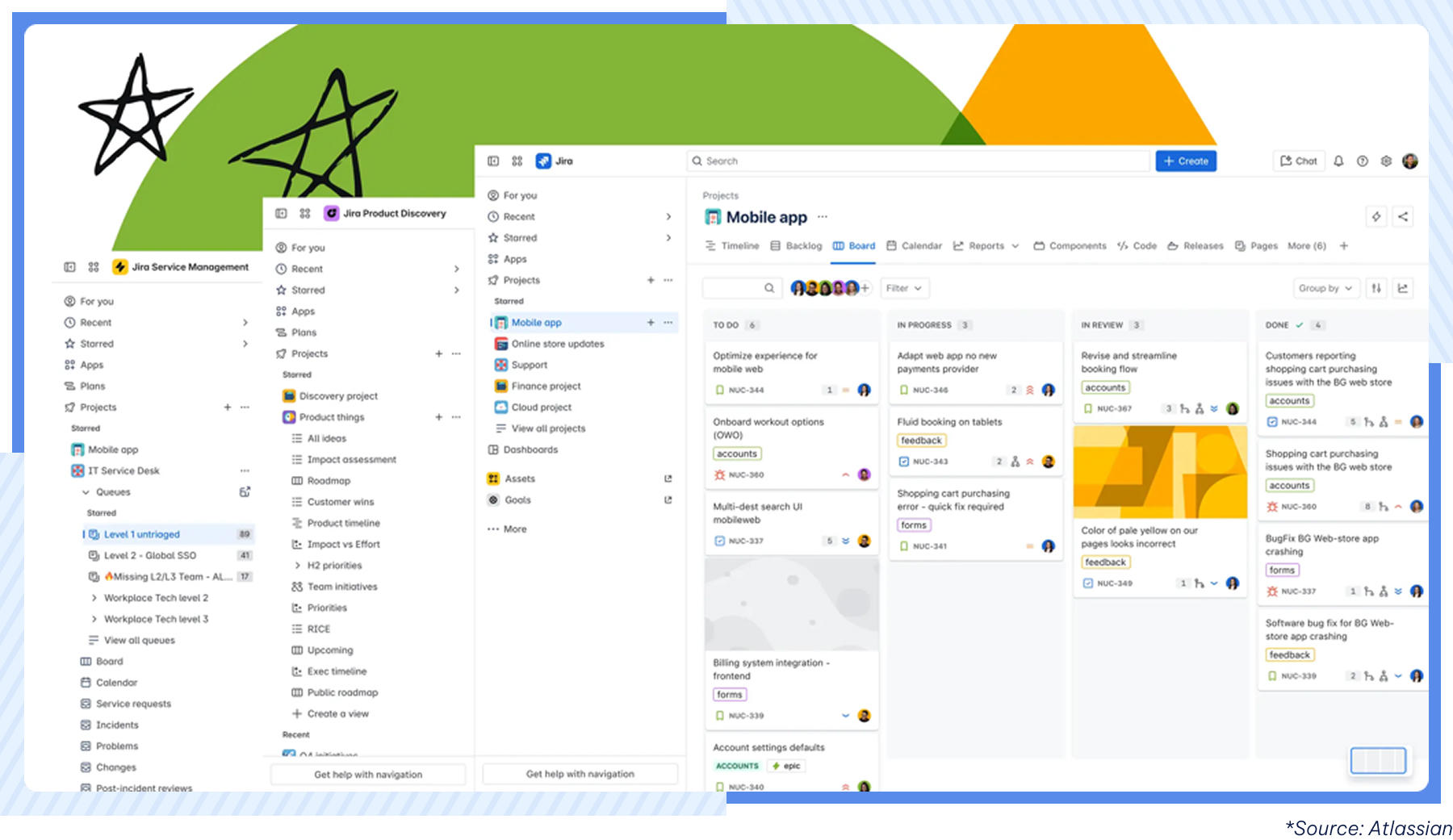
Atlassian is rolling out a full user interface overhaul across Jira Cloud. This includes redesigned navigation and updated core pages to deliver a more consistent and intuitive experience across Atlassian Cloud.
-
New Navigation Bar: The left sidebar has been redesigned for efficiency. It provides quick access to recent or starred items and elevates the position of key features like Assets (Asset/CMDB Management) and Goals (Strategic Goal/OKR Tracking).
-
Maximum Personalization: Users can customize this navigation bar by dragging, dropping, hiding, or showing items to suit their personal workflow. Note: these customizations apply only to your account and do not affect others on the site.
-
Renaming “Project” to “Space”: As part of terminology consistency in the new interface, starting Sep 1, 2025, the term “Project” in all Jira Cloud products will be replaced with “Space.” This helps Jira better serve non-technical teams and aligns with Confluence.
Despite the UI changes, the core functionality of “Space” remains the same as “Project.” JQL queries, APIs, and filters will continue to support the old keywords for compatibility.
3. Launching Integrated Solution Bundles - Collections
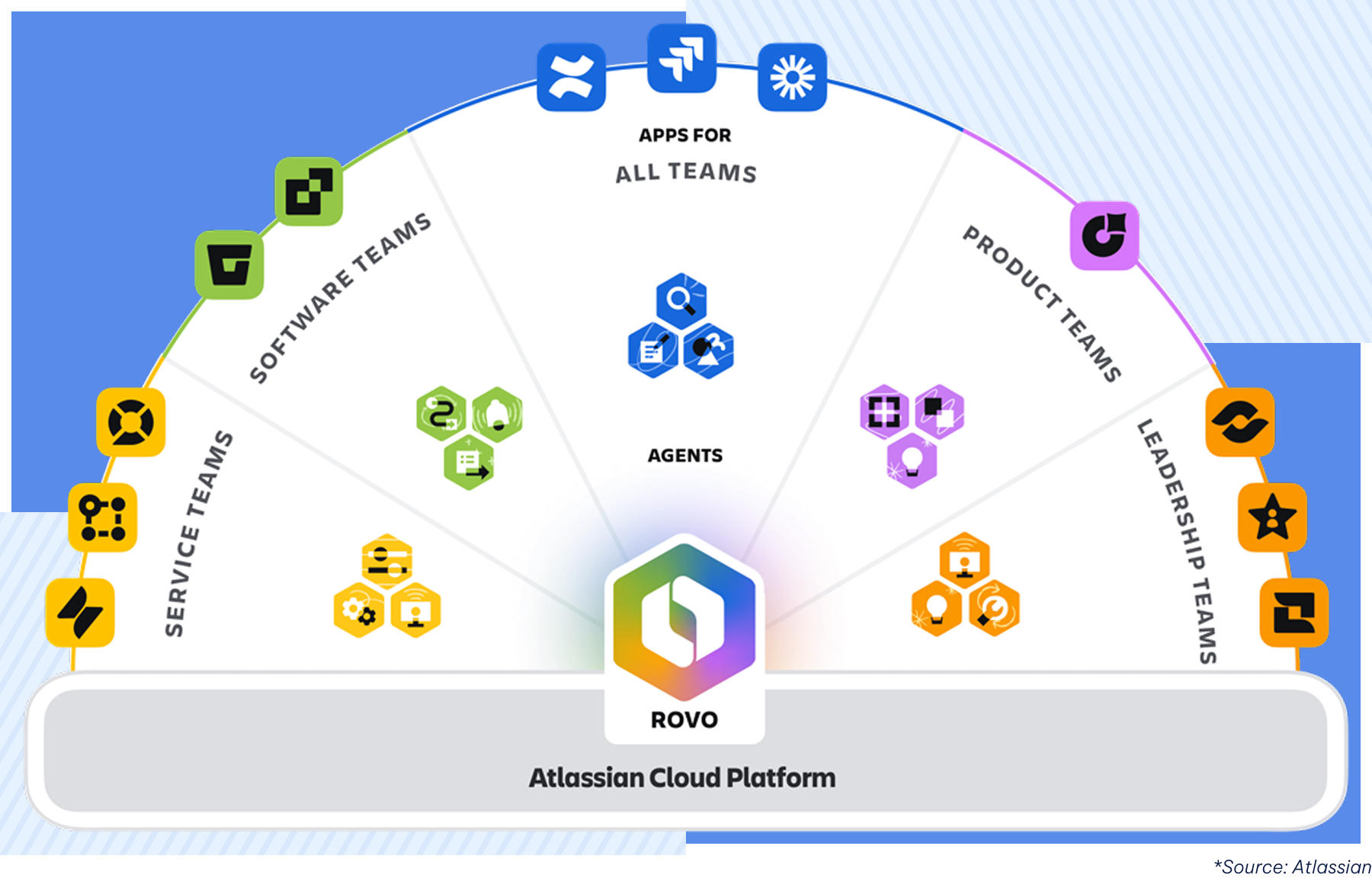
Atlassian is shifting from selling standalone tools to offering integrated solution bundles called Collections, optimizing how teams work together. All Collections combine tools and AI capabilities to support end-to-end teamwork with smarter insights and automation.
The four core Collections include:
-
Teamwork Collection - Combines Jira, Confluence, Loom, and Rovo Agents. Focuses on team collaboration, knowledge management, and work automation.
-
Software Collection: Targets engineering teams, including Rovo Dev, Bitbucket, Pipelines, Compass, and the DX tool. Designed to optimize the software development lifecycle (SDLC) and measure AI-driven productivity and impact.
-
Service Collection: Focuses on IT and customer support, introducing Customer Service Management (CSM), an AI-powered app supplementing Jira Service Management.
-
Strategy Collection: For leadership and strategy teams, connecting team-level work with enterprise priorities using tools like Jira Align.
4. Data Center End of Life (EOL)
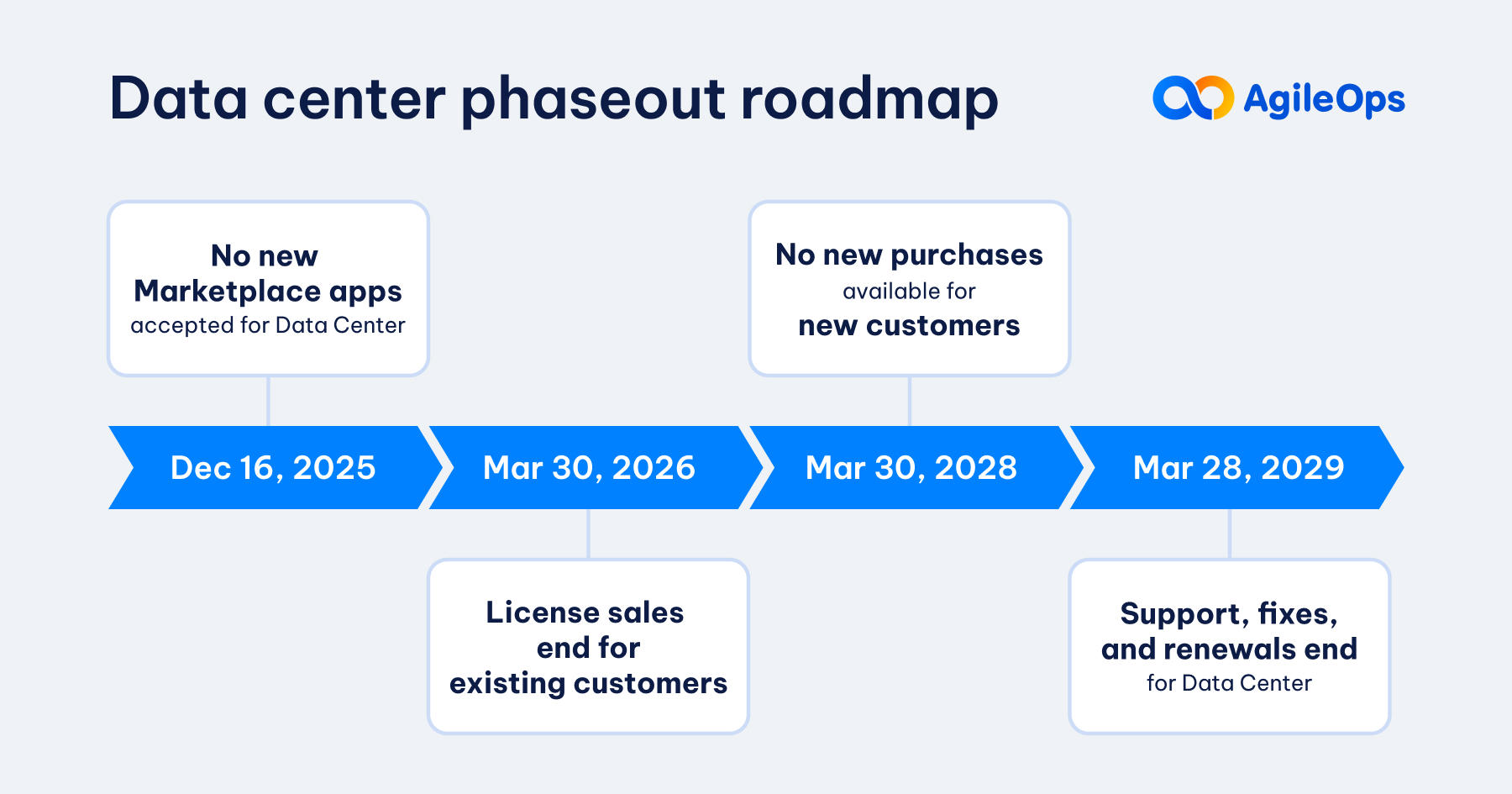
Atlassian is accelerating its Cloud-first strategy and fully transitioning to the cloud platform. This is confirmed by the roadmap to end support for Data Center products, shifting all development resources to Cloud for faster feature releases, enhanced security, and eliminating operational burdens.
-
Official End of Support (EOL) Date: Support for most Atlassian Data Center products will end on Mar 28, 2029. After this date, licenses will expire, products will become read-only, and no further development or security updates will be provided.
-
Advanced Cloud Options (Private Cloud): To meet strict security and compliance needs of large enterprises, Atlassian is developing advanced Cloud deployment options. This includes Isolated Cloud (dedicated, highly secure environments for large enterprises) and Gov Cloud EAP (secure solutions for the public sector, with high compliance standards), expected to launch on Jan 1, 2026.
5. Growth Strategy: Acquisitions Paving the Way for AI
To accelerate AI capabilities and platform integration, Atlassian made several strategic acquisitions at the end of Dec 1, 2025:
-
Rewatch: Acquired to deeply integrate its platform into Loom. New features include automatic meeting recording, calendar integration, and AI-generated notes/action items, making video recordings easier to search and manage.
-
Secoda: Acquired to enrich data with semantics and context, making data AI-ready for faster, smarter decisions.
-
DX (Developer Intelligence): Acquisition completed in Nov 1, 2025. DX adds “engineering intelligence” to the Atlassian ecosystem, enabling technical leaders to accurately measure performance and ROI of technology investments, especially Rovo Dev.
-
The Browser Company of New York: Announced at the end of Dec 1, 2025. The goal is to transform browser technology into an active work platform, purpose-built for knowledge workers in the AI era.
6. Rapid Cloud Innovation Accelerates Delivery
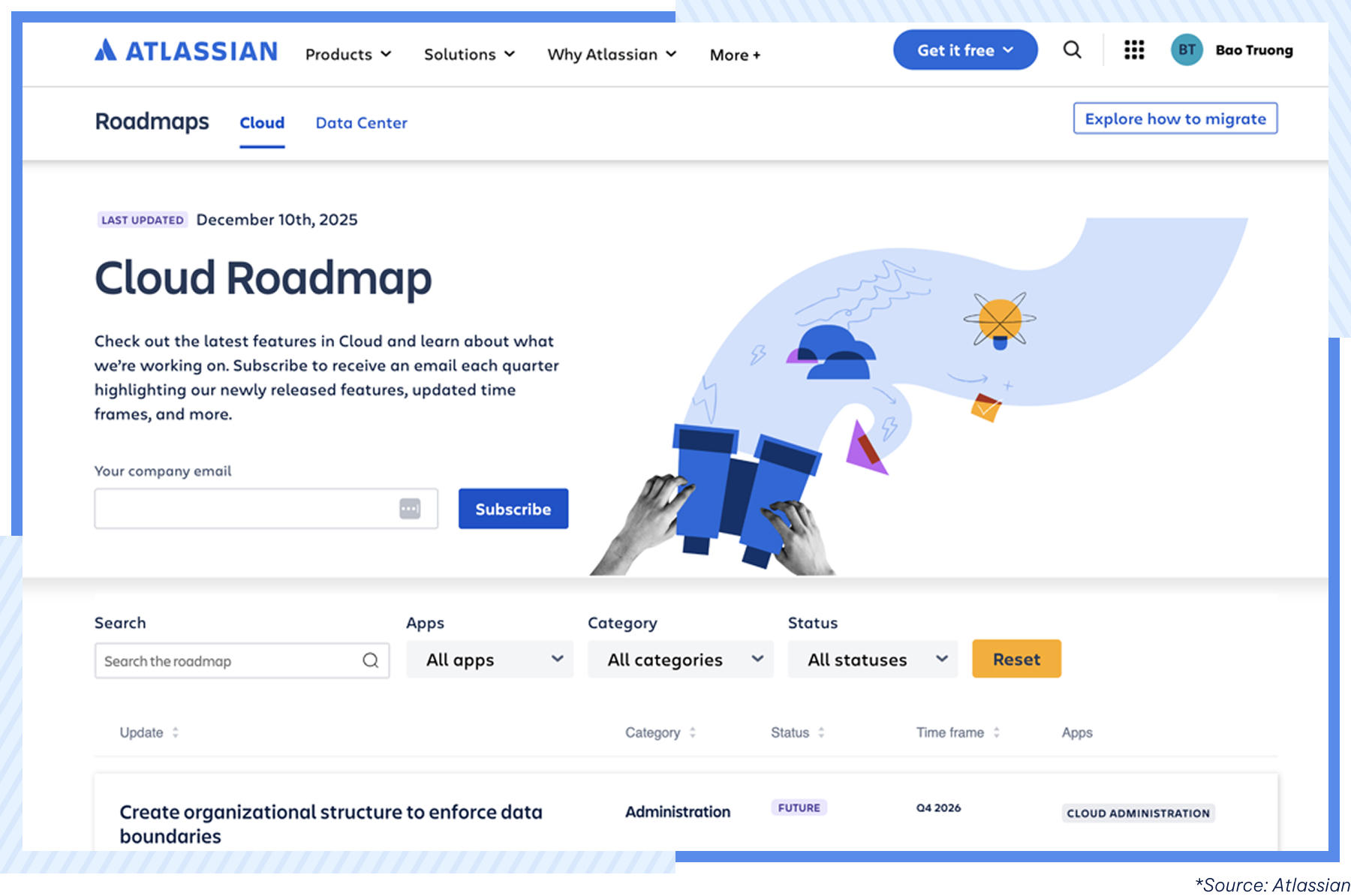
The pace of Atlassian Cloud development has reached record levels, far surpassing Data Center versions, with new features released weekly. The Cloud focus has enabled Atlassian to drive innovation across multiple areas simultaneously:
-
Expanded Automation Capabilities: The platform has added many new actions for Automation, enabling more complex and flexible automation rules. AI is also used to let users create work items from non-traditional sources such as chat, video, or images and automatically convert them into actionable Jira tickets.
-
Process and Knowledge Management Improvements: New features like Journeys in Jira Service Management help users map and track workflows spanning multiple teams. AI-powered features like AI Summaries and Audio Briefings are integrated to help users absorb knowledge faster.
-
Advanced Administration and Governance Tools: Atlassian continuously releases tools to help admins manage large Cloud platforms, including portal-only customer user sync using SCIM 2.0, and a “User interests” tracker to control Marketplace app adoption.


