Contrary to popular belief, Atlassian administrators will not be replaced by Rovo or other AI tools. They will become AI orchestrators.
By Atlassian Community Champions Aaron Geister & Dave Rosenlund
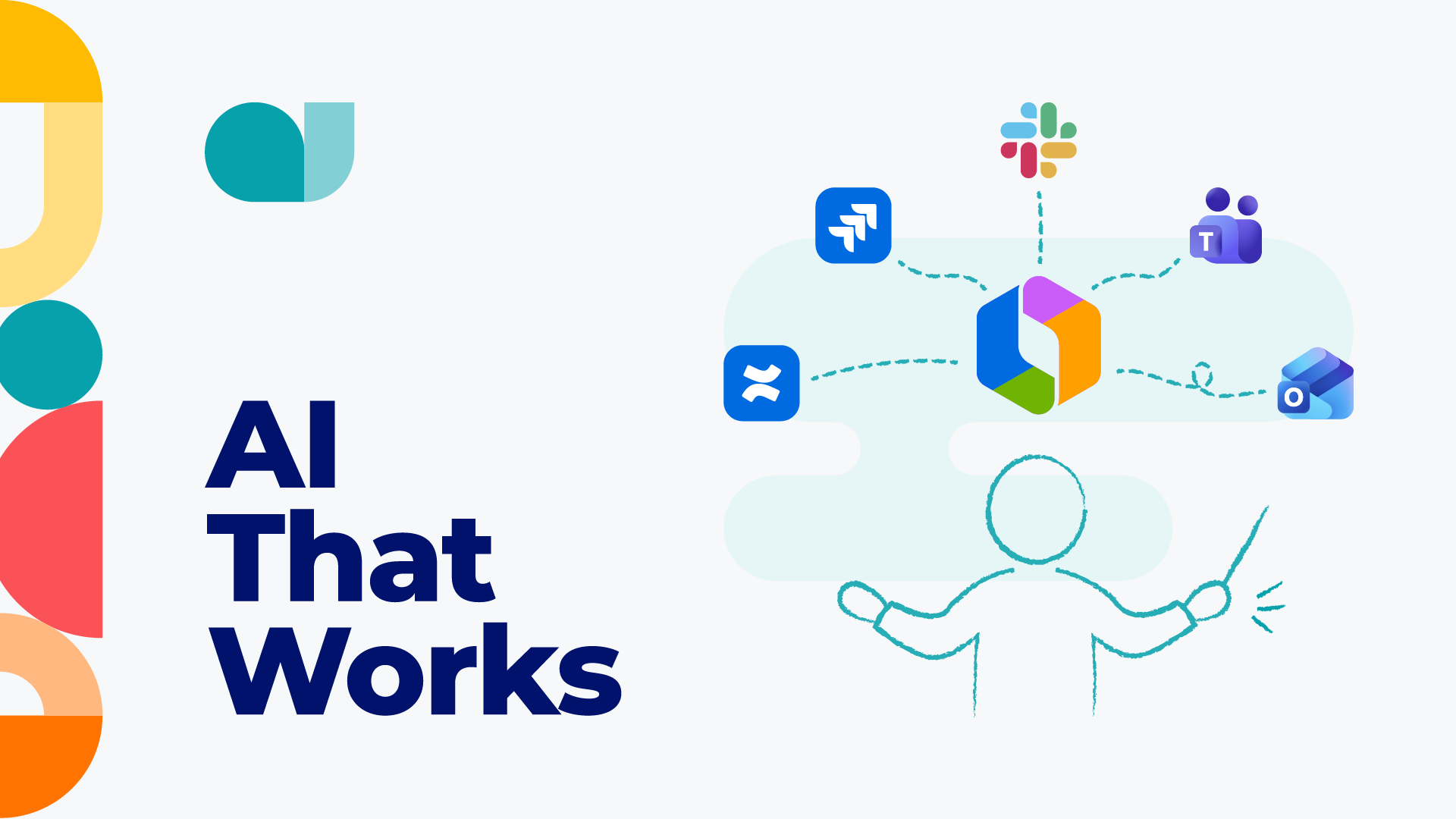
Shaping how systems, context, and automation work together
For a long time, Atlassian administrators were primarily responsible for keeping workflows, permissions, and projects operational. Increasingly, though, the role is evolving into something closer to AI orchestration—shaping how systems, context, and automation work together across the organization.
Instead of managing isolated systems, they’re helping connect them. And information that used to live in separate tools—Slack, Microsoft Teams, Outlook—can now be pulled together into a more unified view. Done well, Jira becomes less of a ticketing system and Confluence a company wiki, into more of a central place where people can understand what’s happening and make decisions with the right context.
That shift sounds subtle, but it changes the role more than most organizations realize.
Connecting Systems Is Not the Same as Connecting Work
Most organizations already integrated their tools where it was needed years ago. They can sync tickets, push notifications, and move data between platforms. Yet teams still spend an enormous amount of time reconstructing context manually because the important parts of the work are scattered across conversations, meetings, approvals, documentation, and tribal knowledge.
The problem was never just data fragmentation. It was operational fragmentation.
For example, during a major incident, the actual decision-making rarely lives in one place. Part of the story exists in Jira Service Management. Another part sits inside Slack threads. Still more in Confluence. Oh. And someone made a key architecture decision during a Teams call. Updates are buried in email chains, ticket comments, or meeting notes. By the time leadership asks for status, teams are often piecing together fragments from five different systems just to understand what is actually happening.
The friction there is not just operational overhead. It creates delays, unclear ownership, duplicated effort, and decisions made without full context.
Most teams recognize this instinctively because they live it every day. The work itself is no longer confined to a single system, but the organizational model behind many workflows still assumes it is.
That gap is where the role of the administrator starts to change.
Operational Context Is Becoming the Real System
Tools like Rovo are accelerating a shift away from simply managing workflows toward building usable operational context. By connecting signals across systems and surfacing relevant information when it is needed, they reduce the amount of manual effort required to find and interpret what matters.
The value is not that AI suddenly “knows everything.” It is that teams spend less time reconstructing the past before they can act in the present.
That sounds like an efficiency gain, but it is actually something larger.
Historically, workflows were mostly deterministic. Administrators defined transitions, permissions, automations, and states. The system behaved predictably because the logic itself was predictable.
AI systems do not behave that way.
Systems like Rovo operate probabilistically across relationships, context, and signals that may span multiple platforms. Instead of simply enforcing workflow logic, they increasingly influence how teams interpret information, prioritize work, and make decisions.
That introduces an entirely different operational responsibility.
As systems become more connected, somebody has to decide how information should move between them, what context is trustworthy, what should be surfaced to AI systems, where automation boundaries exist, and where humans still need to stay involved.
That is no longer simple configuration work. It becomes operational design.
The Platform Is Becoming a Context Layer
This shift is already visible in the way Atlassian is positioning Teamwork Graph and Rovo. The focus is increasingly less about isolated tools and more about creating a shared contextual layer across work, people, goals, and systems.
That is an important distinction because connected systems are not the same thing as connected understanding.
Most enterprises already have integrations everywhere. They have synchronization between platforms, APIs between systems, and automation moving information around constantly. Yet teams still struggle with fragmented decision-making because the context behind the work remains disconnected.
A synchronized ticket is not the same thing as a shared operational picture.
That is where Teamwork Graph becomes more interesting than many people initially realize. It is not just attempting to connect tools. It is attempting to model relationships between work, people, knowledge, and activity across systems.
If that direction continues, the role of the Atlassian administrator changes with it.
The administrator is no longer just managing Jira projects or Confluence spaces. Increasingly, they become responsible for shaping how organizational context itself is surfaced, trusted, and operationalized across environments.
That is much closer to orchestration than administration.
AI Orchestration Introduces New Governance Problems
This is also where the work becomes more difficult than the current AI conversation often acknowledges.
When workflows were deterministic, governance was relatively straightforward. Permissions, approval chains, automation rules, and access models were usually explicit and observable.
Contextual AI systems introduce fuzzier boundaries.
An AI system may surface incomplete information with high confidence. It may connect signals correctly but interpret relationships incorrectly. It may elevate outdated context because the surrounding systems themselves contain inconsistent operational data.
In other words, AI does not eliminate operational fragmentation. In many cases, it amplifies whatever operational conditions already exist.
That means organizations cannot treat AI orchestration as a feature rollout. They have to treat it as an operational discipline.
The quality of the outcomes increasingly depends on the quality of the underlying systems, governance models, collaboration patterns, and institutional knowledge.
That changes the administrator’s role again.
The challenge is no longer just maintaining platforms. It is maintaining trust in the operational context those platforms produce.
AI Orchestration Still Requires Human Judgment
That is why the idea that AI will somehow replace administrators misses the point entirely.
If anything, the opposite is happening.
As systems become more connected and AI becomes more embedded inside operational workflows, organizations need people who understand not just the platforms themselves, but how work actually moves across teams, systems, approvals, governance boundaries, and decision-making structures.
In Aaron's work as a Principal Solution Architect, tools like Rovo, Claude, GPT, and MCP have become part of how he approaches these problems. Not as isolated products, but as part of a broader ecosystem that is starting to connect work, context, and decision-making across platforms.
The real shift is not that AI replaces administrators. It is that administrators increasingly become the people responsible for shaping how these systems work together under real operating conditions.
That is a very different role than simply administering systems.
📚 Further Reading
See also…
About the Authors
Aaron Geister is an Atlassian Community Champion for the Central Wisconsin chapter. Dave Rosenlund is an Atlassian Community Champion and the founder of the virtual Atlassian Community Events chapter, CSX Masters (fka ITSM/ESM Masters), and more.
In their day jobs, they are colleagues at Platinum Atlassian Solution Partner, Trundl (which is why they are able to easily collaborate on this article).

