An Explorer's Log: Taking a Rovo Studio App All the Way to Production
I had heard the pitch: Rovo Studio's App Builder turns a prompt into a real Forge app, no terminal required. As someone who has written plenty of Forge by hand, I was equal parts curious and skeptical. So I did the only honest thing and went exploring. The plan was simple: build a real app, then refuse to stop at the demo. Add an external API. Make it cross-product. Try to take it somewhere you'd actually ship. Here is the field log.
The easy ascent
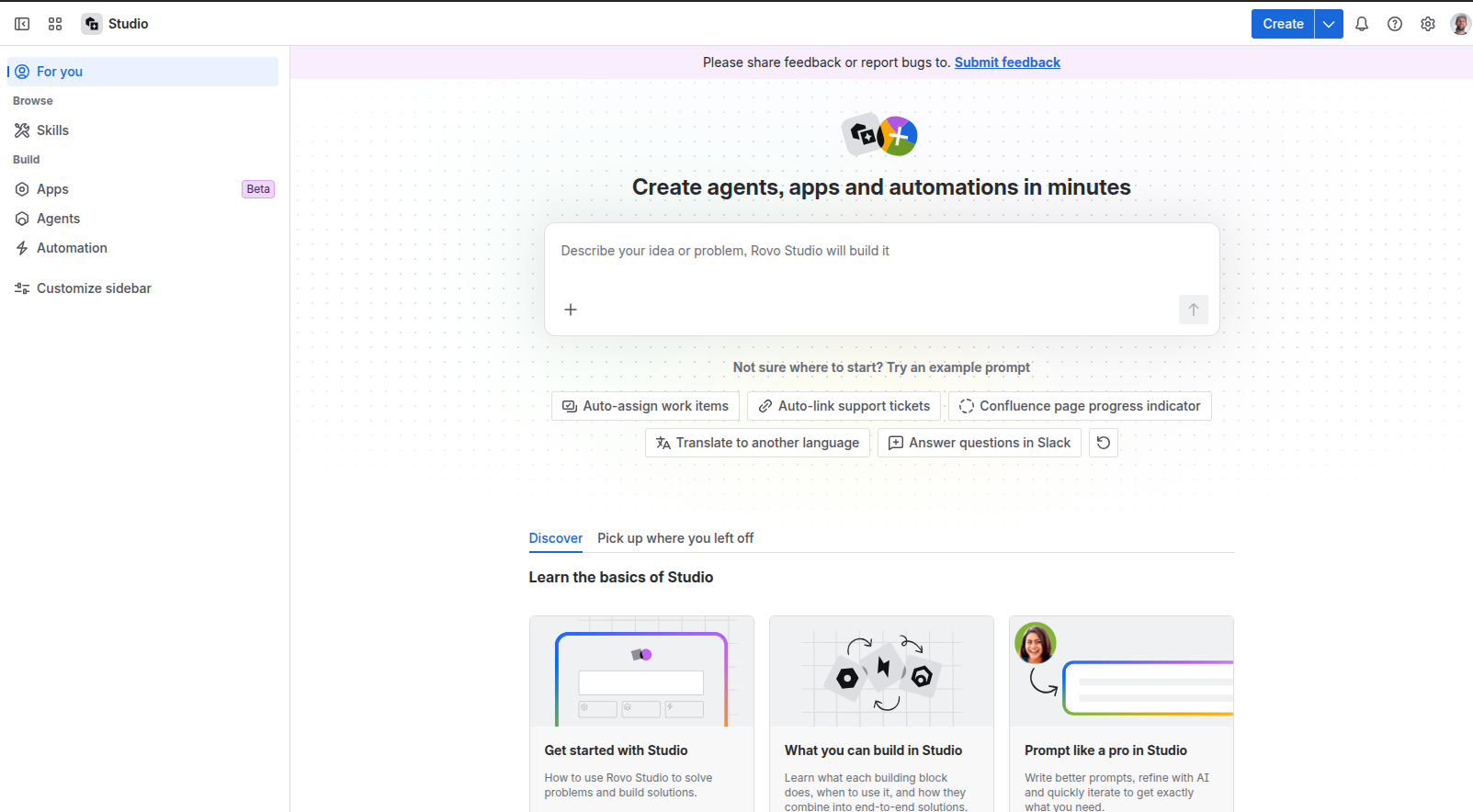
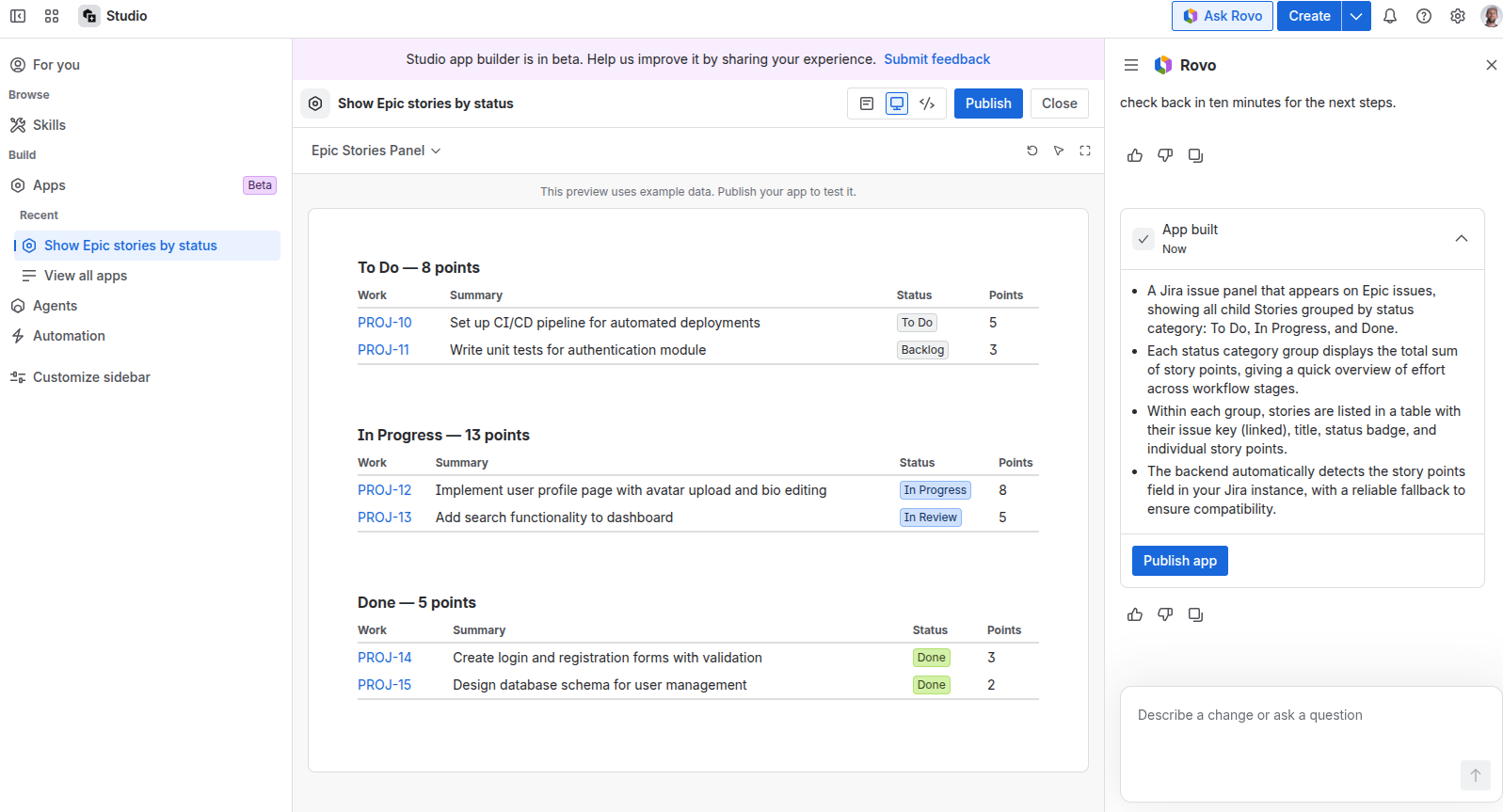
The first stretch is genuinely delightful. I described what I wanted, "a Jira panel that groups an Epic's stories by status and sums their story points", and a couple of minutes later it was running on a real issue, with a real app id, installed on my dev site. No scaffolding, no boilerplate, no CLI.
Then the small magic. I clicked a column in the live preview, typed "swap these two", and it rebuilt just that piece. When a build broke, I pasted nothing but the bare error message and it found the fix. When I told it something was wrong, it reconsidered and corrected itself instead of digging in. I asked it to handle the failure case for an unreliable API, and it added neat per-row fallback states so one bad call never took down the panel. There are thoughtful touches too: a desktop notification when a build finishes, a clearly labeled "this is example data" in the preview.
If the trail ended here I would have written a very different post. A non-developer really can get a long way up this mountain. But I had said I wouldn't stop at the demo.
Where the map gets fuzzy
The interesting part of any expedition is where the trail markers thin out, and for me that was the push toward production. I added an external status API. Then I made the Jira panel also pull in related Confluence pages, which quietly turns a single-product app into a cross-product one. And a pattern emerged that is worth sharing with fellow builders: things that looked finished sometimes weren't.
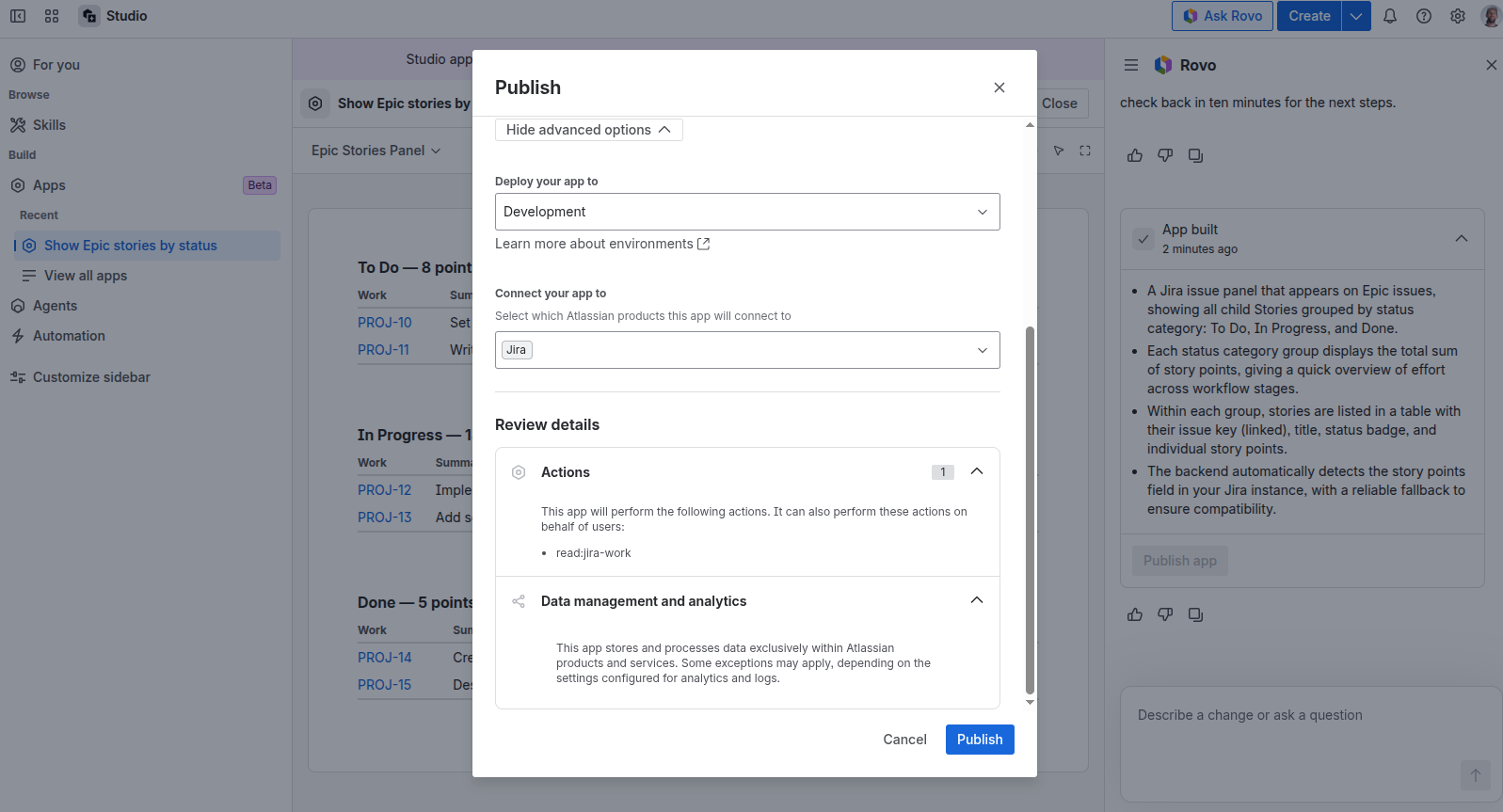
A few examples from my notes. The builder happily published an app whose local build was actually failing its type-check. The changelog it generated once described a feature that didn't exist in the code. A new permission, one that lets the app send data to an outside domain, arrived through a small, collapsed line in the publish dialog without much fanfare. And while wiring up an API key, I got a useful reminder to keep secrets out of code, which is exactly right, and then a prompt to paste the key into the chat, which is exactly the thing to be careful about. None of these is fatal. All of them are the kind of thing a beta smooths out over time. But together they taught me where to keep my eyes.
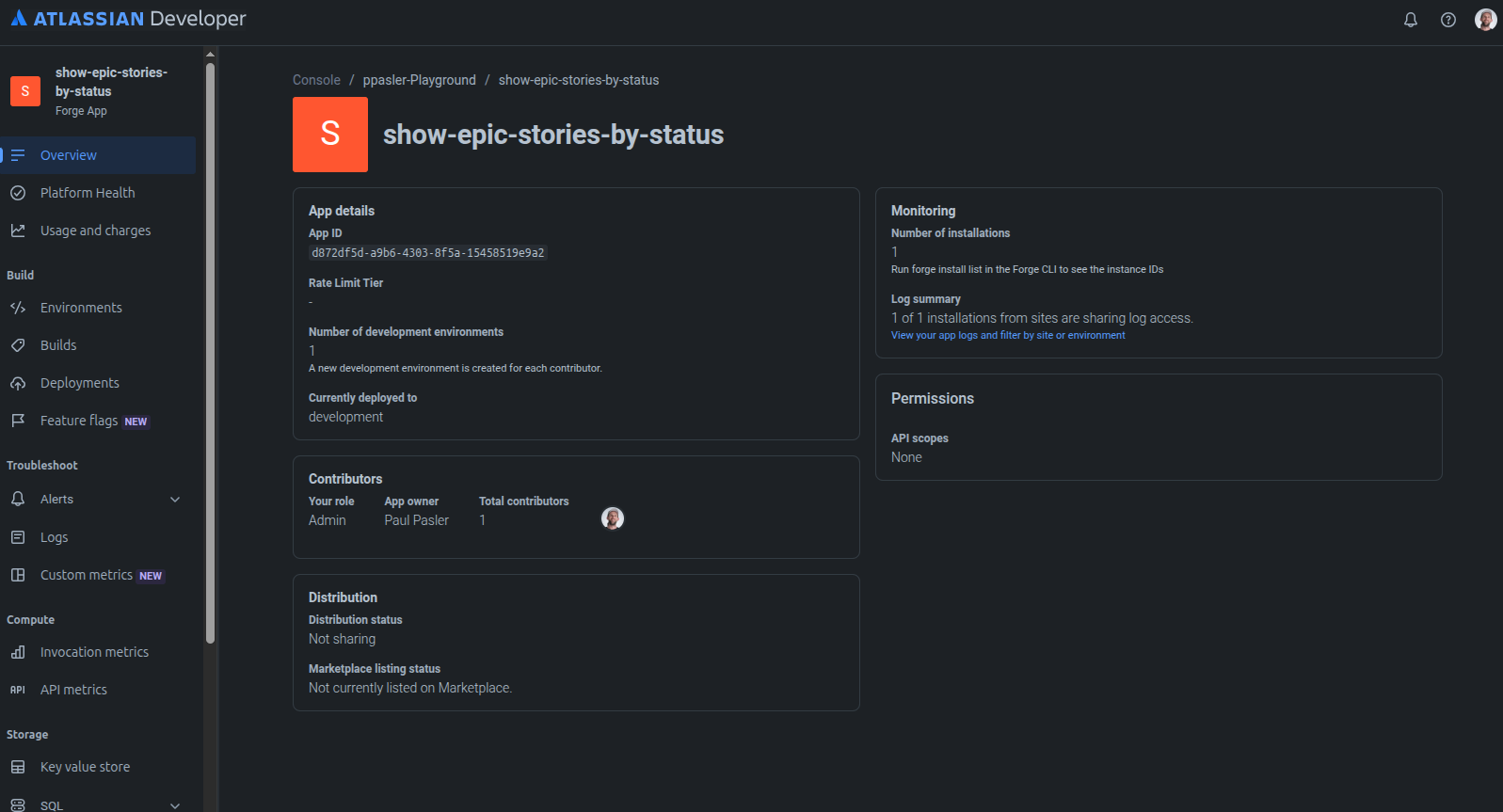
The longest detour was a cross-product call that simply refused to work. I had a confident theory. I was wrong. I had a second confident theory. I was also wrong. The tool had its own theories, some right, some not. The only thing in the whole episode that consistently told the truth was the runtime logs in the Developer Console. That turned out to be the single most useful habit of the entire trip.
What I'm bringing back
If you are heading out on the same trail, here is what I'd pack.
Read the logs. When the tool says "fixed" or "your app is live", treat that as a hypothesis, not a fact, and confirm it in the Developer Console: deployments, logs, API metrics. This one habit saved me every time, and it humbled both the tool's guesses and my own.
Review the export before you ship. The generated project comes with a genuinely nice baseline, linting, tests, security scanning, all there. But give the code a real read before production. Look for things compiled in for the preview that shouldn't reach real users, for data fetches that quietly cap out, for scopes and permissions that crept in. The first eighty percent arrives fast; the last twenty is where a careful read pays off.
Treat the download as a one-way door. Once you pull the code local and continue with the Forge CLI, that is your source of truth. Going back and forth between the builder and local edits is how you overwrite your own work.
Notice the governance moments. New scopes and new egress are real decisions. They can slide by quietly, so it is worth pausing on the publish dialog and actually reading what you are approving, especially anything that sends data outside Atlassian.
The Atlassian Developer Console
So, is it worth exploring?
Honestly, yes. Rovo Studio is a remarkable on-ramp. It collapses the distance from idea to working prototype in a way that genuinely changes who can start building on Forge, and it is improving quickly. What I learned is not "don't use it", it is "use it with your eyes open". The builder gets you to a working app astonishingly fast. The craft, and the fun, is in the final climb to something you'd trust in production.
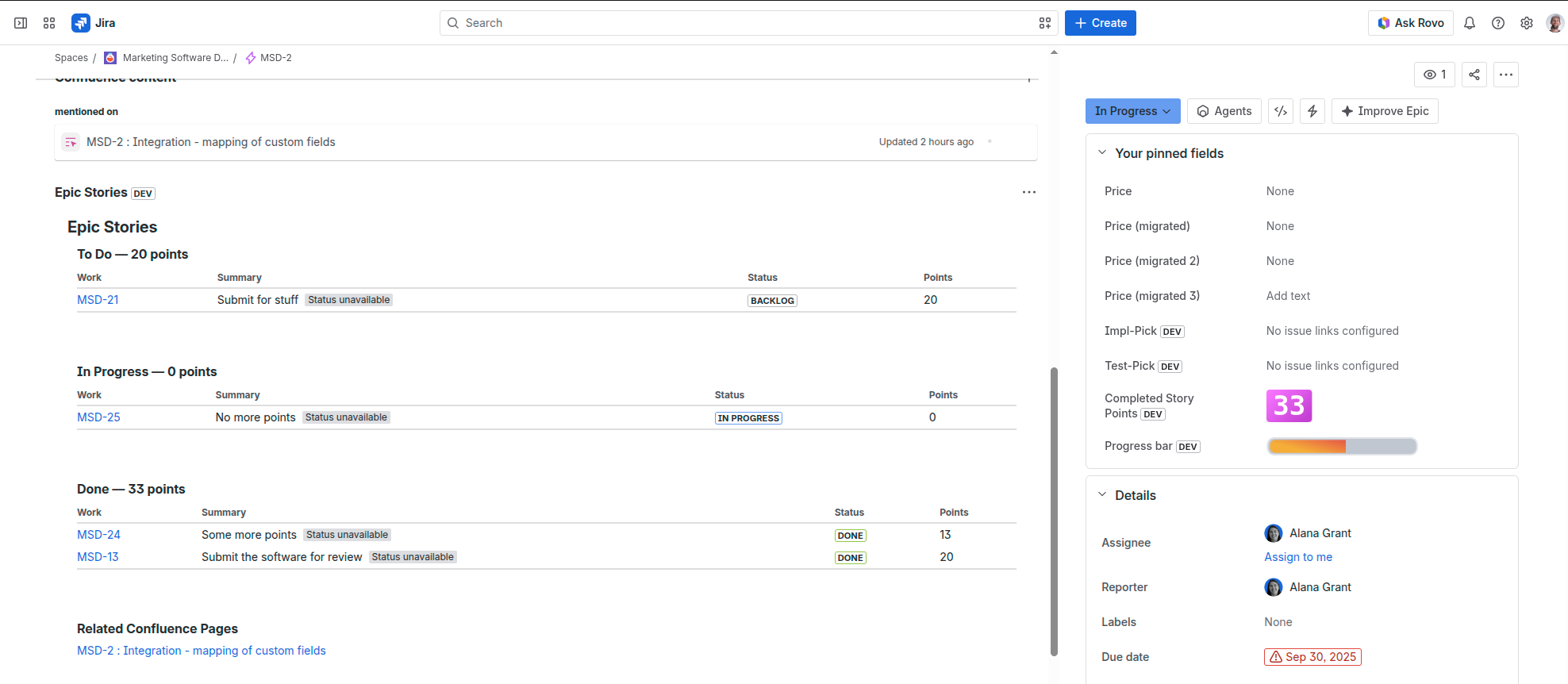
It is a great way to enable non-technical domain experts to write their own prototype Forge apps, without having to know all the details about programming. Unlike normal vibe coding, Studio feels like a part of the Atlassian ecosystem and adds some extra sugar on top (e.g. the live preview).
Pack your logs. Enjoy the view. And if you find a smoother path up the last stretch than I did, I'd love to hear it in the comments.
![Photo of Paul Pasler [Seibert]](https://avatar-management--avatars.us-west-2.prod.public.atl-paas.net/557058:16d1f9bb-612b-43a6-ac1b-8857c60c5182/e35f4b50-5f2f-4df0-87f3-7d1be5a76df6/128)


