Software delivery in 2026 moves faster than ever. AI copilots write code. Releases happen continuously. Roadmaps shift weekly.
But one thing hasn’t changed.
Unmanaged risk still slows teams down more than any missing feature.
Most Agile teams talk about velocity, flow efficiency, and sprint goals. Few systematically talk about risk inside the actual Jira issue where the work lives.
And that small gap creates big surprises.
Let’s look at what risk awareness really means in Jira today and why more teams are embedding it directly into their workflow using tools like Risk Radar.
Risk Management in Jira Is Not About Fear
When people hear “risk management” they imagine heavy documentation, approvals, or complex matrices.
In practice, it’s much simpler.
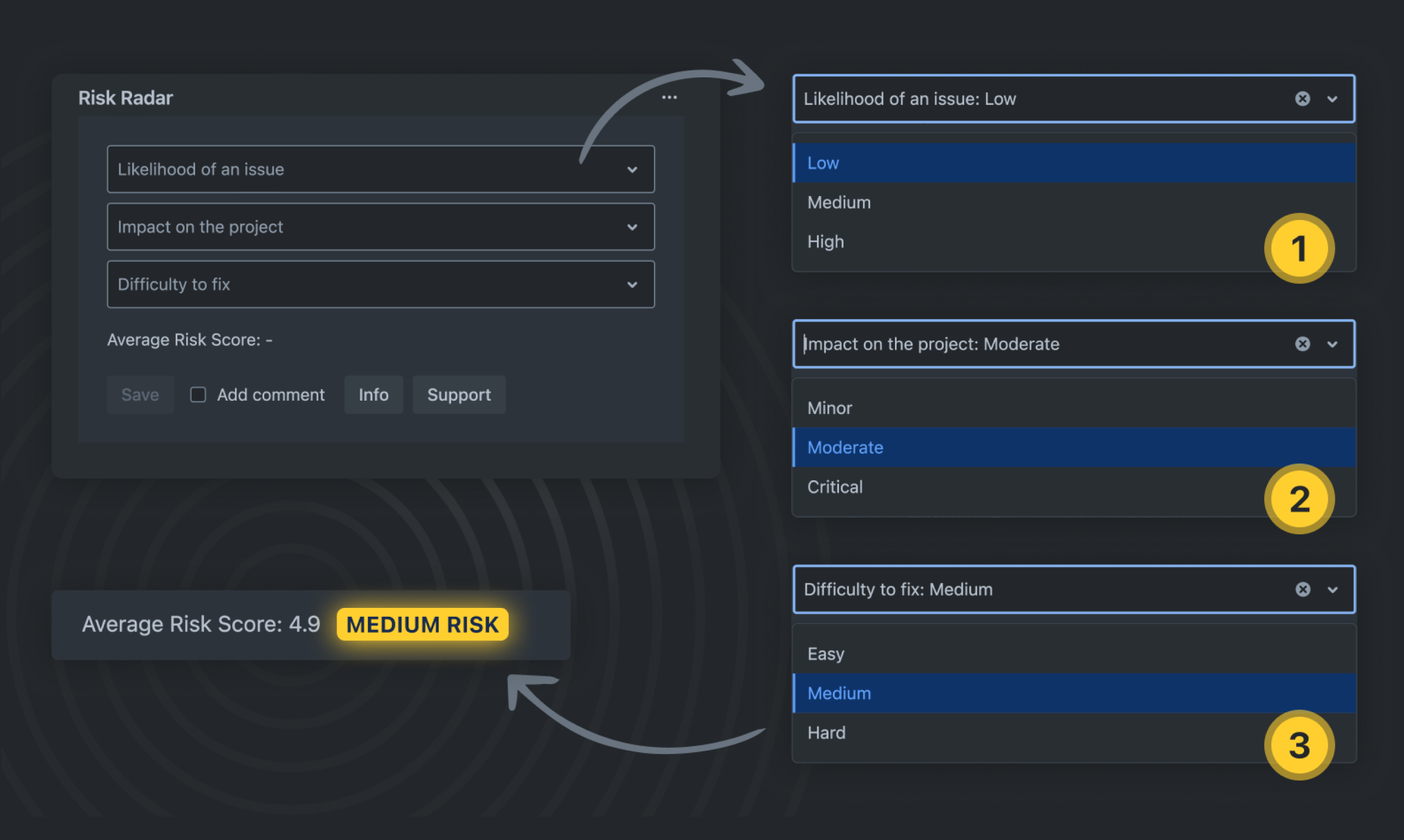
Risk management inside Jira means asking three short questions before work accelerates:
-
How likely is this to fail?
-
If it fails, how much does it hurt?
-
How hard is it to recover?
That’s it.
When those questions are answered inside the issue, during grooming or sprint planning, teams gain clarity that dashboards alone can’t provide.
Why This Matters More in 2026
Modern teams operate in environments where:
-
Third-party APIs are critical dependencies
-
AI-generated code increases speed but not always predictability
-
Distributed teams work across time zones
-
Delivery expectations are higher than ever
Risk today is rarely obvious. It hides inside assumptions, dependencies, and unclear ownership.
Without visibility, teams discover problems mid-sprint. Or worse, after release.
A Realistic Scenario
Imagine a team integrating a new payment provider.
On the surface, the Jira issue looks straightforward. Acceptance criteria are clear. Estimates are reasonable.
But no one evaluates risk.
Halfway through the sprint, the payment service starts limiting requests, unexpected bugs show up, and the test environment works differently from the live system.
The team scrambles. Velocity drops. Confidence drops. Trust with stakeholders takes a hit.
Now imagine the same issue with risk awareness embedded.
During planning, someone flags:
-
Likelihood: High
-
Impact: High
-
Effort to Fix: Medium
The team assigns a senior engineer. They allocate buffer time. They design fallback logic.
The task may still be complex. But it is no longer surprising.
What Scrum Masters and Kanban Leads Gain
Risk Radar is not just for developers.
Scrum Masters gain:
-
A structured way to surface hidden uncertainty
-
A clearer signal during sprint planning
-
Better retrospective conversations around risk handling
Kanban leads gain:
-
Insight into which items deserve closer monitoring
-
A visual cue when high-risk work enters “In Progress”
-
Data to balance flow with stability
Product owners gain:
-
Better prioritization discussions
-
A way to justify trade-offs with stakeholders
-
Early warning signs before commitments slip
What Risk Radar Does Inside Jira
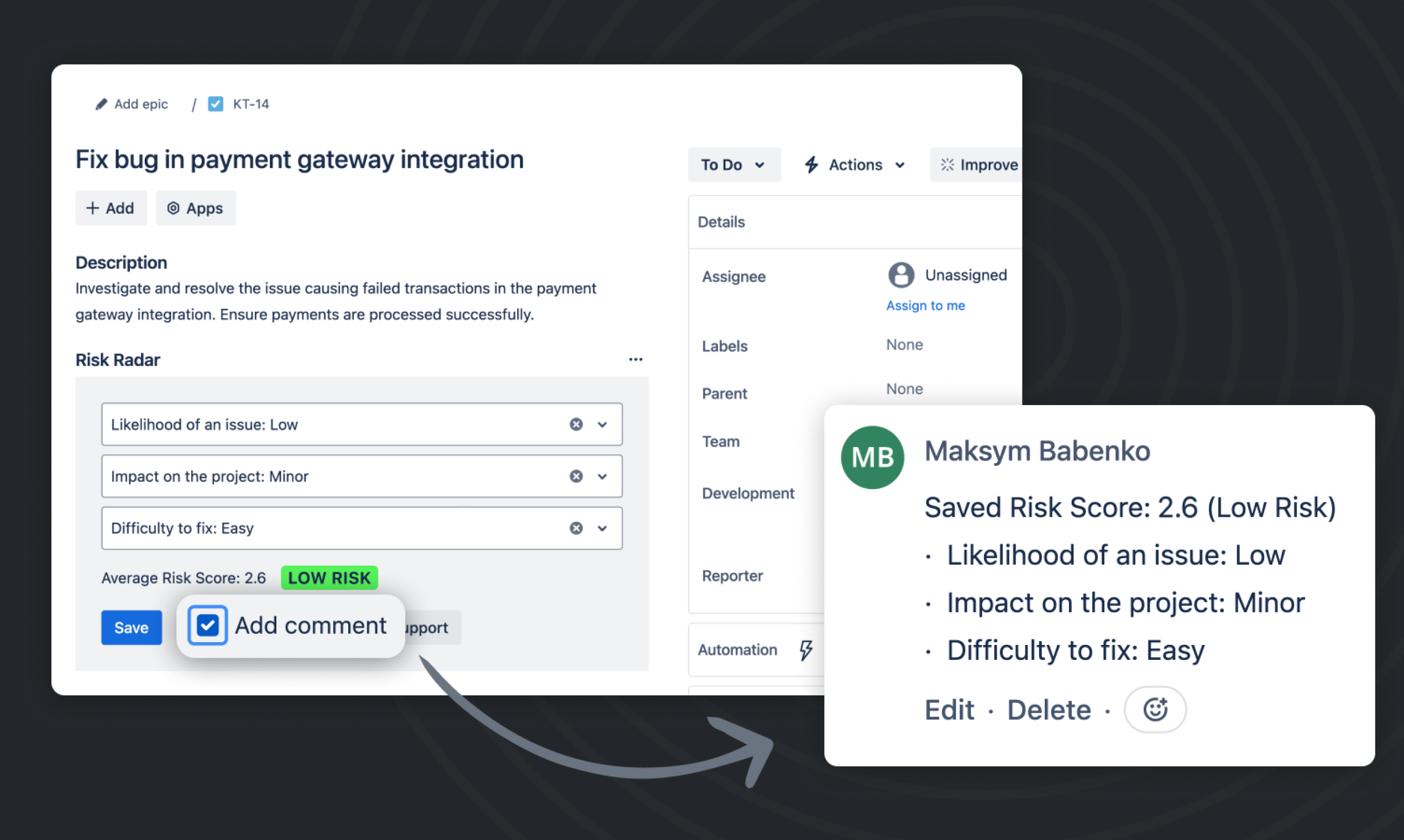
Risk Radar keeps everything where teams already work.
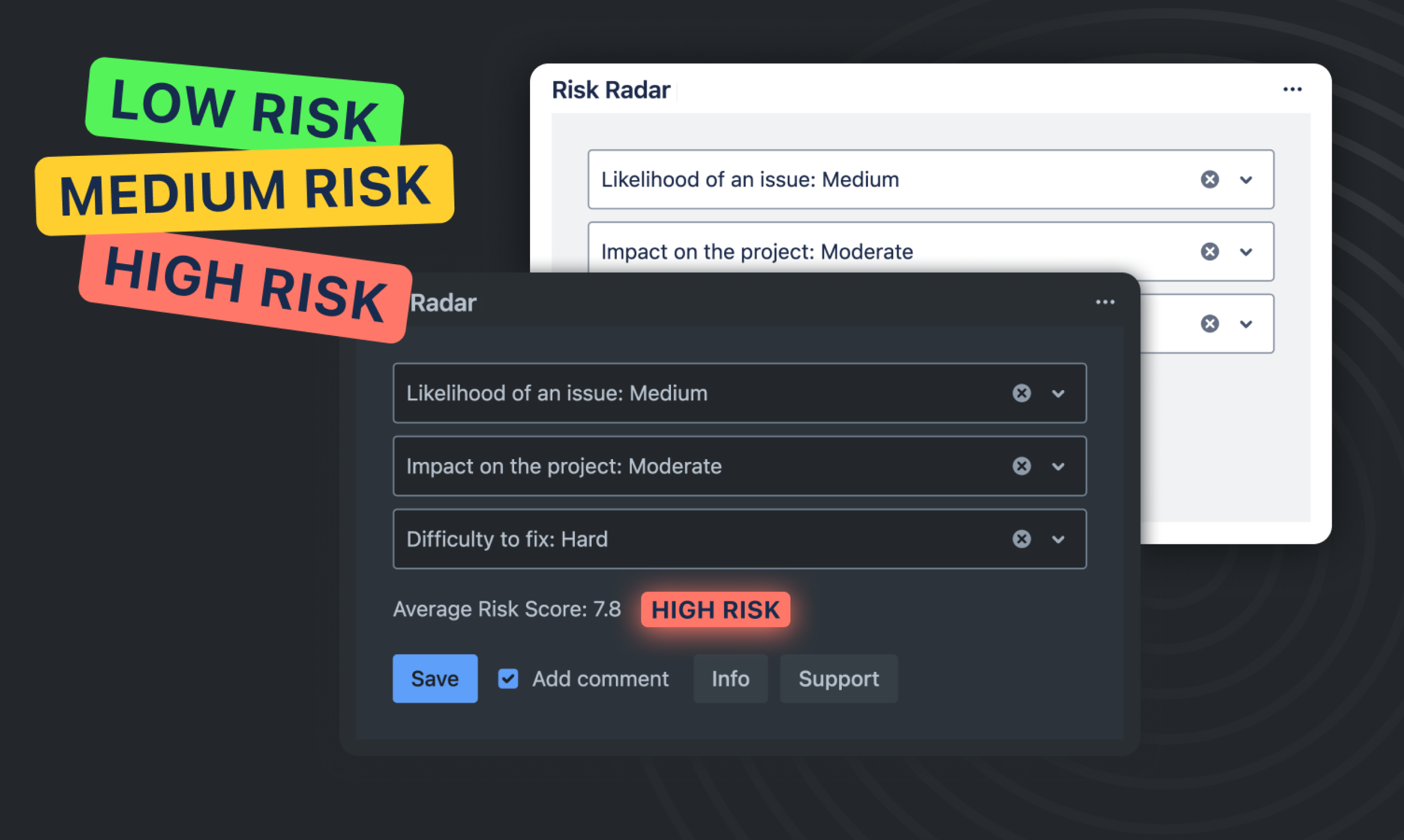
Inside each Jira issue, you can score:
-
Likelihood
-
Impact
-
Difficulty to Fix
The app calculates a risk score and displays a clear visual indicator directly in the issue view. No spreadsheets. No external dashboards. No context switching.
It’s lightweight. It takes seconds. It makes risk visible.
And visibility changes behavior.
Risk Awareness Without Bureaucracy
You don’t need a formal risk committee. You don’t need additional workflow steps.
You just need a habit:
During backlog refinement
Pause and score risk.
During sprint planning
Check if high-risk items are overloaded in one sprint.
During retrospectives
Ask whether identified risks were handled well.
Risk Radar supports that habit. It doesn’t replace your process. It strengthens it.
A Small Change That Scales
The most effective teams in 2026 don’t eliminate risk. They make it visible early.
Risk Radar gives teams a simple layer of awareness inside Jira. It does not change how you work. It makes your existing work smarter.
Start by scoring just a few issues. Observe the conversations that follow.
You may notice that risk discussions shift from “why did this happen?” to “we saw this coming.”
And that shift makes all the difference.
