The key to true efficiency isn't just tracking how long things take (duration); it's tracking how they move (transitions). If you aren't analyzing rework, your velocity is likely hiding substantial waste.
By shifting our focus from time spent to status counts and transitions, we can identify the biggest killers of productivity: hidden rework loops.
How Big The Problem: Status Count
The first diagnostic step is simple: How many times did we touch this? In an ideal workflow, a work item should visit each major status just once. When Timepiece's Status Count report shows that a work item visited Implementation 5 times, that’s a major red flag. The frequency of revisiting a status is the measure of your hidden rework problem.
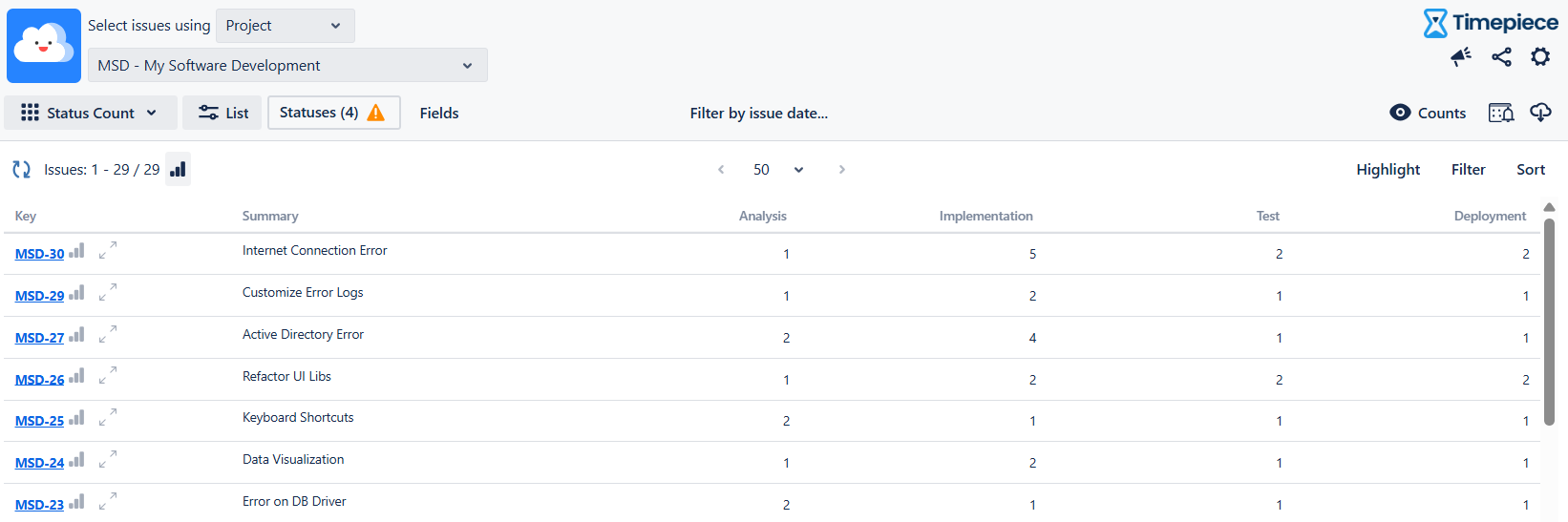
The Context Switching Tax: High status counts are critically expensive because they impose a "context switching tax." Every time a developer is forced to pick an item back up, they pay a penalty. Re-engaging with a task forces the developer to switch context, which can consume significant mental energy and time to regain deep focus.
This churn is a productivity killer. The Status Count Report gives you the exact magnitude of the issue you need to solve.
Diagnosing the "Why": Transition Count
If the Status Count tells you how big the problem is, the Transition Count tells you why it's happening. By examining where the work item came from, you can distinguish between a planning failure and a quality issue.
The Definition Loop: Bad Requirements
This happens when a developer starts working but realizes the requirements are confusing or missing, and must send the work item back. A single step back from Implementation to Analysis is normal, but repeated loops indicate a bottleneck that requires attention.
The Signature Transition: Backward movement from Implementation to Analysis.
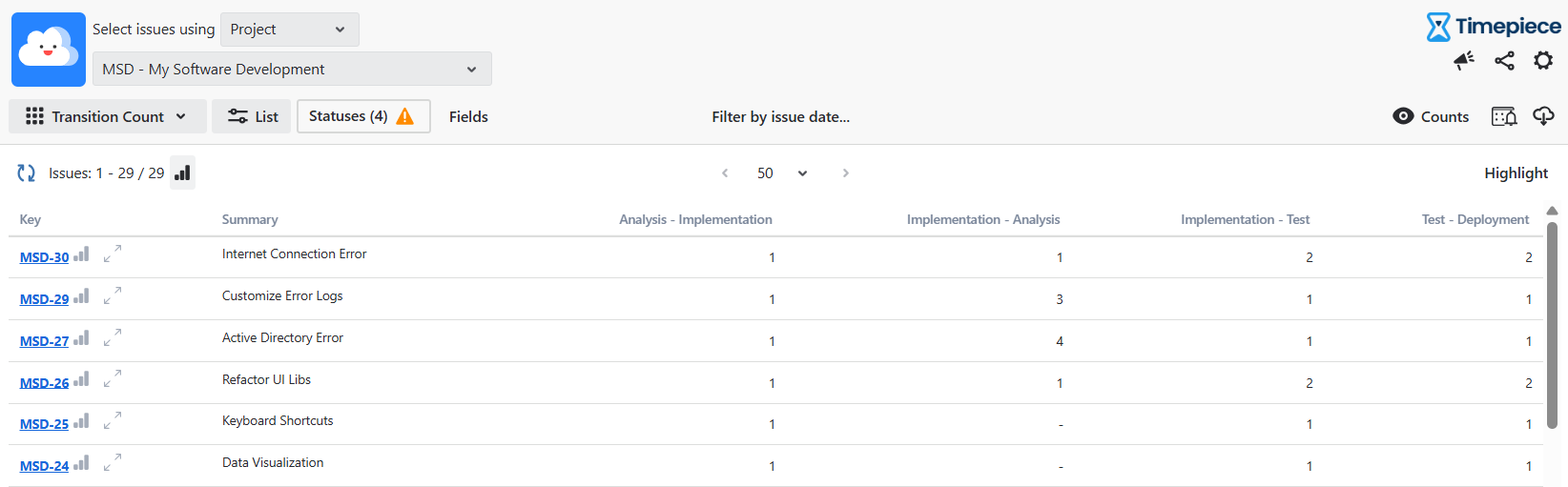
The Diagnosis: The team is starting work before the issue is truly ready. This is a planning problem, not a coding problem.
If you see a high count here, improve your requirements. Analysts or product owners need to refine the definition of work better before development begins.
The Execution Loop: Buggy Code
This loop occurs when the requirements were fine, but the implementation failed to meet quality standards during testing.
The Signature Transition: Backward movement from Testing to Implementation (or 'Fixing').
The Diagnosis: This indicates a systemic quality issue in the execution phase.
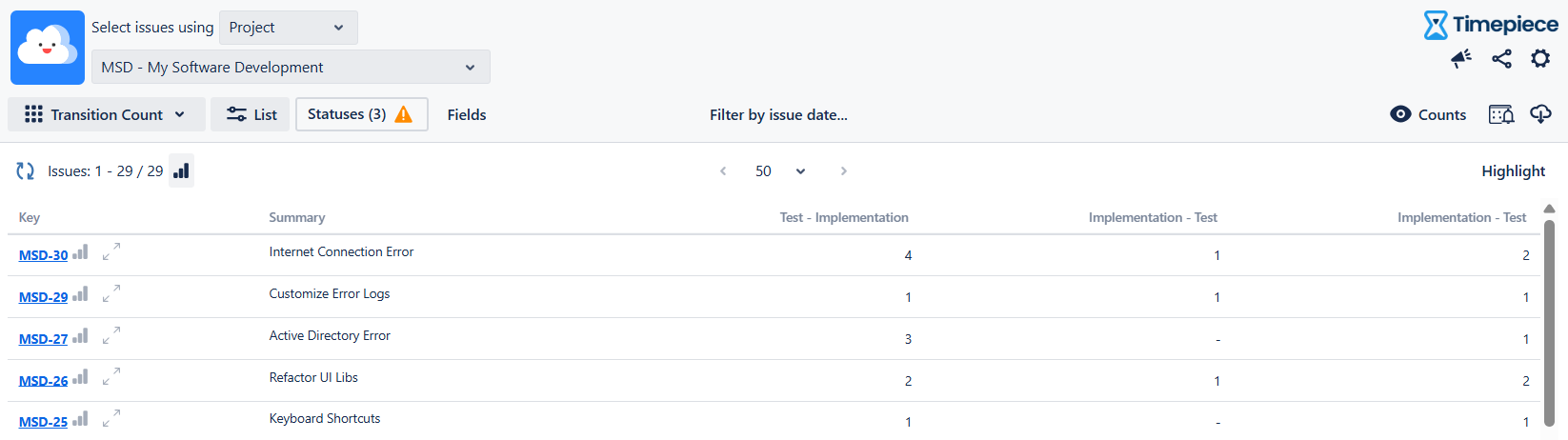
If you see a high count here, improve your testing and quality standards. Focus retrospectives on strengthening developer-level quality and peer review processes.
Actionable Data for Continuous Improvement
Don't just track how fast you are going; track how often you are turning back. This diagnostic approach turns hidden frustration into clear, actionable data:
If work returns to Analysis: Improve your requirements.
If work returns from Test: Improve your quality and testing.
To make this analysis routine and visible, dedicated reporting tools are essential for transforming complex raw transition data into simple, digestible Status and Transition count reports. Tools like Timepiece – Time in Status for Jira can provide the counts you need to monitor these metrics easily.
