I want to share a lesson we learned while building our own product: how to activate users - one of the most fundamental problems for any SaaS.
Because without activation, there’s no sustainable growth.
Activation usually comes down to two things
-
Defining the Aha moment
-
Reducing Time to Value (TTV)
In theory it sounds straightforward: every product knows what it does, so it should know what value it delivers.
The hard part is this:
What your product does ≠ the final value the customer actually came for.
And a “pivot” is often not about changing the idea.
It’s about uncovering the real value and putting it front and center.
When that happens, everything shifts:
Our path (pretty typical): bottom-up
We started at the bottom.
Stage 1: Automating agile rituals
Our initial value was automating agile processes - helping hybrid teams run rituals consistently.
Useful? Yes.
But it sat low in the customer’s value loop, with a limited growth ceiling.
Stage 2: Visibility and a collaboration hub
Then we moved higher: we added visualization of progress, timelines, deadlines, and issues.
A team collaboration center emerged - a timeline where data from the tracker and rituals flowed together (automated check-ins inside the team’s communication hub).
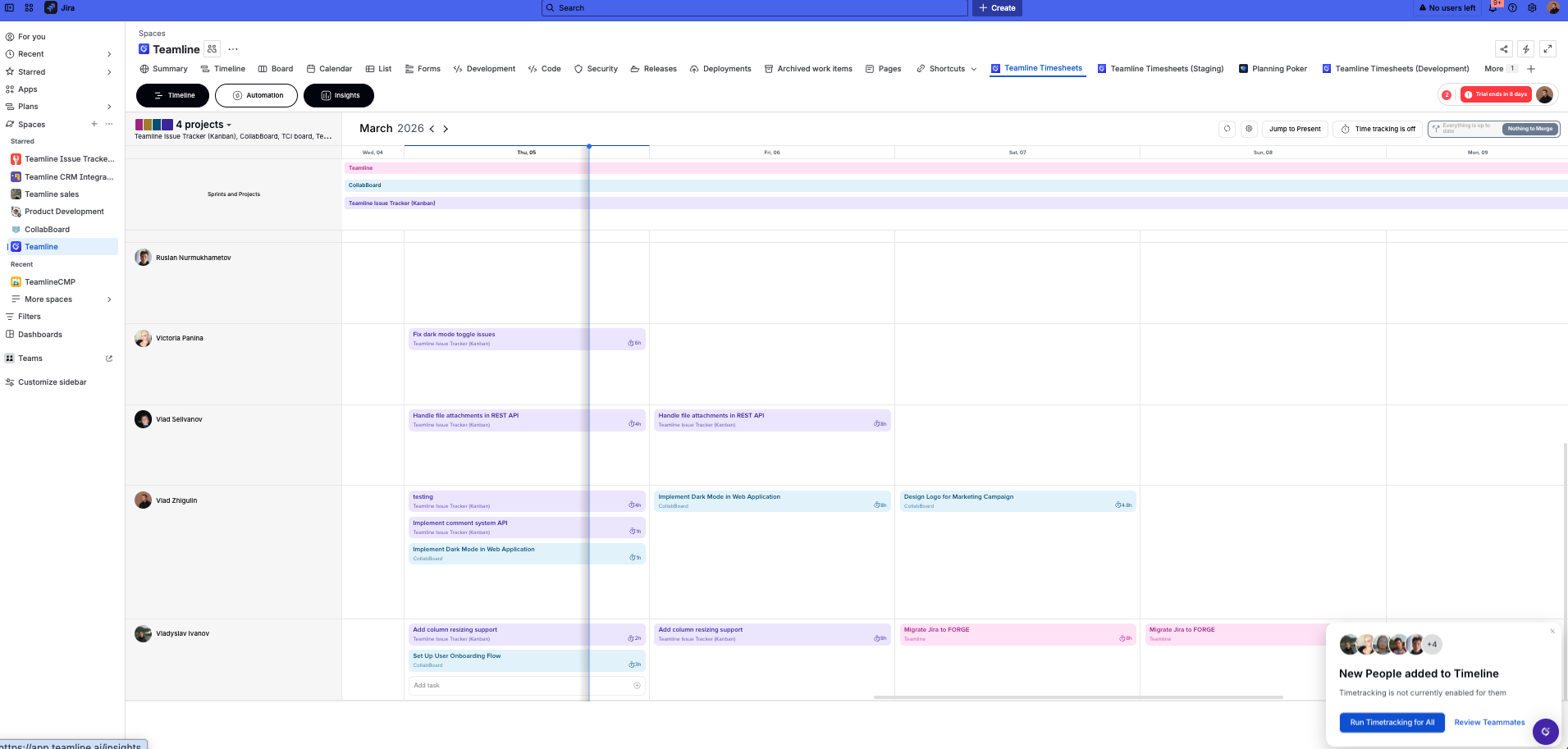
This helped a lot, especially in sales, because we could talk not only at the team level, but at the organizational level.
Companies don’t want “automation for automation’s sake.”
They want clarity: what will be delivered, and when.
But even that wasn’t the final destination.
Where the real value was hiding
After hundreds of interviews and experiments, our hypotheses converged into one point:
Everything we were building was ultimately about one thing:
Improving Time to Market.
Once we realized that, we made a radical step.
We surfaced the components that actually decompose Time to Market:
 Instead of asking new users to first set up a ritual or build a timeline, we embedded a metrics widget directly into every issue card.
Right after installation, teams can see their current lead time and cycle time immediately.
Step 1 in our value loop: know your real numbers
First, users understand their baseline.
Step 2: understand why the numbers look that way
Then comes the harder part: explanation.
And we happened to build this at the right time.
AI finally gave us a practical tool for the “why”
Users can open an issue and start a conversation with an AI agent to break down, step by step, where the delays happened.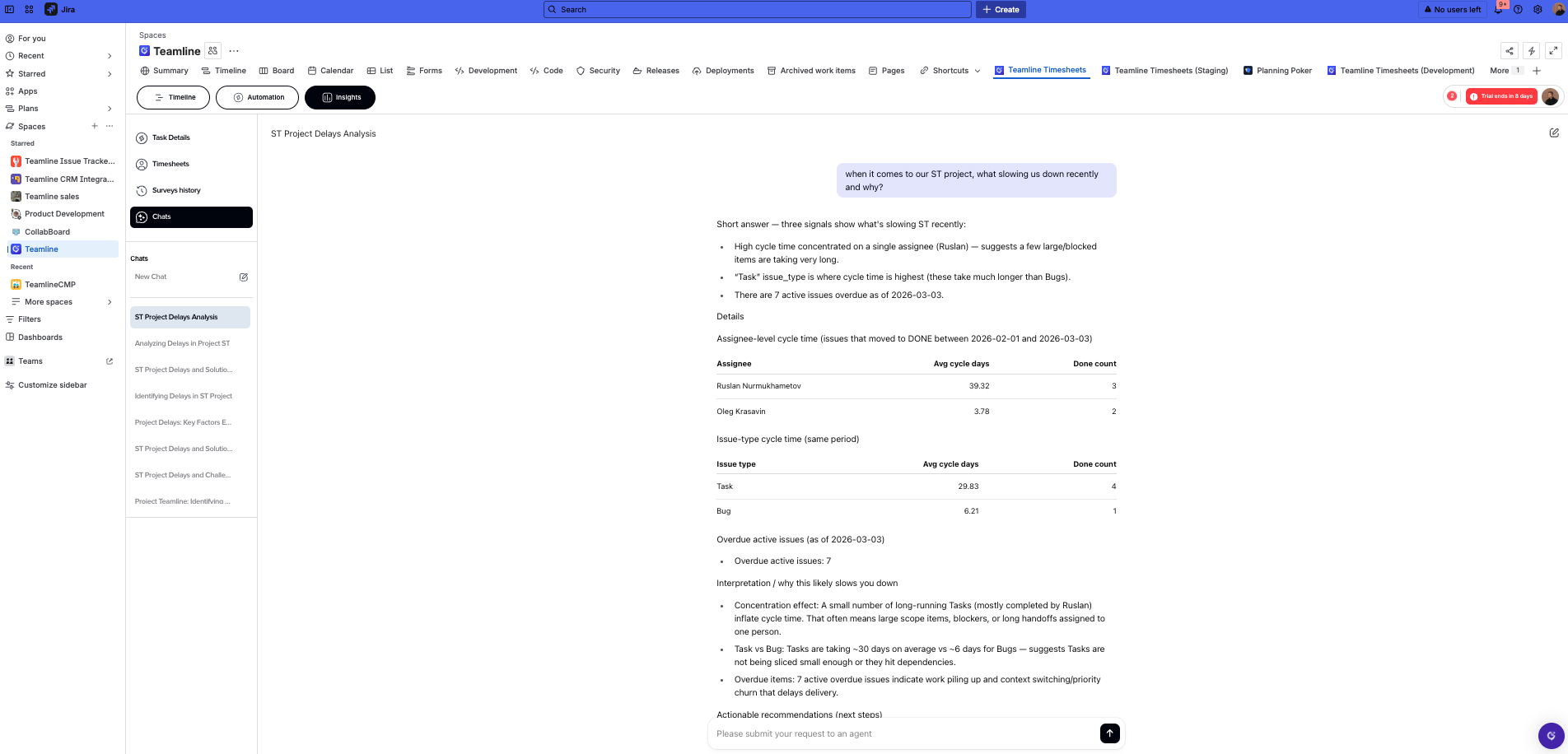
This unexpectedly solved problems not only for teams, but also for business stakeholders, because now you can:
Step 3: influence tools (the “how to improve” layer)
Only after baseline + explanation do “action tools” matter.
What used to be Step 1 (ritual automation: standups, retros, planning poker, timeline) becomes what it should be:
a mechanism to improve the metrics - not the goal itself.
What this changed for us
Every move up the value chain is basically a pivot:
But once you build the right sequence in the value loop, the funnel starts working almost on its own.
Because the real Aha moment becomes:
-
you see your Time to Value / delivery metrics
-
you understand why they are what they are
-
you know how to improve them
-
and you can track the trend over time
And the “value barrier” in enterprise conversations drops.
We no longer lead with “agile automation.”
We lead with Time to Market improvement.
And that’s the language of value.
