AI is appearing everywhere in Jira, and that is a good thing. It can help teams summarise issues, draft content, classify work and reduce manual effort.
But when it comes to improving Jira workflows, conversational AI has a gap.
If AI says "Your workflow may have bottlenecks" — the obvious question is: based on what?
If it says "You should simplify your process" — the next question is: which part, and why?
Without evidence behind the recommendations, AI can sound helpful while still being vague. And vague advice does not drive process improvement.
Jira already contains the evidence
Every Jira issue leaves a process trail. It moves through statuses, waits, loops back, gets blocked, changes ownership, and follows expected paths — or very unexpected ones.
Over time, that history becomes a rich record of how work actually flows. It can reveal rework loops, bottlenecks, handoff issues, process variation, and automation opportunities.
The problem is that this evidence is buried across issue histories, transitions, timestamps, custom fields and workflow configurations. Most teams know the data is there — they just do not have an easy way to turn it into structured insight.
Evidence-based AI works differently
A generic AI response might say: "Consider reducing bottlenecks, improving handoffs and automating repetitive steps."
That sounds reasonable, but it is not actionable. A Jira admin or consultant needs to know where the bottleneck is, which workflow path is causing delay, which issues show rework, and what evidence supports the recommendation.
Evidence-based AI starts with the data — which paths issues followed, where work spent the most time, where items moved backwards, and which patterns repeated often enough to matter. Then AI interprets the findings.
That is the difference between an AI assistant and an AI advisor. An assistant helps answer a question. An advisor helps explain what is happening, why it matters, and what to do next.
What this looks like in practice
We built Process Advisor for Jira to explore this idea. It analyses Jira workflow history and turns it into evidence-led process insight.
Here are a few examples of what it produces.
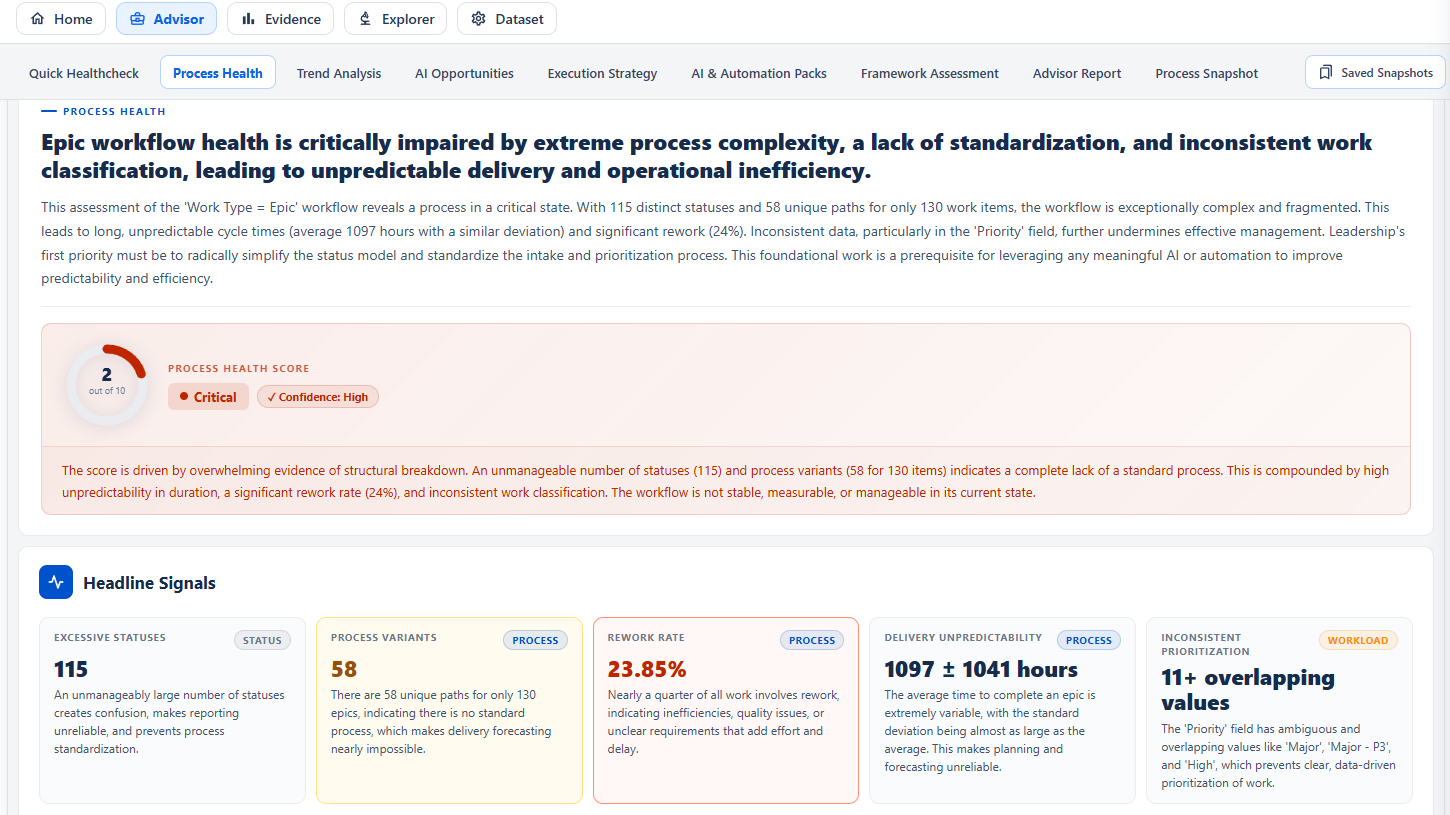
Process health grounded in data
The AI generates a process health assessment based on actual workflow metrics — not generic advice. Every finding references specific evidence: status counts, variant counts, rework rates, delivery unpredictability.
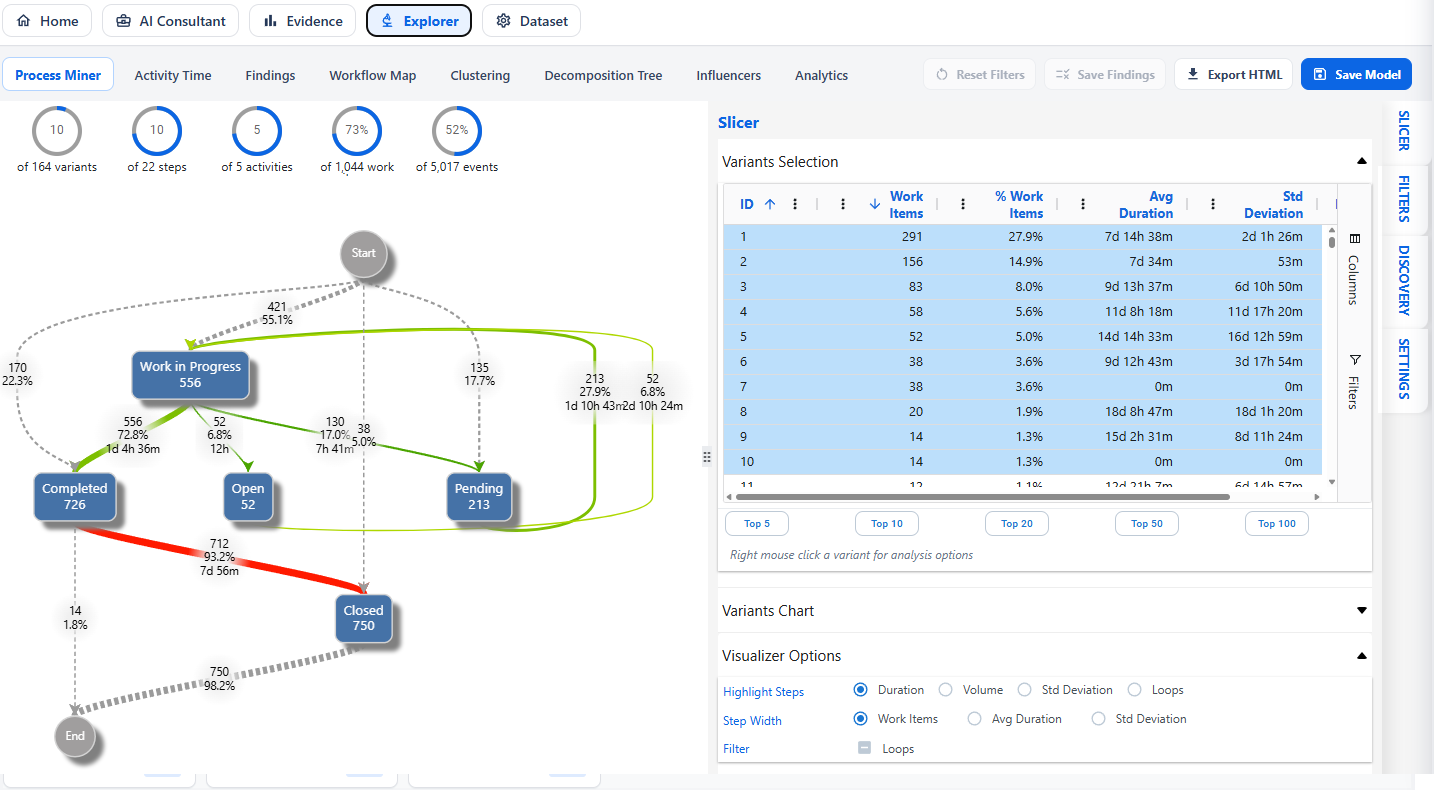
Process mining to see how work actually flows
A visual process map shows the real paths issues take through the workflow — including volumes, durations, and variant breakdowns. This is the evidence layer that sits underneath the AI recommendations.
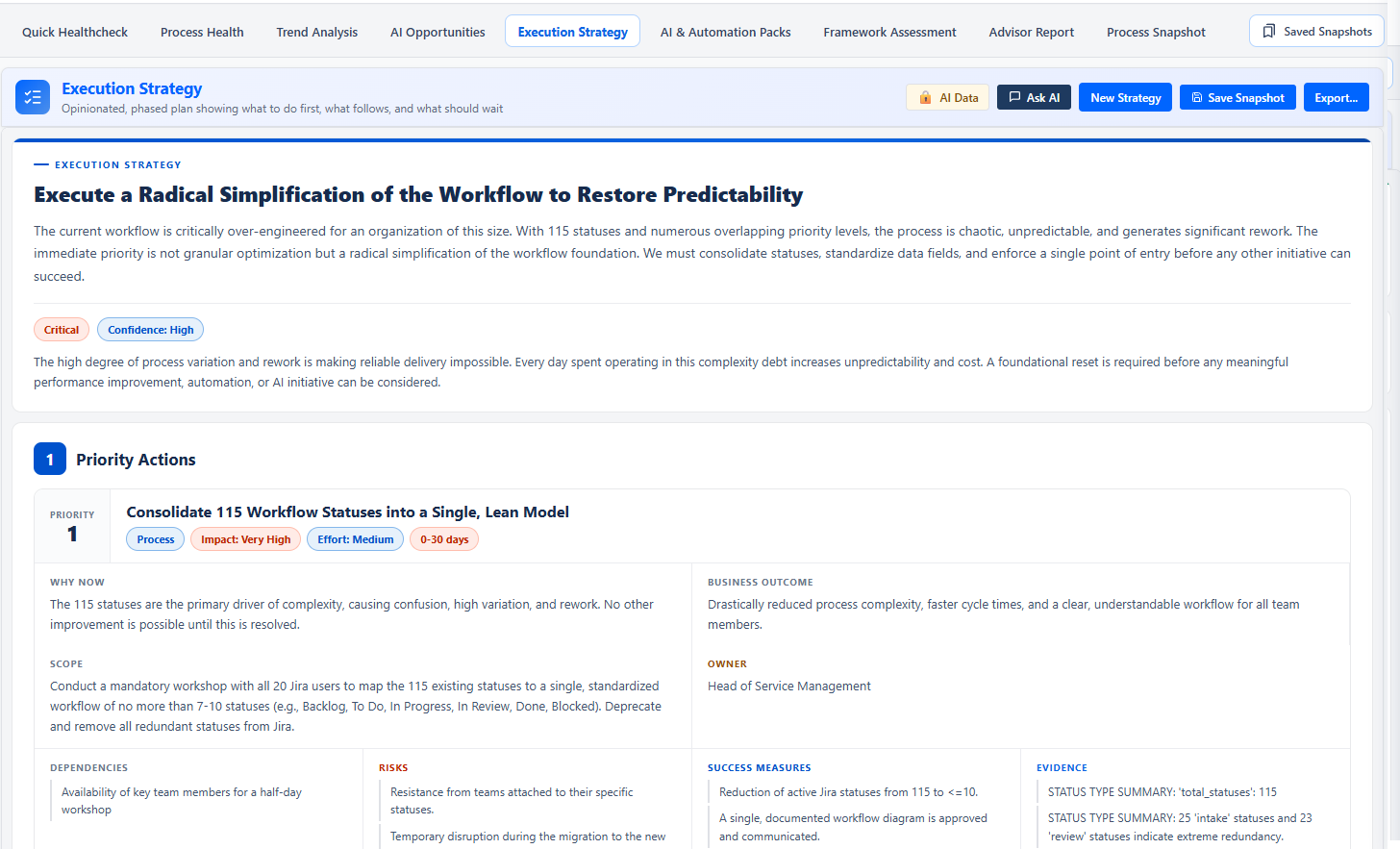
Prioritised actions with evidence references
The AI generates an execution strategy with prioritised improvement actions. Each action includes why it matters now, the expected business outcome, scope, risks, and the specific evidence that supports it.
Why this matters for Jira admins and Atlassian Partners
For Jira admins, evidence-based insight changes the conversation. Instead of only responding to "Can we add another status?", you can ask "What does the data show about how this workflow is actually performing?"
For Atlassian Partners and consultants, the opportunity is bigger. Clients often do not just need another workflow change — they need help understanding where work is slowing down, where rework is happening, and which improvements would deliver the most value. Process Advisor can help turn Jira history into structured findings and client-ready insight — not replacing consultants, but giving them better evidence, faster.
Interested to hear how others are thinking about using AI for Jira workflow improvement. Are you seeing demand from clients for this kind of evidence-based approach, or is conversational AI meeting the need?
Process Advisor for Jira is available on the Atlassian Marketplace.
