Genuine question, not rhetorical — I'd like a reality check from people running real projects.
I've been digging into why Jira timeline and Gantt apps so often open up empty, and found something that surprised me. I sampled 400 issues from Atlassian's own public tracker: not one of them had a Start date set. Due date appeared on about 1%.
That seems to explain a lot. Every timeline app reads those two fields. If nobody populates them, the app opens blank, and the app gets blamed. The July 2026 timeline update still requires both dates to be explicitly set, so this doesn't look like it's changing.
So I tried the opposite approach: don't ask anyone to fill anything in, reconstruct the dates from the issue's status change history instead. First transition into an In Progress category = actual start. Transition to Done = actual end. For finished work that isn't an estimate — it's what actually happened.
I measured coverage across six real projects (Apache FLINK/SPARK/KAFKA, MongoDB SERVER/WT, Jenkins). It reconstructs a duration for 23% to 71% of issues depending on the project, median around 55%. The variation tracks how disciplined the team is about moving tickets through In Progress — MongoDB's internal engineering projects scored highest, Apache community projects lowest, since a lot of those issues get filed and never picked up.
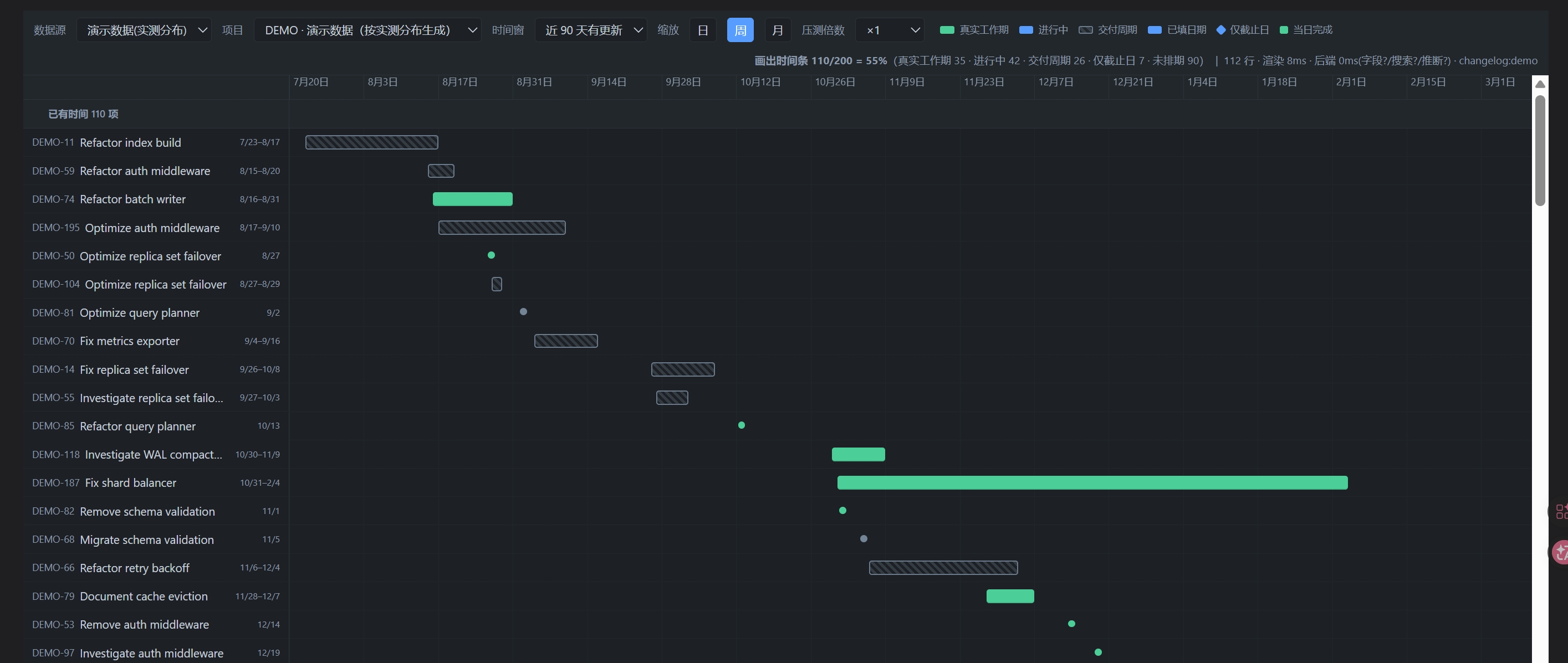
Two things I'd genuinely like to hear from you:
1. Does your team fill in Start date? Or is my sample unrepresentative of how companies actually run Jira internally?
2. Would a timeline of what actually happened be useful to you — for retrospectives, status reporting, spotting where things stalled? Or is forward planning the only thing you care about, in which case history doesn't help?
I'm building this, so I'm obviously biased. Very happy to be told it's solving a problem nobody has.


