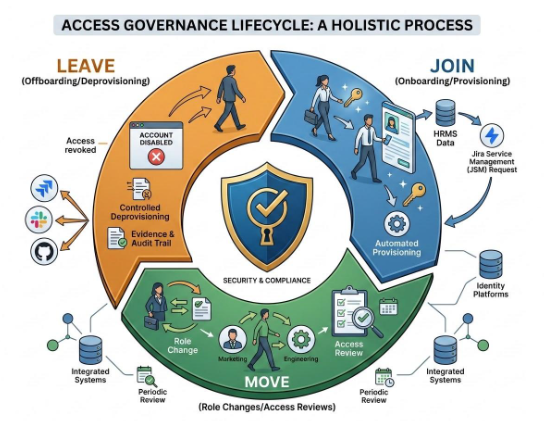
When a new employee joins, HR, management, and payroll are aligned. But IT is often left guessing which groups or permissions are required.
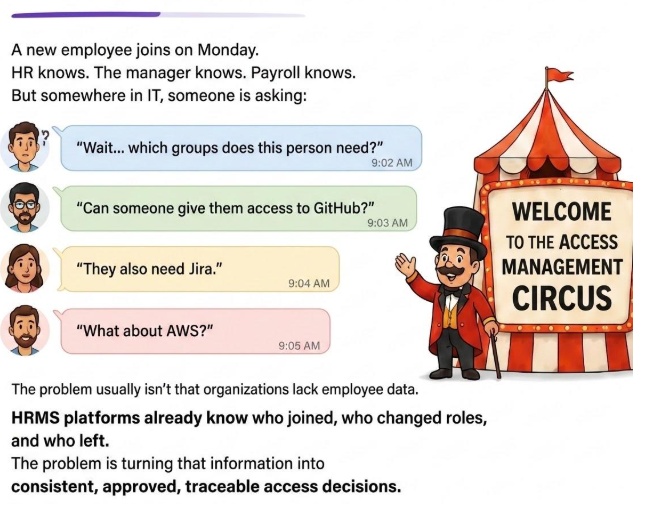
HR knows the employee. IT has to know the access.
HRMS platforms track identity details like department and role. However, they don't automatically define security boundaries. For instance, should every Engineering hire get full AWS admin rights? Likely not. Access governance defines these specifics.
Probably not.
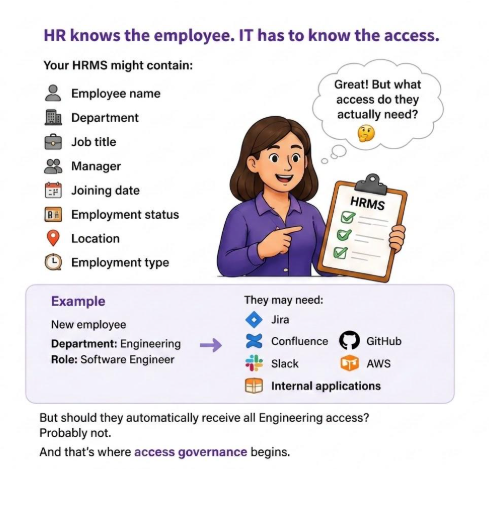
That's where access governance begins.
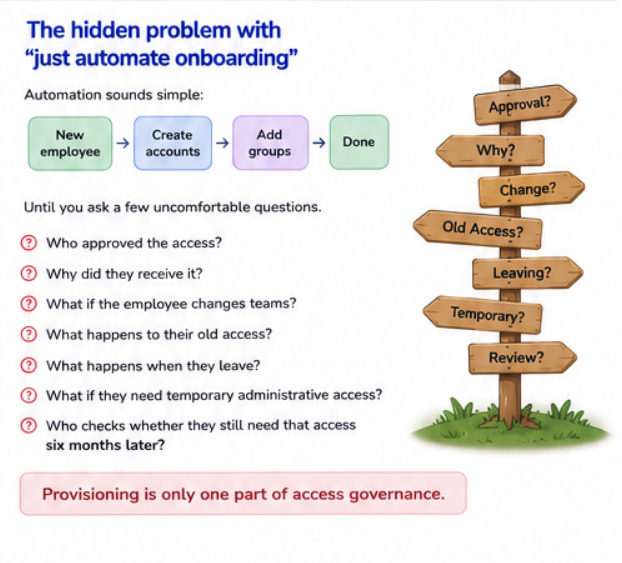
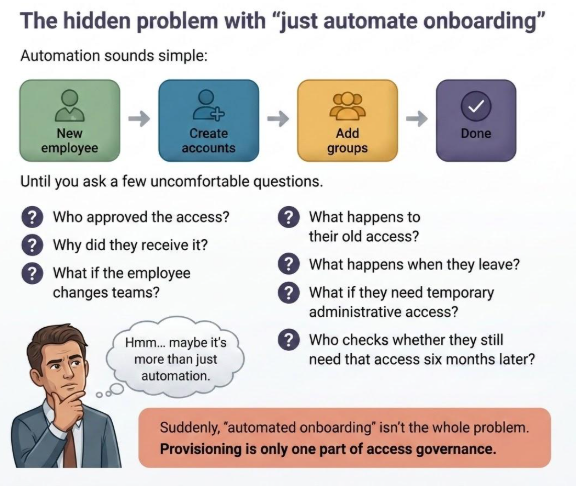
The hidden problem with "just automate onboarding"
Automation isn't just about creating accounts. Without governance, you miss critical controls:
- Who approved the access and why?
- What happens when a user changes teams?
- How is temporary access revoked?
Provisioning is just the start, lifecycle management is the goal.
Think of the employee lifecycle as an access lifecycle
Instead of treating onboarding as one event, look at the entire journey:
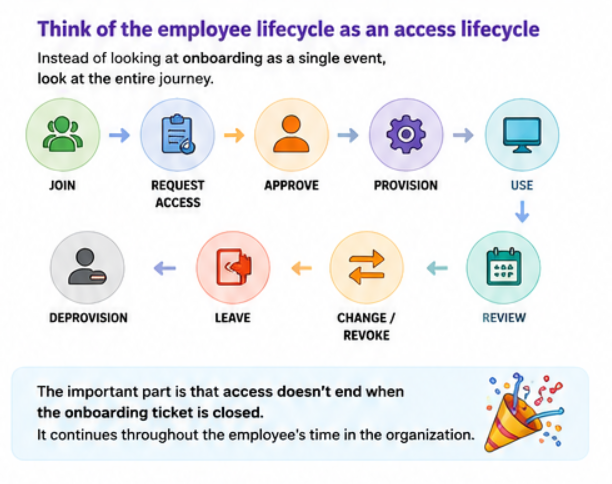
Access doesn't end when the onboarding ticket closes.
Controlled automation in action
Replace free-form requests with structured workflows. Automation should manage the heavy lifting, while humans focus on high-risk approvals:
- Standard: Manager approval triggers automatic provisioning.
- Sensitive: Multi-tier approval (Manager + Owner).
- Privileged: Time-bound access that expires automatically.
- Scheduled: Access is automatically granted to the designated user starting from a selected future date.
Scaling with Jira Service Management (JSM)

JSM acts as the governance layer, connecting your HRMS and identity platforms to ensure consistency. It handles the mover/leaver scenarios that often lead to "access creep."
The Governance audit test
Can you reliably answer these for an employee hired 6 months ago?
- What access was granted and who approved it?
- Has it been reviewed since?
- Can you remove it all tomorrow if they leave?

The long-term payoff
Without Governance | With a Structured Governance Model |
More employees ↓ More applications ↓ More access requests ↓ More manual work ↓ More exceptions ↓ More access creep ↓ More audit pain | More employees ↓ Standardized requests ↓ Defined approval rules ↓ Automated provisioning ↓ Periodic reviews ↓ Controlled revocation ↓ Consistent audit evidence |
If answering requires spreadsheets and manual searches, you have an access-governance problem. Start small, automate key rules, and build a scalable lifecycle.