Why is Atlassian promoting Shadow IT?
So, in their documentation, Atlassian warns about the dangers of Shadow IT and even talks about how Atlassian can be part of this problem:
 "In the context of Atlassian, you’re unable to centrally manage these products from your Atlassian organization. This means that you won’t find them under the Products tab at admin.atlassian.com with the rest of your organization’s products."
So then, surely Atlassian must provide some tools to IT administrators to manage shadow IT? And why yes, yes they do, as described in Discover products your users administer. Oooh, what's this: Manage your users' requests for products? 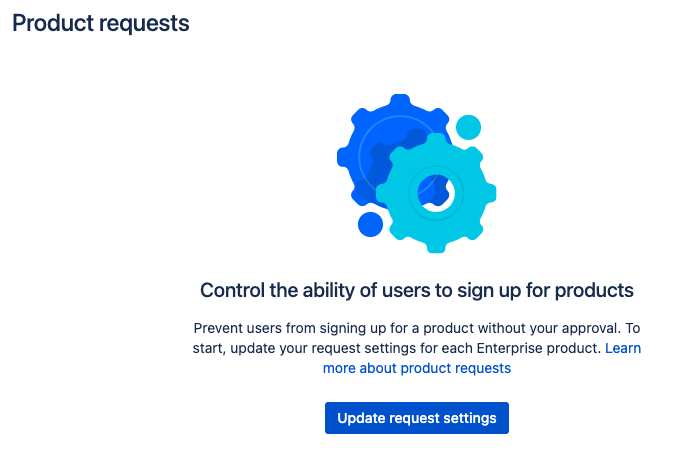
Wow, you mean I can choose to prevent MY USERS from creating these problematic "shadow" instances of Atlassian products? That sounds EXACTLY what I need!
Oh, but sad trombone we don't have Enterprise Cloud.
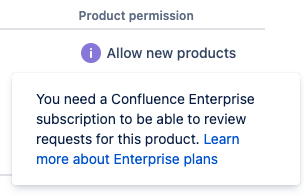
How much would Enterprise Cloud cost?
So our smallest instance is a JSM of 300 agents. Enterprise would cost $48,000 more per year. Is this worth the extra hours I spend having to delete instances? Hm....
Oh but wait, reading the screenshot above "update your request settings for each Enterprise product" (emphasis mine). Ok, that'd be $148,000/yr more for Confluence (5000 users) and $236,000/yr more for Jira (6000 users).
Ah well. I guess we should just hire an intern then.
Hrm.... I see this has been discussed before, ad nauseum. Or perhaps just ad nauseating:
And the OG ticket, closed after 1600+ votes after they "fixed" it, but only if you pay for Enterprise:
- ACCESS-1468 - Allow Administrators to control managed users' associated sites and products
Some highlights:
"Lets call it what this is, hiding the age of the ticket by creating new ones. Now instead of looking almost 4 years old, it's just a recently created issue."
--mattpatenaude comment - 06/Oct/2023 9:28 AM the day Atlassian "resolved" the issue
Not Shadow IT, but Accidental IT
Here's the thing though. We migrated about to Atlassian Cloud about a month ago - Jira, Confluence, JSM. Users want to use it. (Well, they don't have a choice.)
But users… get confused. In the nearly one month since we migrated, we've had nearly a dozen new instances created by mistake.
How does this keep happening?
Google
Users don't remember that our servers that used to be named jira.COMPANYNAME.com or confluence.COMPANYNAME.com are now COMPANYNAME.atlassian.NET. (.NET? Really? Ahem, CLOUD-6999)
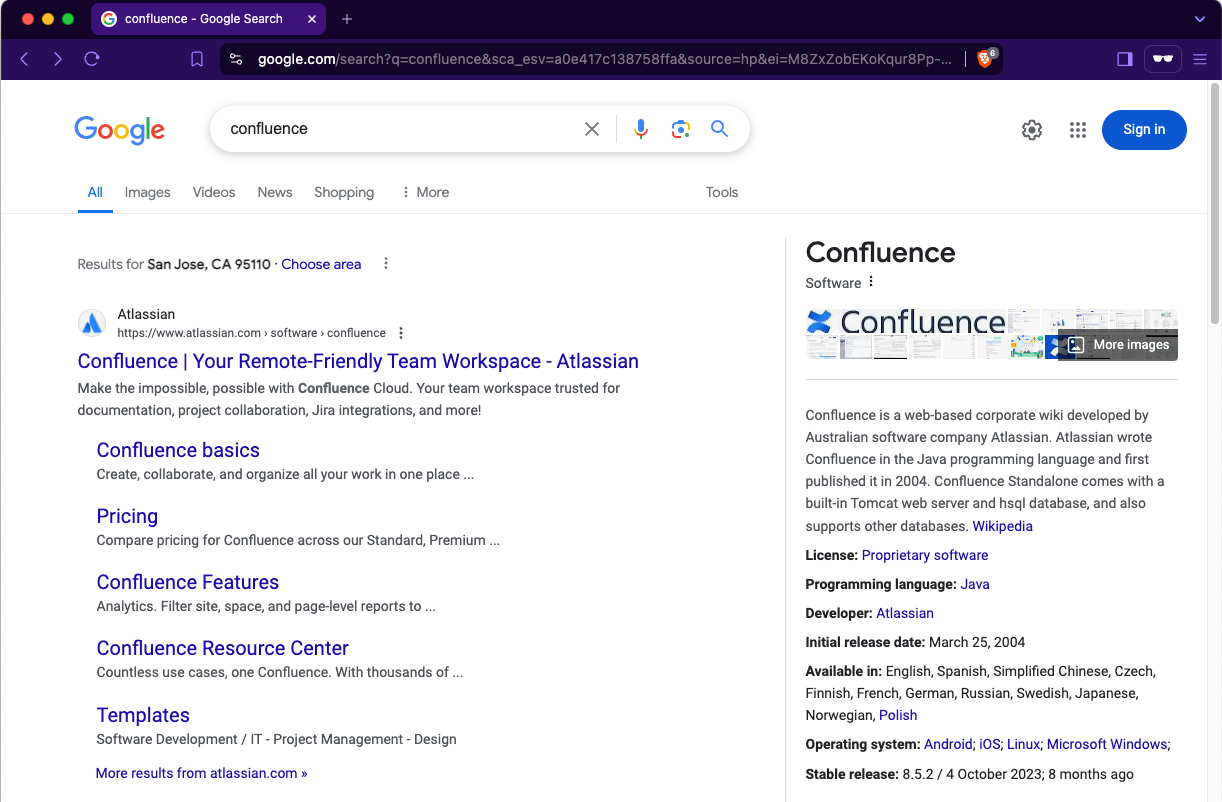
So they Google it. Or type it into their browser bar, which… Googles it.
And they end up here:
Big Blue Buttons
And so, they click on Confluence. Which takes them here, with two very big, friendly, blue buttons, and one very tiny "Sign in" link.
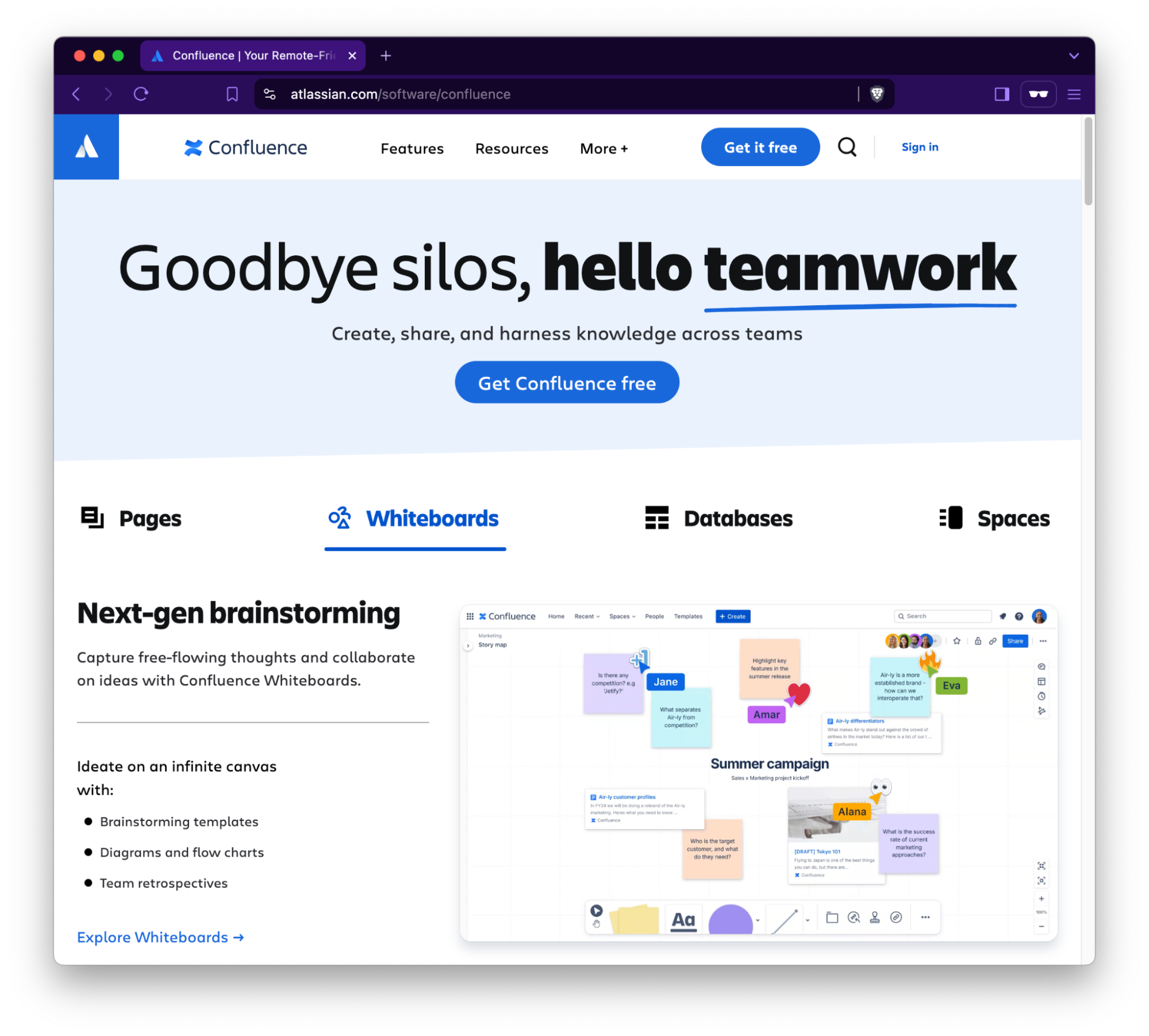
Now, those of us who are Atlassian Admins know that you're not supposed to hit those blue buttons, but instead click on the very tiny "Sign in" link:
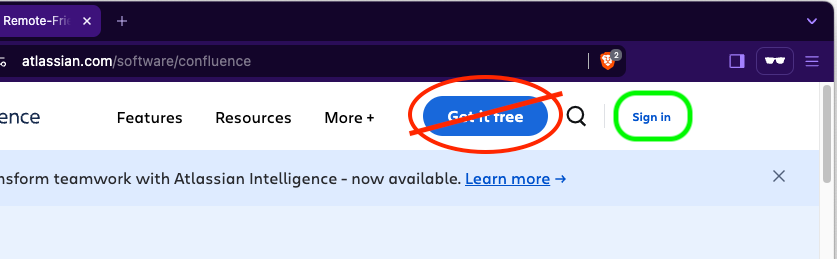
Sign up/Login? What's the difference?
But I'm guessing that 11 people at my company did not. Instead they clicked one of the blue buttons, and oh look, it's what kind of looks like a login page. Oh and we just migrated to Confluence Cloud, so perhaps this will give them some kind of tutorial. It does say "Get started with Confluence":
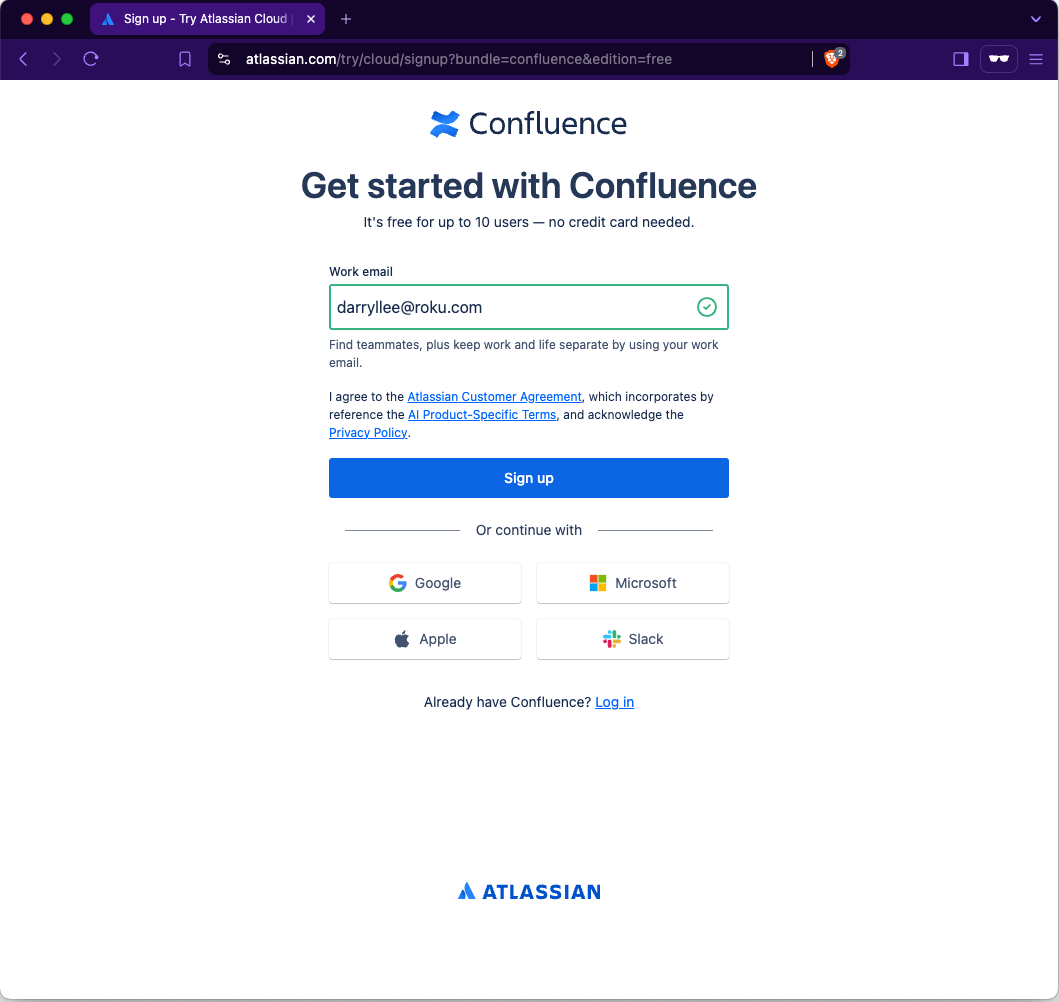
Now because me and my team have done the work to connect Atlassian Access Guard to our IdP, Confluence happily recognizes that user's account. They may have even been redirected to our Azure AD page and done their whole SAML login. Very secure! And now they're back.
Go team go!
Huh. "roku-team-...." that sounds right. I work for Roku. I'm on a Team. Let's go hit another friendly blue button.
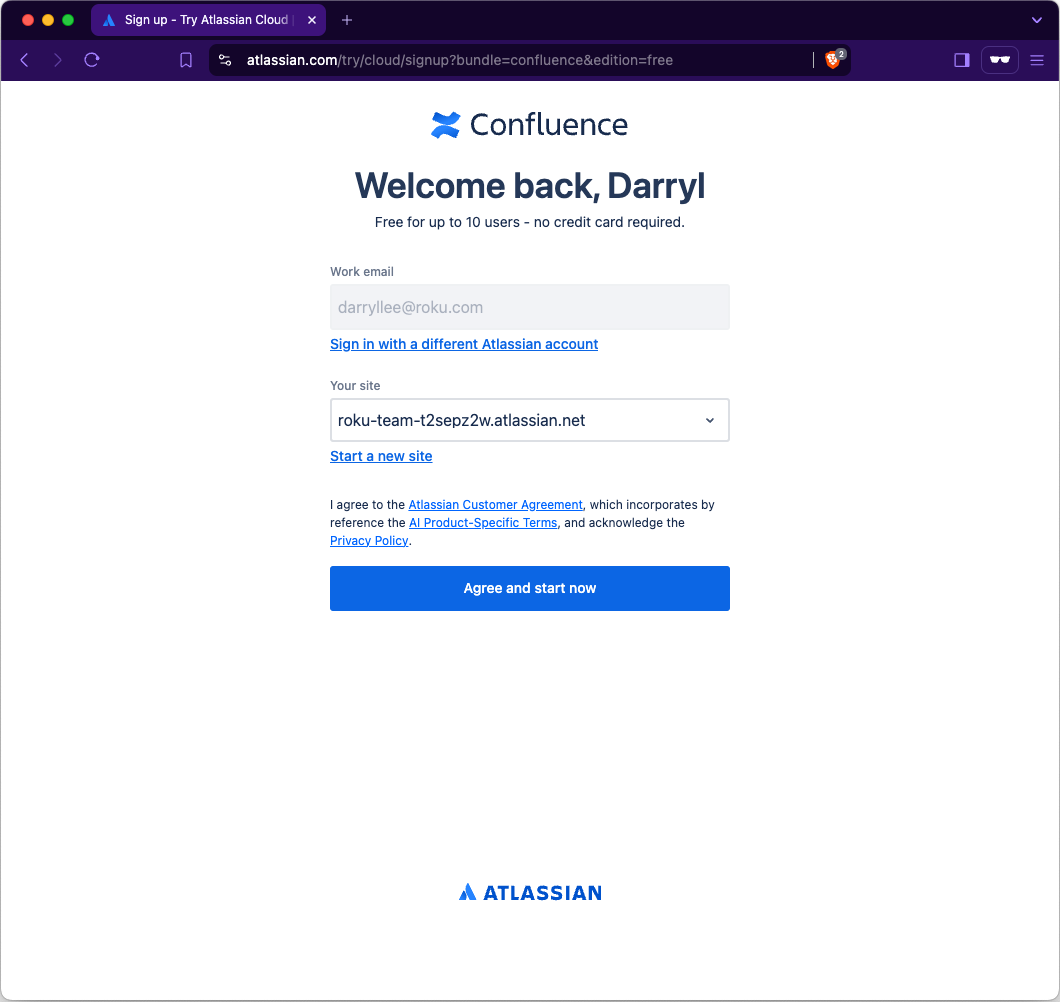
And that… is why I now have an Excel sheet tracking "shadow" Atlassian Cloud sites created by mistake, including emails addresses of the users who mistakenly created them (who have ALL indicated they did this on accident), when I cancelled the sites, and assuming the cancellation actually goes through (which it often DOES NOT), when I have deleted the Organizations that were also set up for each site.
I guess this is a huge win to Atlassian's Sales Team who have designed a very efficient "funnel" to get users to sign up for new Atlassian Cloud sites. (Assuming they only measure sign-ups, and not cancellations by irate Atlassian administrators.)


