One extra custom field doesn't matter.
Neither does one workflow.
Or one status.
Or one OAuth integration.
That's exactly how every large Jira instance slowly becomes difficult to manage.
A quiet change is about to affect thousands of Jira sites
For years, Jira Cloud let organizations expand almost without thinking.
A new team needed a workflow? Create one.
A department wanted another custom field? No problem.
A project requested its own statuses? Easy.
After hundreds of small decisions, many Jira sites accumulated thousands of configuration objects, most of which were never reviewed again.
To keep Jira Cloud scalable and reliable, Atlassian has introduced Data Limits and Guardrails. Some are recommended operating thresholds, while others become enforced limits that prevent additional configuration once reached.
This isn't just another administration announcement.
It's a shift from "configure as much as you want" to "govern your Jira continuously."
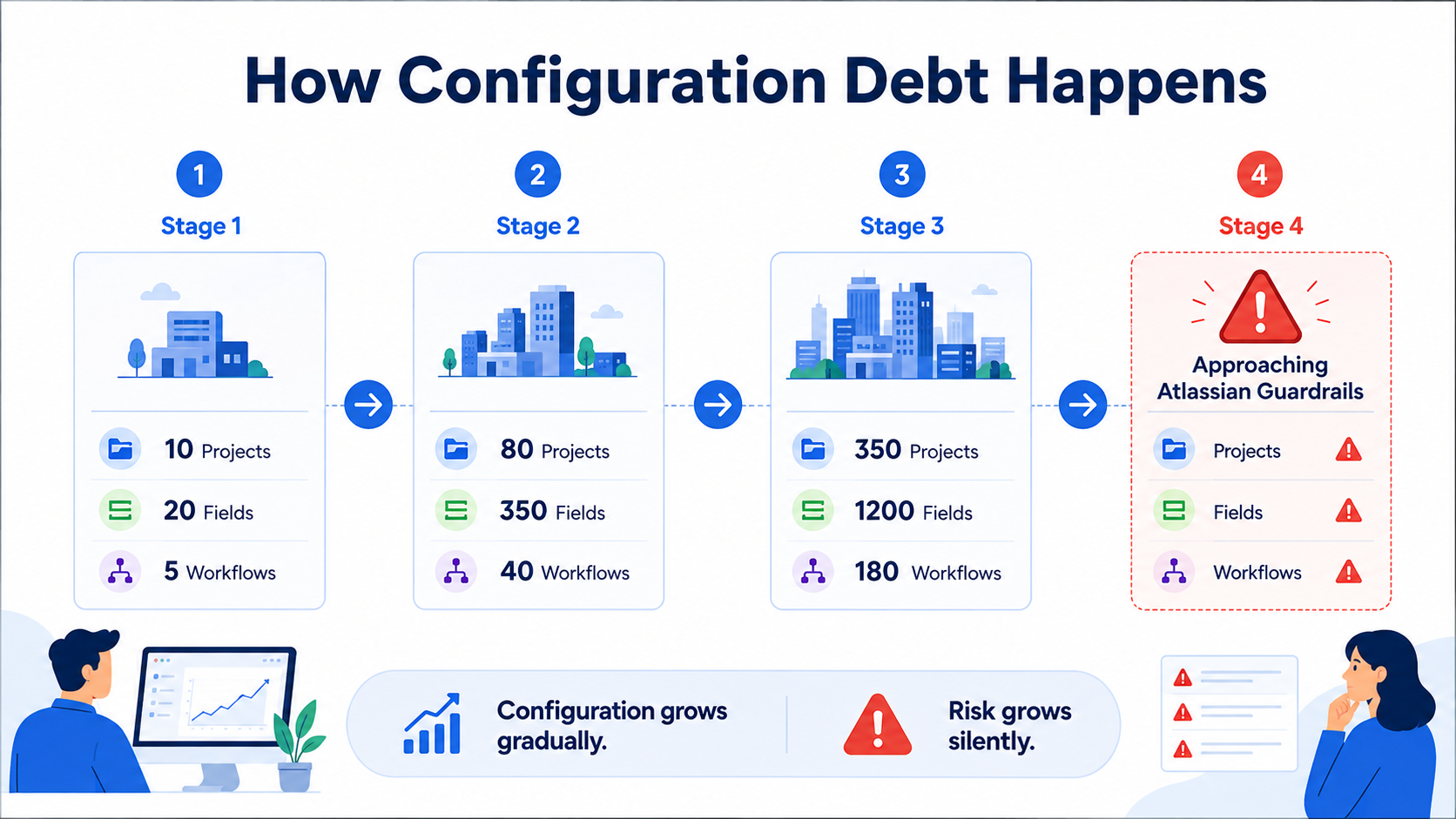
This isn't just a Standard customer problem
When Atlassian announced Data Limits, many administrators assumed:
"We'll deal with it when we get close."
That's exactly the mindset that creates emergency cleanup projects.
The reality is that every stakeholder experiences the impact differently.
If you're a Jira Administrator...
You're responsible for keeping Jira healthy.
Without visibility, questions become difficult:
- Which configuration area is growing fastest?
- Are unused workflows accumulating?
- Are we close to any enforced limits?
- Which teams contribute most to configuration growth?
If you're an Engineering Manager...
You probably don't care how many custom fields exist.
You care when:
- projects get delayed
- administration requests take weeks
- new workflows cannot be created
- teams begin cleaning configuration instead of delivering software
Configuration debt eventually becomes delivery debt.
If you're a Jira Premium customer...
Site Optimizer gives valuable recommendations.
But every executive eventually asks a different question.
"Are we actually improving?"
A snapshot answers today's question.
Historical trends answer tomorrow's.
If you're a Solution Partner...
This is a new consulting opportunity.
Customers don't just need someone to clean Jira once.
They need someone to continuously measure governance maturity.
Imagine your Quarterly Business Review showing:
- Guardrail utilization decreased 18%
- Workflow growth stabilized
- Duplicate fields reduced
- API health remained stable
- Configuration complexity trending downward
That's measurable business value.
Two different risks. One operational responsibility.
Many organizations monitor infrastructure.
Few monitor Jira governance.
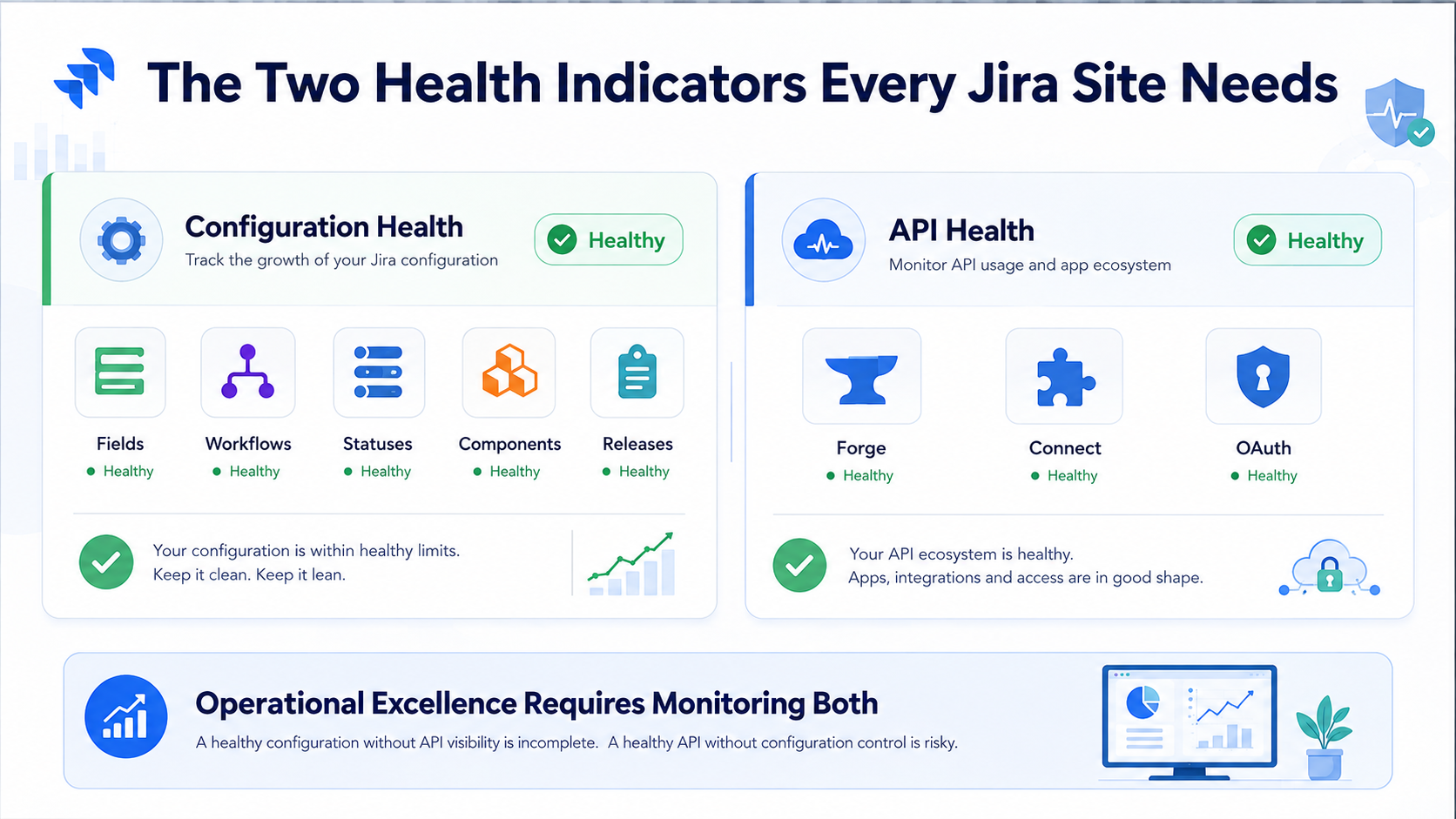
Today there are two independent operational risks every administrator should understand.
| Operational Risk |
What It Protects |
Who Should Care |
|---|
| Jira Data Limits & Guardrails |
Configuration health |
Every Jira Admin |
| API Rate Limits |
Integration reliability |
Enterprise Admins with high Custom Developments |
They solve different problems.
But both can interrupt business operations if ignored.
Let's talk about Data Limits first
This is the newest operational topic affecting Jira Cloud.
Guardrails exist because configuration growth isn't free.
More configuration means:
- more administration
- more maintenance
- more complexity
- greater risk of inconsistent governance
Some limits act as recommendations.
Others become enforced limits that prevent further configuration until usage is reduced.
The challenge isn't the limits themselves.
The challenge is discovering them too late.
The Friday afternoon nobody wants
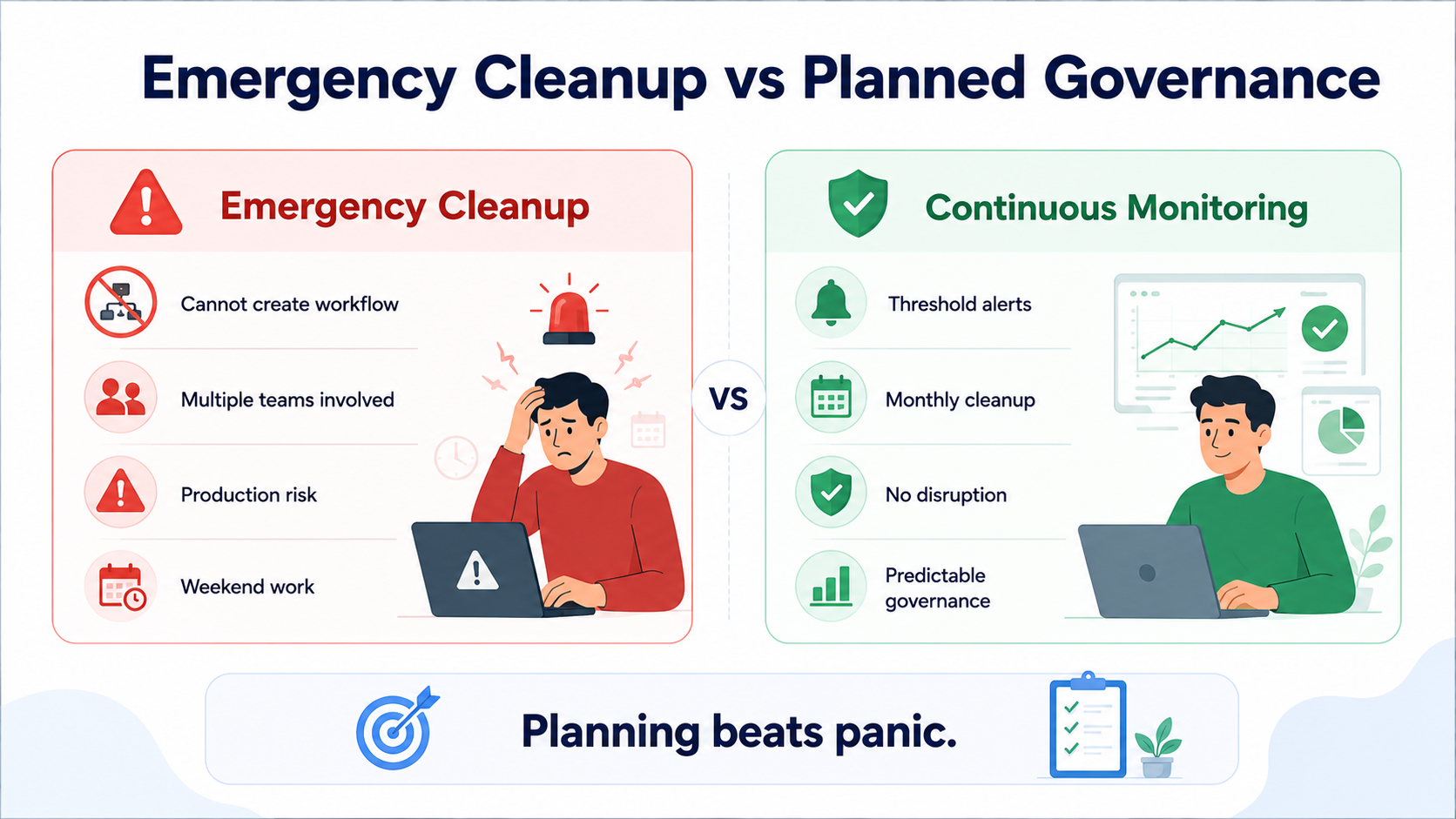
Imagine receiving this request.
"We need one more workflow."
Except Jira won't let you create it.
Now someone has to answer questions like:
- Which workflows are unused?
- Which projects still depend on them?
- Can we safely archive them?
- What will break if we remove them?
That isn't a technical exercise.
It's a company-wide cleanup project.
And it usually happens when everyone is already busy delivering software.
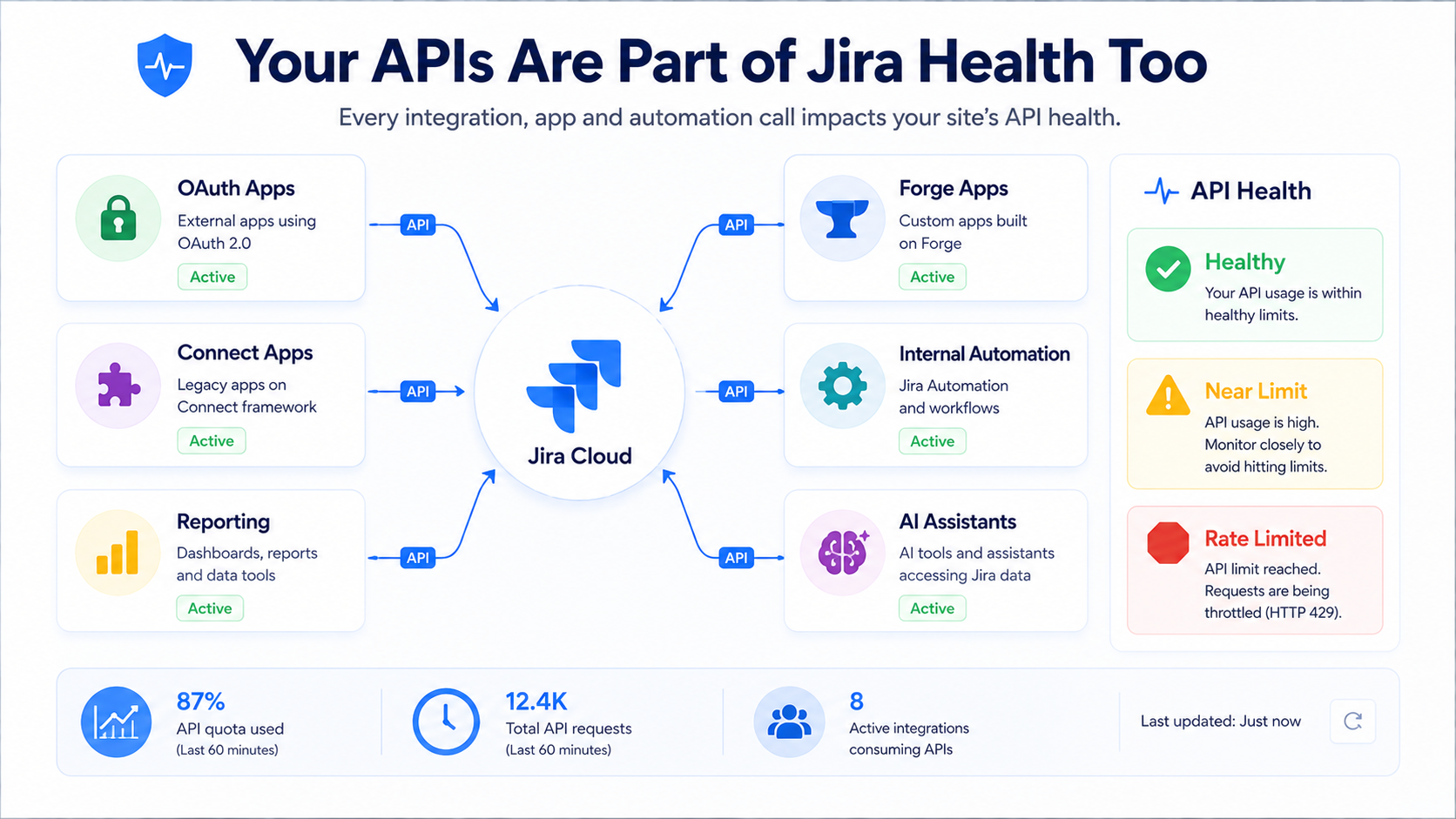
Then there's the second challenge: API Rate Limits
While everyone is discussing Data Limits, another operational risk continues to grow.
API consumption.
Many organizations now use:
- AI assistants
- Internal dashboards
- Synchronization tools
- Automation platforms
- Reporting solutions
- OAuth integrations
These integrations consume Jira APIs.
If they exceed platform rate limits, requests begin receiving HTTP 429 (Too Many Requests) responses until traffic is reduced.
This isn't only relevant to Marketplace vendors.
It's relevant to every organization building integrations inside its own Jira tenant.
Operational reliability now depends on understanding both configuration health and API health.
What good governance actually looks like
Healthy Jira administration isn't about counting objects.
It's about identifying trends before they become problems.
A mature governance process asks questions like:
- Which configuration is growing fastest?
- How much did we grow this quarter?
- Which teams need cleanup support?
- Are we improving year over year?
- Which threshold should trigger an investigation?
Those questions cannot be answered by looking only at today's numbers.
They require history.
This is where continuous monitoring changes the conversation
Instead of discovering problems after reaching a limit...
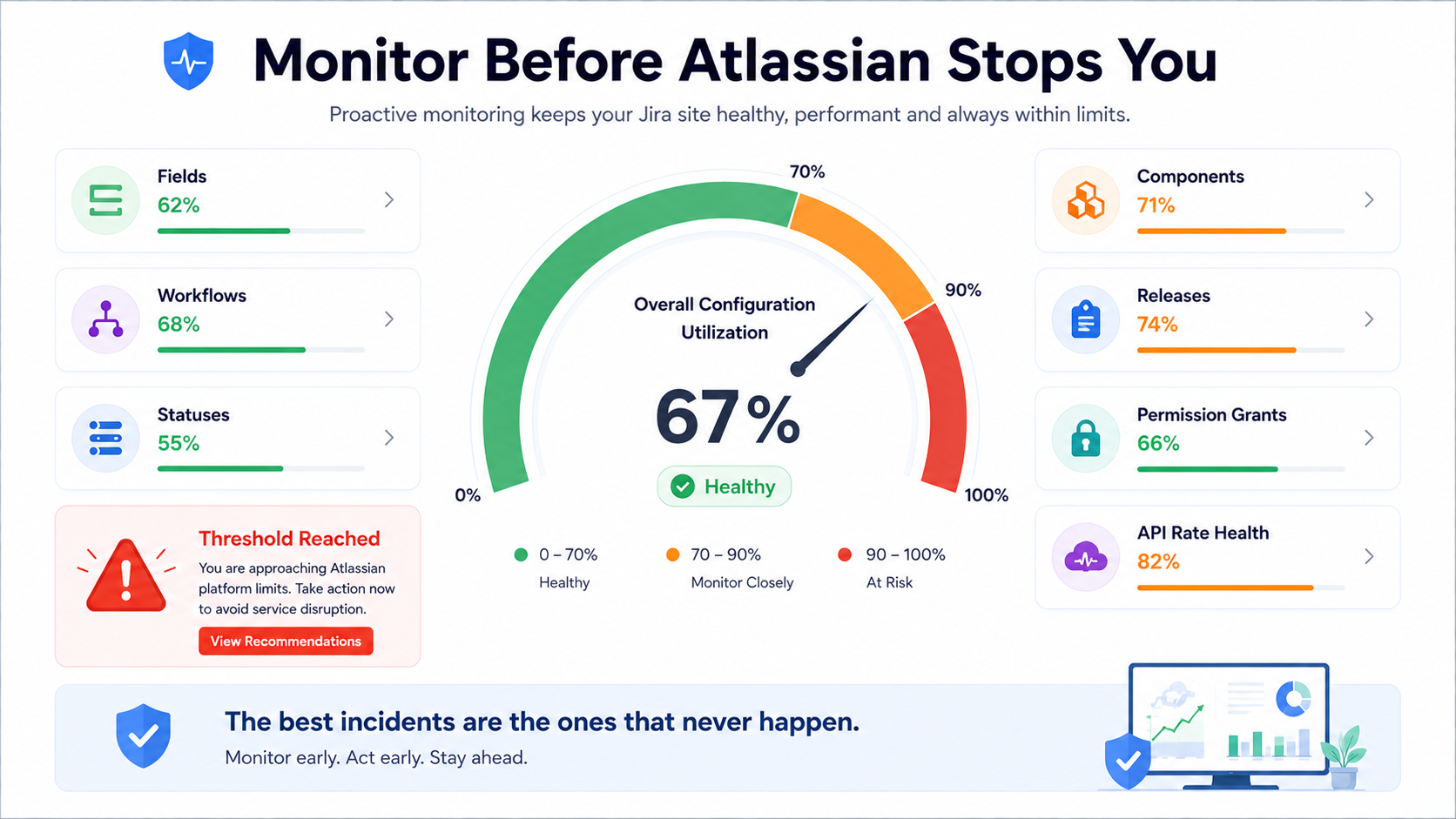
Imagine receiving a notification when usage reaches:
🟢 70%
Review growth trend.
🟡 80%
Schedule governance review.
🟠 90%
Plan cleanup.
🔴 95%
Escalate immediately.
Now administrators have weeks—or even months—to act.
Not hours.
Introducing the next evolution of QuotaWatch
QuotaWatch started with a simple mission:
Help administrators understand API Rate Limits before applications experience throttling.
Today, it has evolved into a broader Jira governance solution.
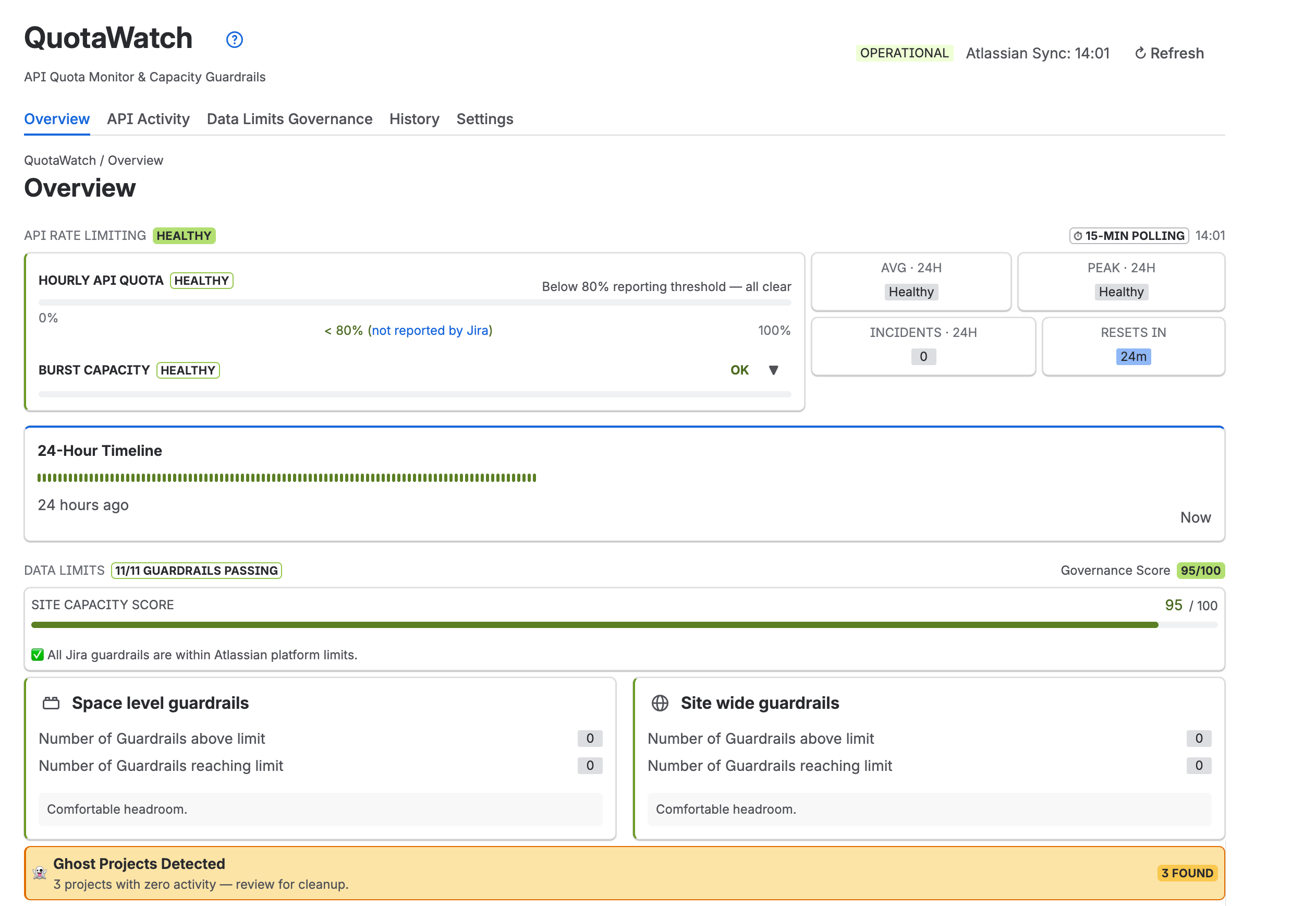
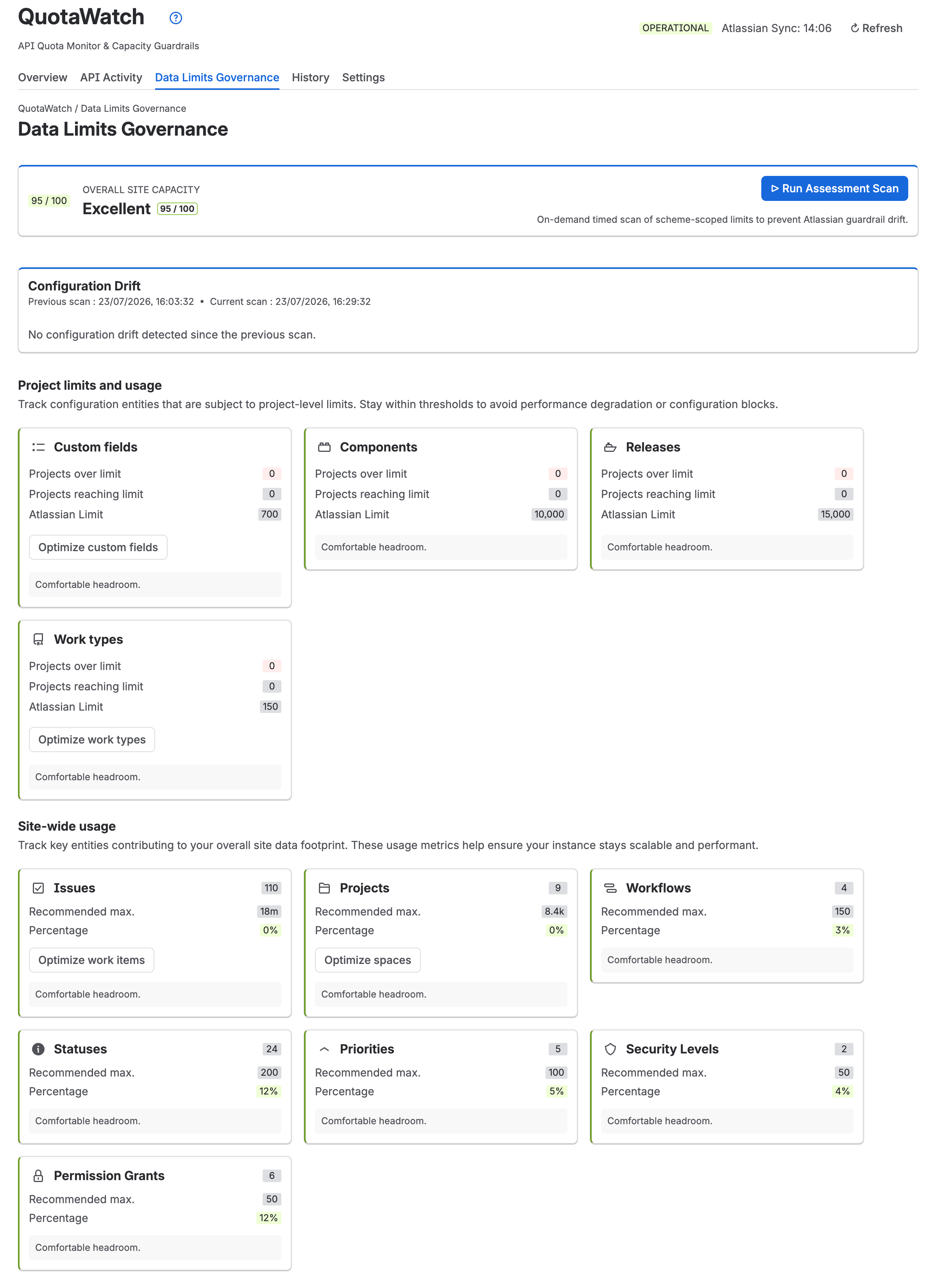
QuotaWatch now monitors both:
✅ Jira Data Limits & Guardrails
- Utilization across supported guardrail categories
- Custom threshold monitoring
- Early warning alerts
- Historical utilization trends
- Month-over-month growth
- Quarter-over-quarter comparisons
- Year-over-year governance improvements
✅ API Rate Limits
- API quota health
- Near-limit detection
- Rate limit events
- Historical API usage trends
- Early threshold notifications
Instead of reacting to operational issues, administrators can identify them long before they affect teams.
Why every stakeholder wins
Jira Standard Administrators
Gain continuous visibility into configuration growth instead of manually checking limits.
Jira Premium Administrators
Complement Site Optimizer with historical trends, configurable thresholds, and continuous governance monitoring.
Engineering Leaders
Reduce operational surprises and keep delivery teams focused on shipping software instead of emergency cleanup.
Solution Partners
Demonstrate measurable customer outcomes through monthly, quarterly, and yearly governance reports, turning one-time optimization projects into long-term advisory engagements.
Marketplace & Platform Teams
Monitor API rate limits alongside configuration health from a single operational dashboard.
The real lesson behind Atlassian's latest announcement
Data Limits aren't the story.
They are the signal.
The real story is that Jira administration is evolving.
Success is no longer measured by how quickly you can clean up after hitting a limit.
It's measured by whether your teams ever reach that limit at all.
Organizations that embrace continuous governance today will spend less time firefighting tomorrow.
The question isn't whether your Jira instance will continue to grow.
It will.
The question is whether you'll be watching that growth before it becomes tomorrow's operational problem.
