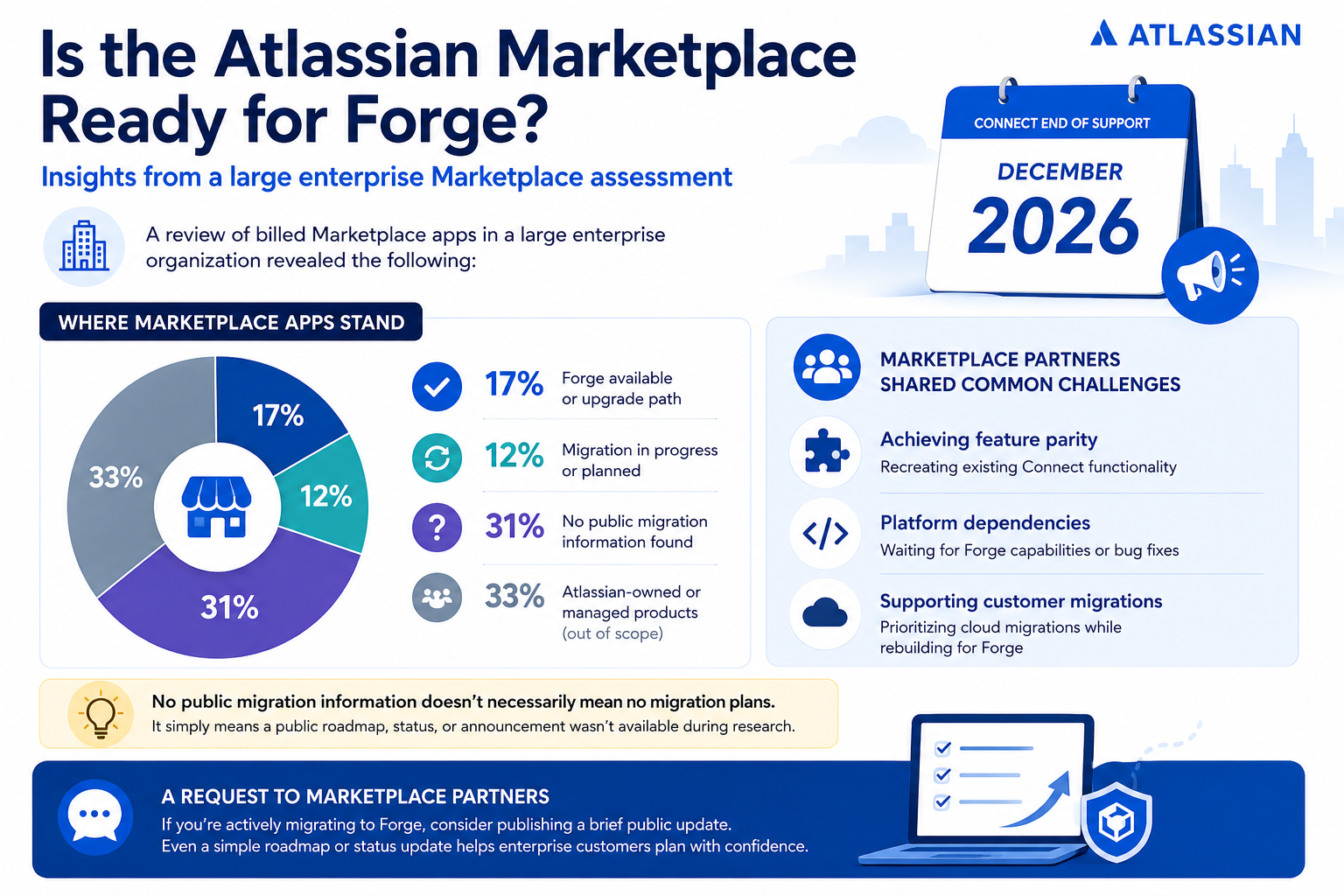
With Atlassian planning to end support for Connect in December 2026, many enterprise administrators are evaluating their Marketplace apps to understand potential impacts and plan ahead.
I recently completed a Forge readiness assessment for a large enterprise organization with a substantial Marketplace footprint. The goal wasn't to evaluate vendors—it was to identify potential risks, understand migration progress, and help the organization prepare for the transition.
What I Found
The results were encouraging overall. Approximately:
- 17% of Marketplace apps have a Forge version available or a published upgrade path.
- 12% have publicly announced migrations that are in progress or planned.
- 6% are following a legacy/end-of-life transition or are custom/private integrations that require internal validation.
- 33% are Atlassian-owned or managed products that are outside the scope of the Marketplace Connect migration.
- 31% did not have publicly available Forge migration information that I could find.
That doesn't necessarily mean those vendors aren't migrating. It simply means I couldn't locate a public roadmap, migration status, or announcement.
The Community Helped Explain Why
In the internal Champions Slack, I asked Marketplace Partners how their Forge migrations were progressing. The response was encouraging- no one suggested they intended to remain on Connect. Instead, partners shared that they are actively working toward Forge but are facing challenges such as:
- Achieving feature parity with existing Connect apps
- Waiting for Forge platform capabilities or bugs to be resolved
- Supporting customer cloud migrations while simultaneously rebuilding applications
Several partners also mentioned they are working closely with Atlassian to remove blockers before releasing Forge versions. That context helped explain why some Marketplace listings don't yet contain clear migration information.
Vendors Without Public Migration Information
In addition to vendors without publicly available Forge migration information, there were a few listings in the admin panel where the vendor or migration ownership wasn't immediately clear. These tended to be older applications no longer on the official marketplace or random user downloaded plugins.
Again, this does not mean these vendors lack a migration plan. It simply means I wasn't able to locate publicly available information after reviewing Marketplace listings, vendor documentation, release notes, and announcements.
If your team is actively migrating to Forge—even if you're still working through feature parity or platform dependencies—consider publishing a short status update. It doesn't need to be a detailed roadmap. Something as simple as:
- We're actively migrating to Forge.
- Feature parity work is underway.
- A beta is planned.
- Additional updates will be shared as milestones are reached.
Those updates can make a meaningful difference for enterprise customers trying to plan responsibly.
Why This Matters
As consultants and administrators, we spend a significant amount of time helping organizations assess risk and plan upgrades. When Forge migration information isn't publicly available, customers are left asking questions such as:
- Should we expect a Forge version?
- Will customer action be required?
- Should we begin evaluating alternatives?
- Are there known feature differences?
- What timeline should we plan around?
Even a brief update can help organizations make informed decisions and reduce uncertainty.
Let's share what we're learning and help make the transition smoother for everyone.
[Update]
Huge thanks to everyone who commented on my original post, sent DMs, and helped refine my approach, including:
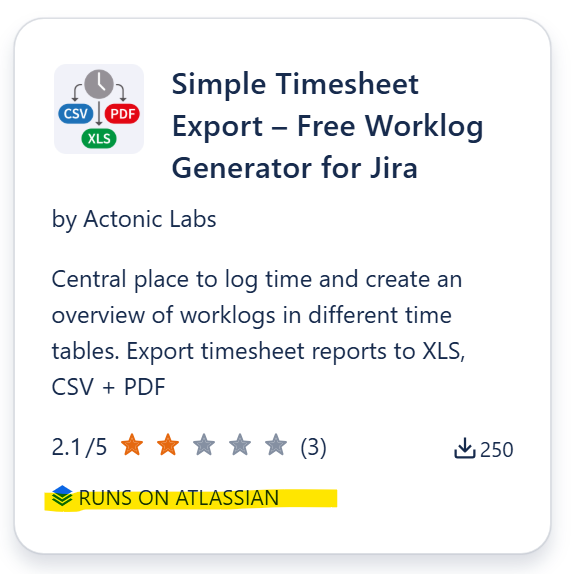
@Rustem Shiriiazdanov _Actonic_ suggested looking for the Runs on Atlassian badge in the marketplace because only Forge apps can run within Atlassian's managed runtime. However, not all vendors that have migrated to Forge have earned this badge because it has additional eligibility requirements. Its absence shouldn't be interpreted as evidence that an app hasn't migrated.
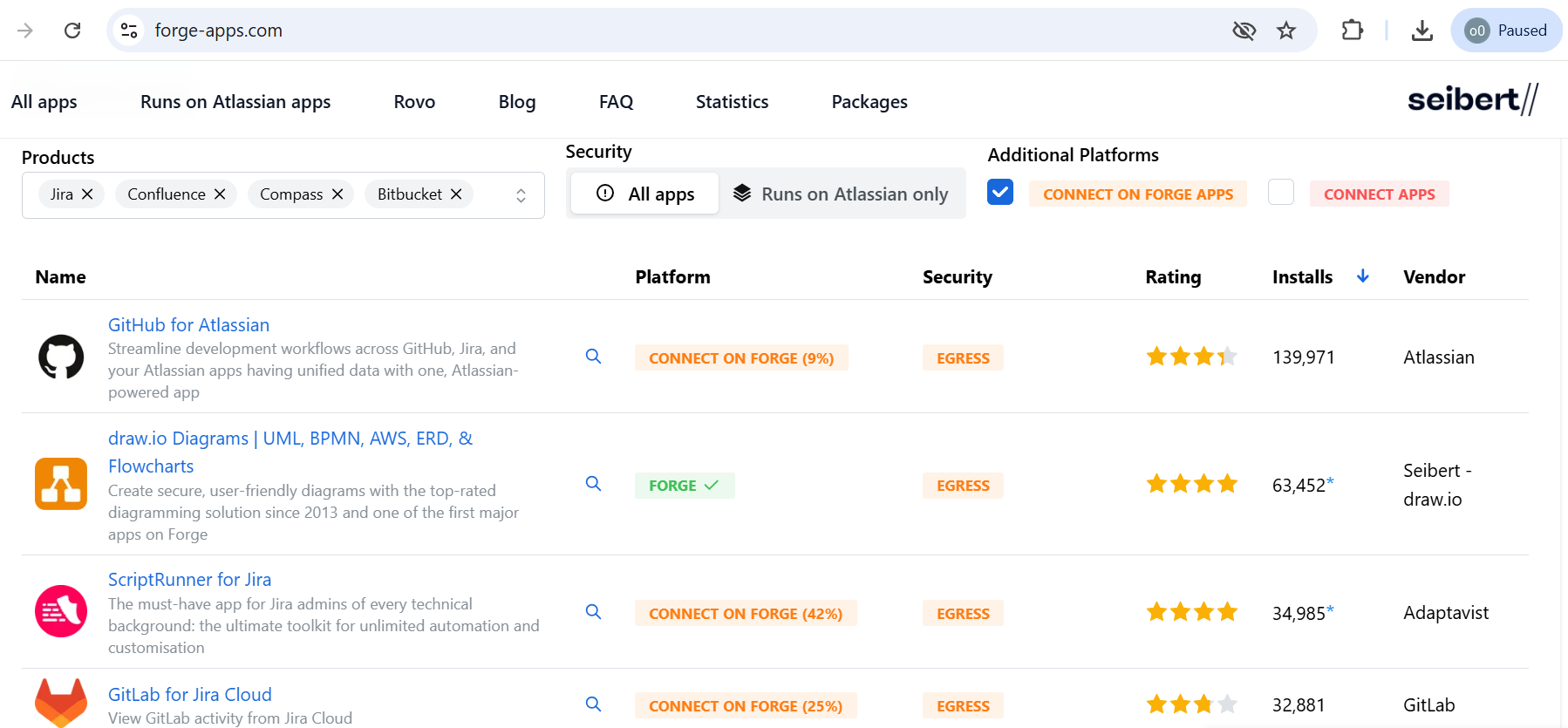
@Krzysztof Bogdan recommended using forge-apps.com by Seibert, which provides module-level Forge migration progress. It significantly sped up my research, although not every marketplace vendors are listed. I still had to contact several vendors directly. Krzysztof also introduced me to ampin.app, which provides a wealth of Marketplace insights.
Visibility Boost
Time Off Management and Auto Assignment by Almbase
All of our apps, with the exception of Time Off Management and Auto Assignment, have already been transitioned to Forge or are currently in testing on Forge. Time Off Management's Forge version is planned for release by December 2026.
Backlog Prioritization for Jira by AppBox
In active development — our Forge migration is underway. No firm date to share, but we're actively working to complete it ahead of Atlassian's Connect end-of-support timeline. The migration is handled entirely on our side; customers won't need to take any action.
Label Management for Jira by Aldeva Digital
We do plan on migrating our applications to Forge platform. Recently we have published an article on our blog regarding the details
https://www.aldevadigital.com/?p=2398.
Status Time Reports Free - Time in Status by Bloompeak
Development is complete and we are currently testing the new Forge app... Estimated availability: Mid-August 2026... No customer action required before December 2026.
Office for Jira (Edit Microsoft Excel, Word & PPT) by ikuTeam (Excellent Customer Service by @Bibek_ikuTeam_ and @Nelson Pereira)
Our apps were rebuilt from scratch on Forge and are Enterprise Ready.
Space Sync for Confluence by Ricksoft
Coincidentally, Space Sync for Confluence completed its migration to Forge just yesterday, shortly after you published this article. See @Raziman Dom - Ricksoft comment below.
Special Note: If you use AI-powered customer support, consider adding your Forge migration status to your knowledge base. I spent a surprising amount of time chatting with support bots that simply didn't have this information.
The more transparent we are as an ecosystem, the easier it becomes for enterprise customers to plan, test, and migrate with confidence.


![Photo of Huwen Arnone [Deiser/Devoteam]](https://us.v-cdn.net/6038660/uploads/avatars/6f/bc/n6fbcb837e47ed9842db045142dbc9275.png)