In software development, bugs are inevitable—but how your team handles them can make or break your product quality and delivery speed. Logging a bug is just the first step. Fixing it fast? That’s where legends are made.
Debugging turns into a scavenger hunt through logs, failed assumptions, and inconsistent environments. The result? Delays, dev QA ping-pong, and the worst sin of all—regressions that crawl back into prod wearing a different hat.

Let’s change that—with debugging checklists in Jira.
Auto-Attach Debugging Checklists
Every reported bug in Jira shouldn’t just sit there waiting for someone to “pick it up.” It should arrive pre-equipped—armed with a structured debugging checklist that’s clear, actionable, and repeatable. Think of it as a built-in playbook for resolution, baked right into your workflow.
You don’t need to manually copy-paste checklists or hope someone remembers to include them. Didit checklists for Jira automatically attaches a debugging checklist whenever the issue type is "Bug."
Turning Checklists Into Real Fixes
Each bug fix can be broken down into actionable steps with Didit checklists.
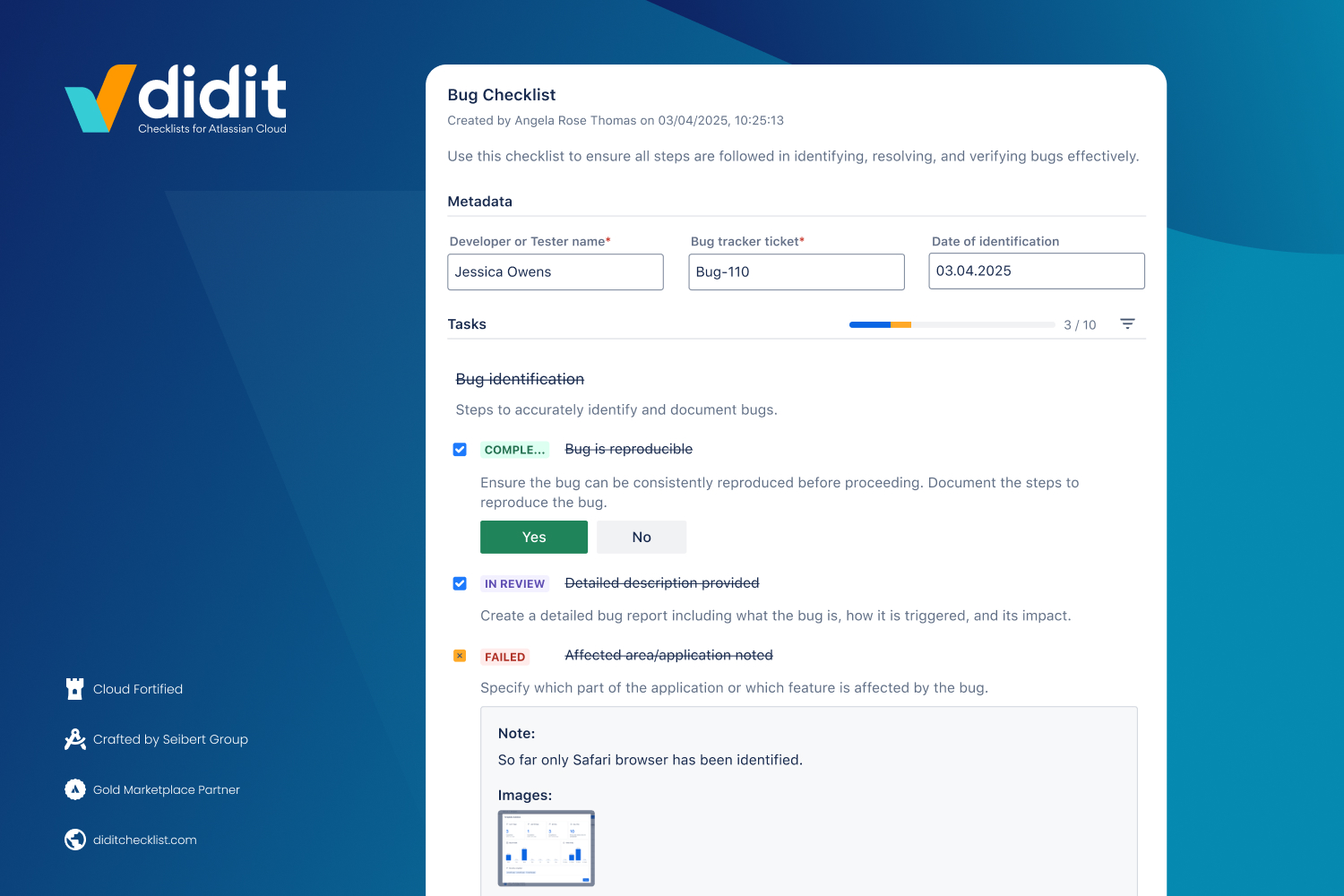
|
Want to try it out yourself? 
You can explore Didit checklists without an active Jira license or having our app installed. Click on the link below to check off tasks via public links.
|
🧪 Create a public checklist for bug resolution from our template
Built-In Collaboration for Dev & QA Teams
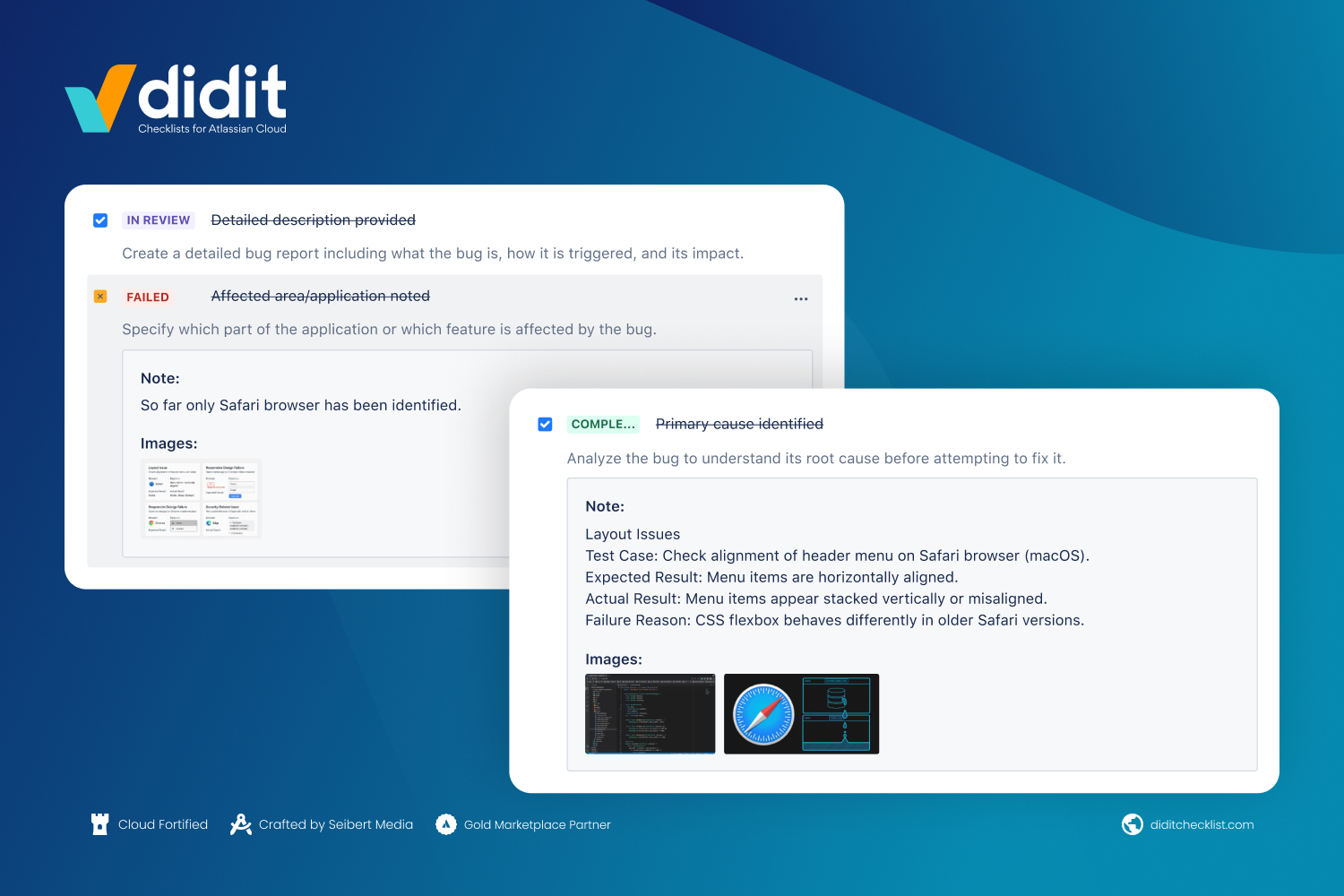
Debugging is rarely a solo endeavor. It’s a team sport. Beyond ticking boxes, QA teams can loop in devs early using Didit checklists and:
- Leave comments to document obstacles and keeps everyone aligned from discovery to fix
- Attach images for clarity
“Done” Means Done—Enforced by Workflow Validator
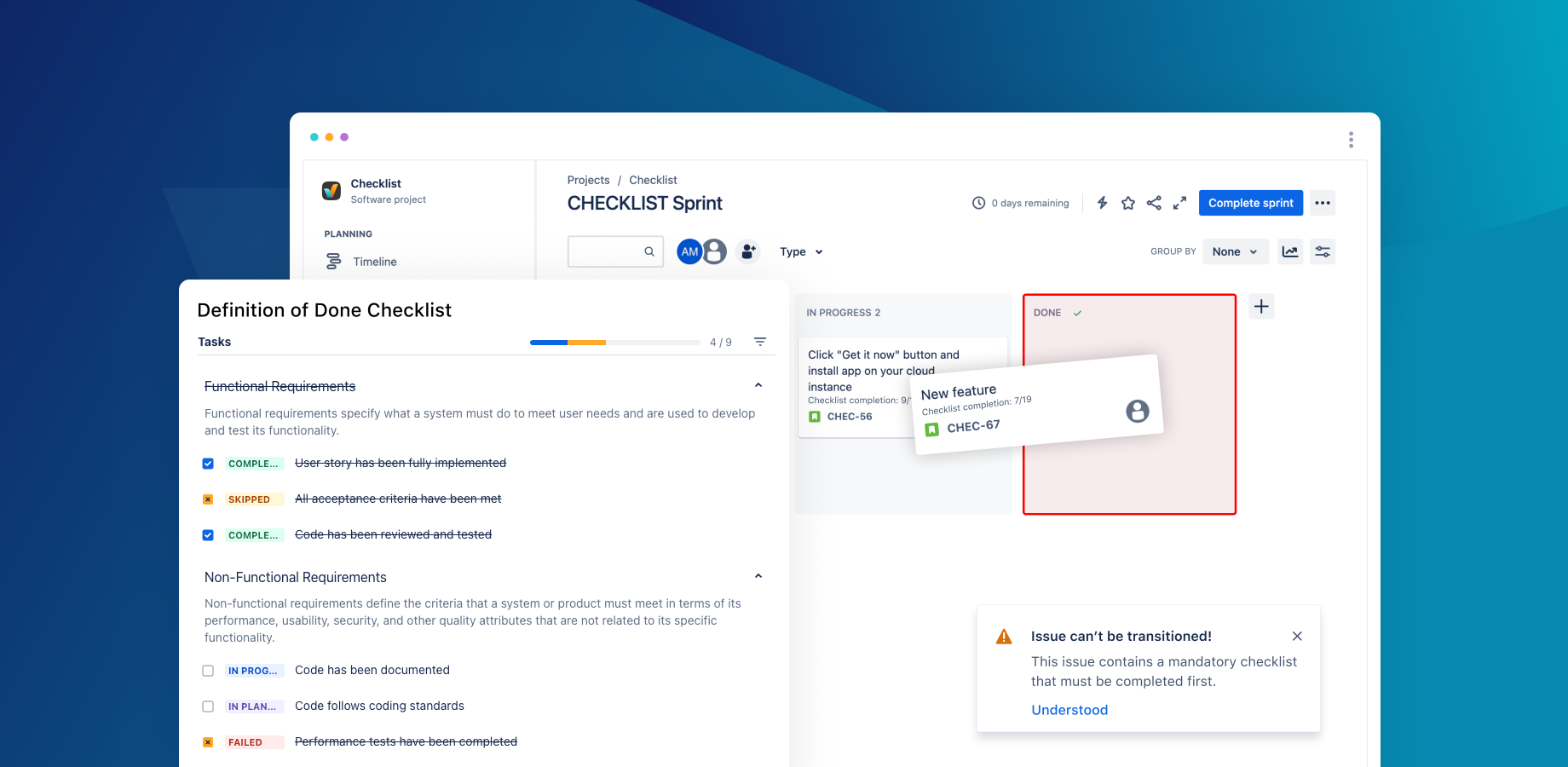
Only bug tickets with a fully completed checklist can be marked as “Done.” Thanks to a workflow validator built into Jira, Didit ensures that no step gets skipped and no fix is rushed.
- No skipped steps
- No rushed fixes
- No unresolved edge cases
Who Benefits from Bug Resolution Checklists?
Using Didit Checklists brings clear advantages to every role involved in fixing bugs:
- QA teams know exactly what information to collect when reporting an issue. No guesswork, no missing pieces.
- Developers receive consistent, detailed reports that help them start debugging right away without needing to chase context.
- Product managers gain a better understanding of how complex an issue is, how long it might take to fix, and where things currently stand.
Avoid missed steps, reduce regressions, and improve collaboration between developers and QA.
➡️ Install Didit Checklists for Jira from the Atlassian Marketplace to support structured bug resolution—with steps that allow logging descriptions, attaching screenshots, and capturing key debugging context directly in the checklist.
