The Social Intranet – Engage, Inspire, Empower! 🚀

Mention the phrase “social intranet” to most, and the responses could be all over the spectrum, both positive and not so positive; “waste of time”, “pictures of cats”, “great way to keep in touch”, “it’s the only way I know what’s happening and when”.
In 2024, there are now five generations in the workplace. According to the Bureau of Labor and Statistics (BLS) this includes Post War (1928-1945), Baby Boomers (1946-1964), Gen X (1965-1980), Millenials (1981-1996), and Gen Z (1997-2012). That is an incredibly broad audience of employees to be speaking with and hearing from.
Suppose the end goal is to engage, inspire, and empower each of these generations of employees most effectively and efficiently, individually and collectively. In that case, you have a tall order on your hand friend! Certainly, each of these groups has something unique to offer to your organization and its coworkers.
As such, it can be tricky finding the right tools and methods to keep this multigenerational workforce on the same page, enthusiastic, and inspired to your organization’s mission in the most collaborative of manners.
What Is A Social Intranet? 🤔
The original design for corporate Intranets was essentially basic, static websites and portals that allowed employees to access corporate resources, and documentation from a web browser. It wasn’t until the mid-90s that the first bare-bones examples of corporate intranets began developing as an extension of the internet itself. If we fast forward to today, they have morphed into file-sharing services such as Google Drive, DropBox, and OneDrive.
Present day, it’s not just about the push of information out, it’s also about the pull of responses, reactions, and feedback from staff. This is what we’ve now come to understand as the Social Intranet. It’s about collaborating within your team, but also between teams, or quite literally, with the entire company itself. The social aspect of it means it has been imbued with functionality to make the experience less like digital cubicles, and a bit more like digital watercoolers.
Social Intranet Benefits 📈👩💻
Today’s social intranets are platforms that are designed to accomplish any or all of the following;
Allows for employee engagement and direct feedback
Increases productivity and removes or at the very least reduces complexity
Staff can create unique content, a springboard for increased motivation and enthusiasm
Fosters higher levels of collaboration
Increased transparency between individuals, teams, and management
While this study from Deloitte may be pre-pandemic, the findings are more relevant than ever due to this global event. For instance, respondents indicated that employee engagement can increase retention rates by upwards of 87%. Additionally, “social tools” as they referred to them in 2014, showed an increase of 20% in satisfaction levels of employees.
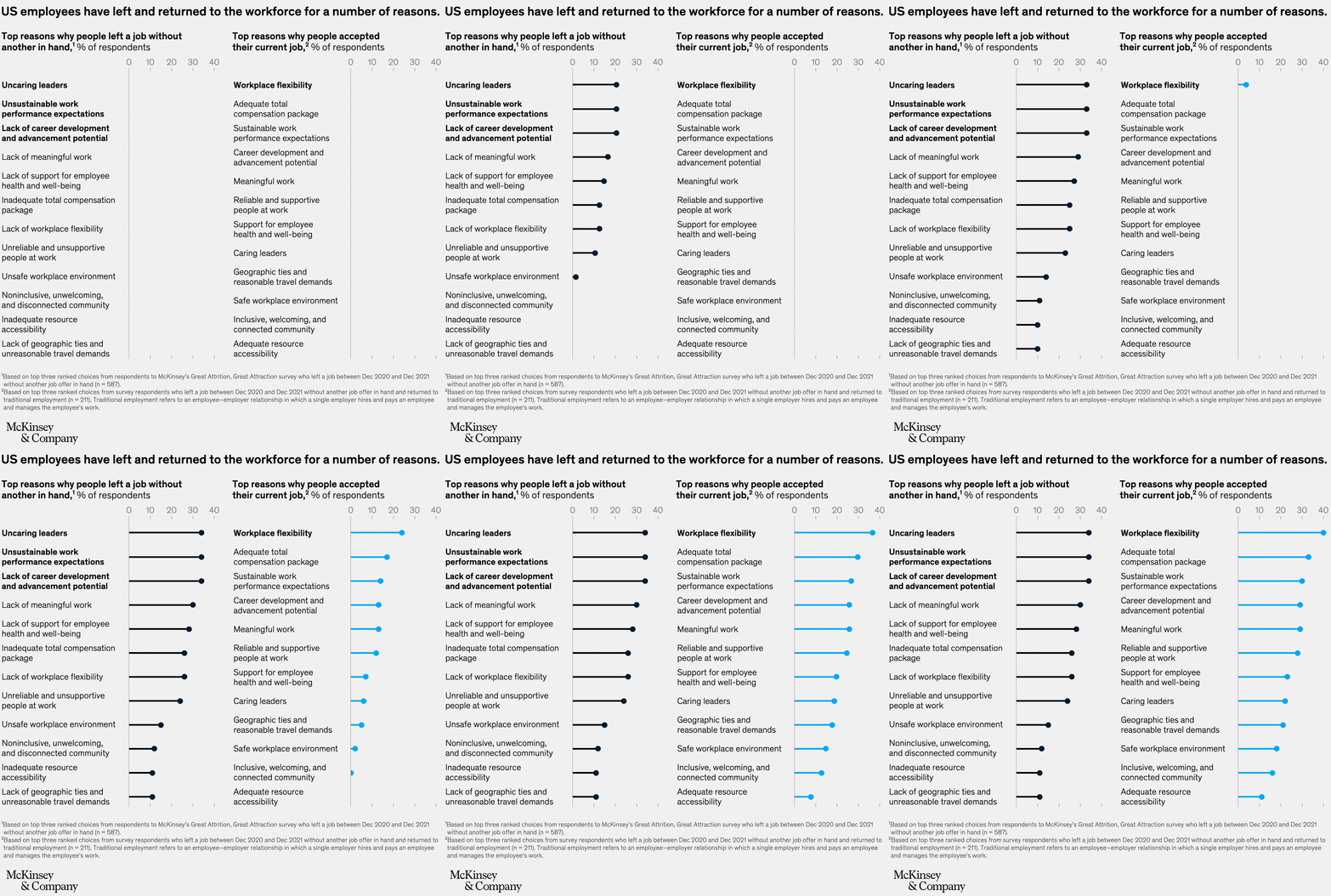
A more recent 2022 McKinsey & Company study found that employees who felt engaged in their work were 20-25% more productive than their disengaged coworkers. Additional research from McKinsey & Company shows a number of the top reasons why individuals left a job (without heading to a new job) and then reasons why employees had accepted their current job, many of those reasons point back to topics such as engagement, empowerment, and meaning.