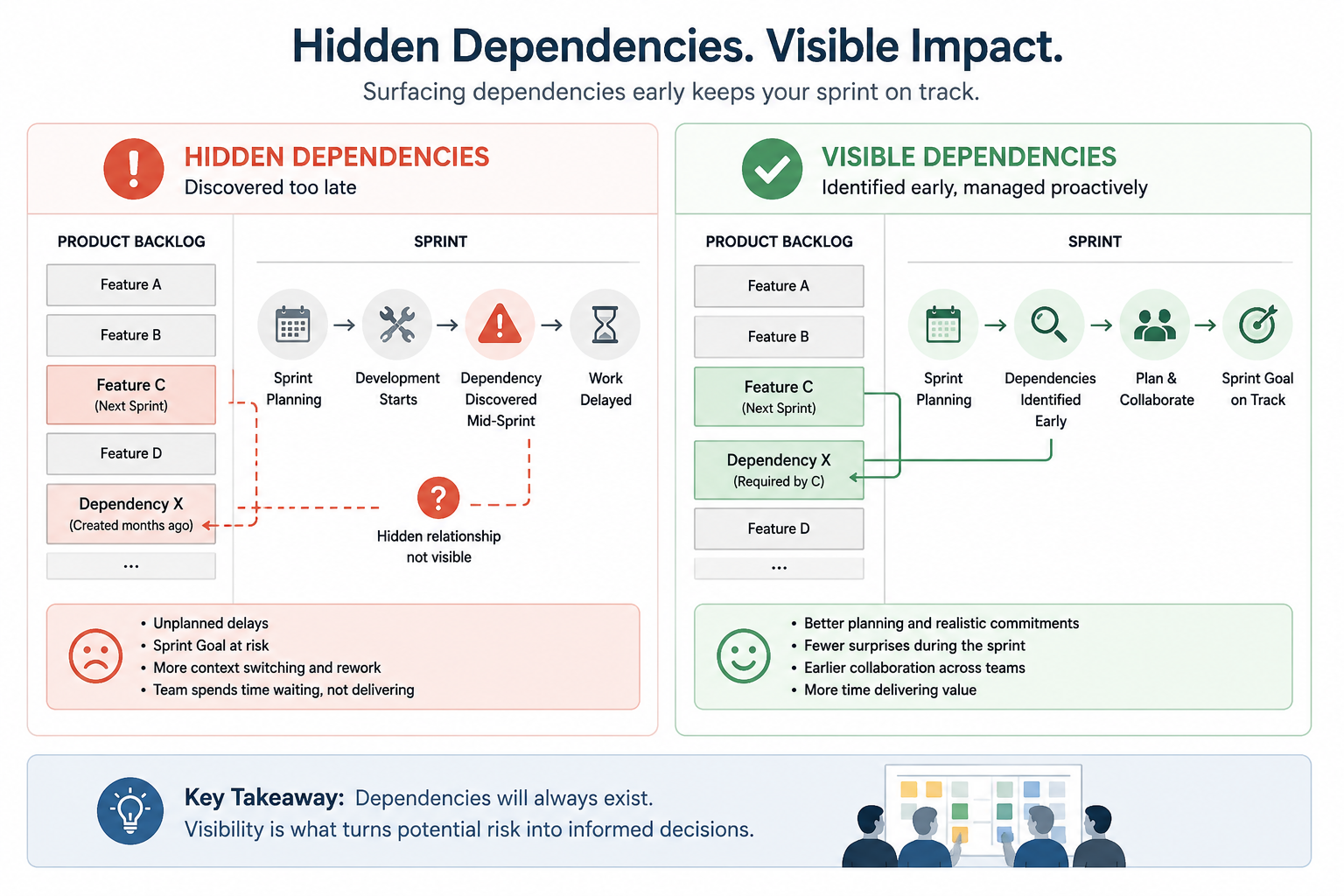
One thing I've noticed across Scrum teams is that dependencies rarely cause problems because they exist, they cause problems because they're discovered too late.
Some dependencies are easy to identify during Product Backlog Refinement or Sprint Planning. Others are much less obvious.
Imagine planning a Product Backlog Item for the next Sprint, only to discover halfway through that it depends on another issue created months ago. That older issue is still sitting in the backlog because its priority changed, and no one realized it had become a prerequisite for newer work.
The issue itself isn't blocked because of poor planning. It's blocked because the dependency wasn't visible.
Scrum doesn't prescribe a specific way to manage dependencies, and that's one of its strengths. Every team can adopt practices that work best for their environment. But regardless of the approach, visibility seems essential.
When dependencies are visible early, teams can:
- Reorder backlog items.
- Collaborate with other teams sooner.
- Adjust the sprint scope before work begins.
- Reduce surprises during the Sprint.
When they're hidden, they often surface during Daily Scrums, creating delays that could have been avoided.
I'm particularly curious about long-standing dependencies, those tied to backlog items that have gradually slipped down the priority list but still influence future work.
How do you ensure those relationships don't get lost over time?
I'd love to hear how other teams approach this.
- Do you identify dependencies during backlog refinement?
- How do you track cross-team or cross-project dependencies?
- Have you encountered situations where an old, low-priority backlog item unexpectedly blocked high-priority work?
- What techniques or tools help you keep dependencies visible without adding unnecessary process?
Looking forward to learning how different teams handle this challenge.

