Teams don’t need more visibility — they need shared signals
Teams rarely struggle to capture work. They struggle to run decisions and delivery on the same truth.
Most organizations already have the basics:
- Jira for plans, tickets, epics, and delivery tracking
- Confluence for decisions, specs, runbooks, and strategy docs
- Loom for async updates, walkthroughs, and “here’s what changed” context
Add them up and it sounds like collaboration is solved. Yet familiar symptoms show up everywhere—from fast-moving startups to global enterprises:
- Roadmaps get renegotiated mid-cycle
- Cross-team dependencies “surprise” everyone late
- Status meetings multiply because nobody trusts the last update
- Leaders ask for dashboards, teams deliver dashboards, and still… people argue
Here’s the uncomfortable truth: connected tools don’t automatically create aligned behavior. For alignment, you need shared signals—metrics that are:
- grounded in real work (not subjective reporting)
- comparable across teams (or at least comparable across “like work”)
- visible where decisions happen
- tied to actions (so people know what to do when the signal moves)
Teamwork Collection gives you a connected workspace. This article is about the missing ingredient: what to measure across Jira + Confluence + Loom so teams stop chasing updates and start improving flow.
And this is also where Time in Status fits naturally: it turns Jira status history into the timing layer most teams wish they had when plans start slipping.

The Teamwork Collection mindset: measure the system, not the people
Before metrics, one framing that matters—regardless of company size:
The purpose of measurement in a connected workspace isn’t surveillance. It’s coordination. The healthiest teams use metrics to answer questions like:
- Where are we losing time?
- Which handoffs are friction-heavy?
- Are decisions getting made fast enough to support delivery?
- Is communication reducing rework—or producing noise?
If your metrics can’t point to a process change, they’re not signals. They’re trivia.

The measurement model: three surfaces, one operating system
A simple way to think about Teamwork Collection measurement:
Jira tells you: how work is moving
Flow health, bottlenecks, aging work, and where time accumulates.
Confluence tells you: what the organization knows and decided
Decision quality, clarity, traceability, and operational readiness.
Loom tells you: how fast context moves between humans
Coordination speed, alignment, and whether updates replace meetings or create confusion.
Connected tools are great. But connected signals change behavior when you measure flow + decisions + context as one system.

Part 1: What to measure in Jira (beyond “how many tickets did we close?”)
Most Jira reporting fails because it measures outputs without measuring flow health. Here are Jira signals that actually predict planning reliability:
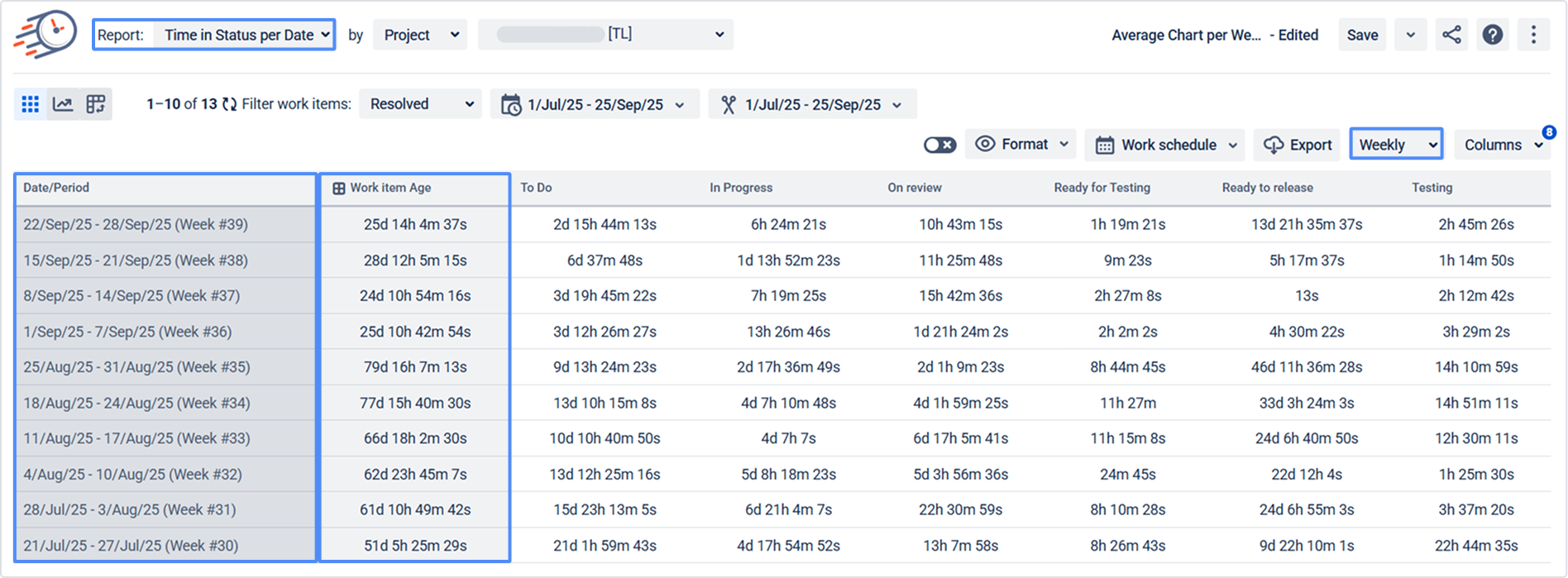
1) Work item aging (the “silent risk” signal)
Question: How long are items sitting in the system without completion? Aging work is where missed commitments come from—and where stakeholder escalations begin.
What to do with it:
- Set “aging thresholds” by work type (bugs vs features vs spikes)
- Review aging items weekly and decide: finish, split, descoped, or stop
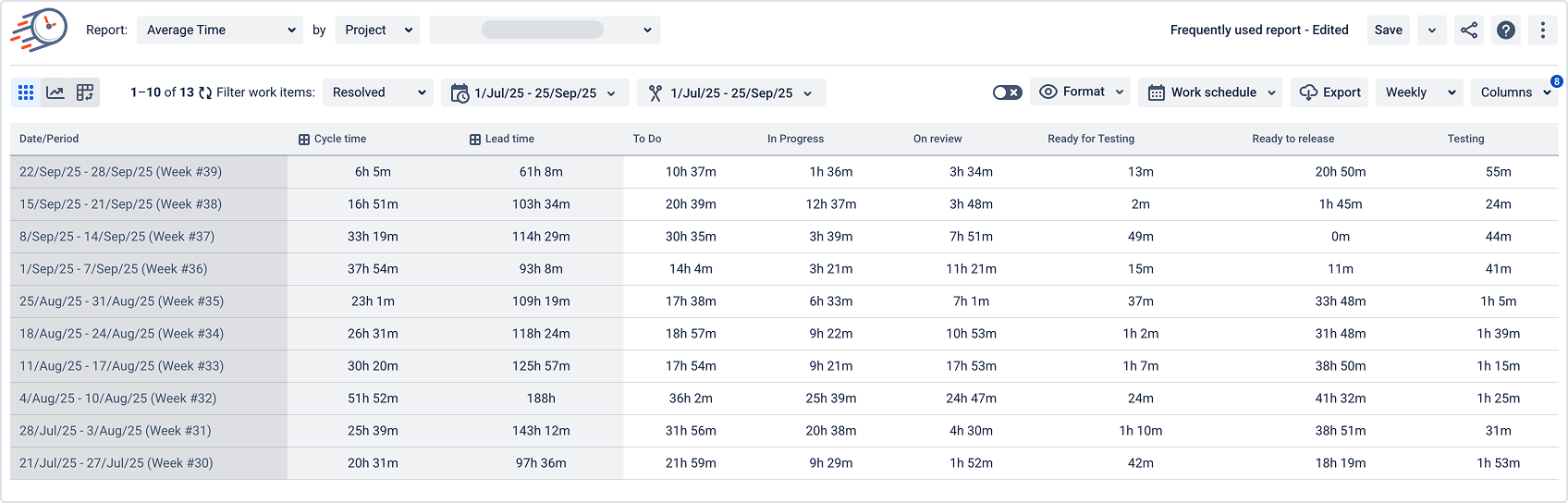
2) Cycle time and lead time trends (the reality check)
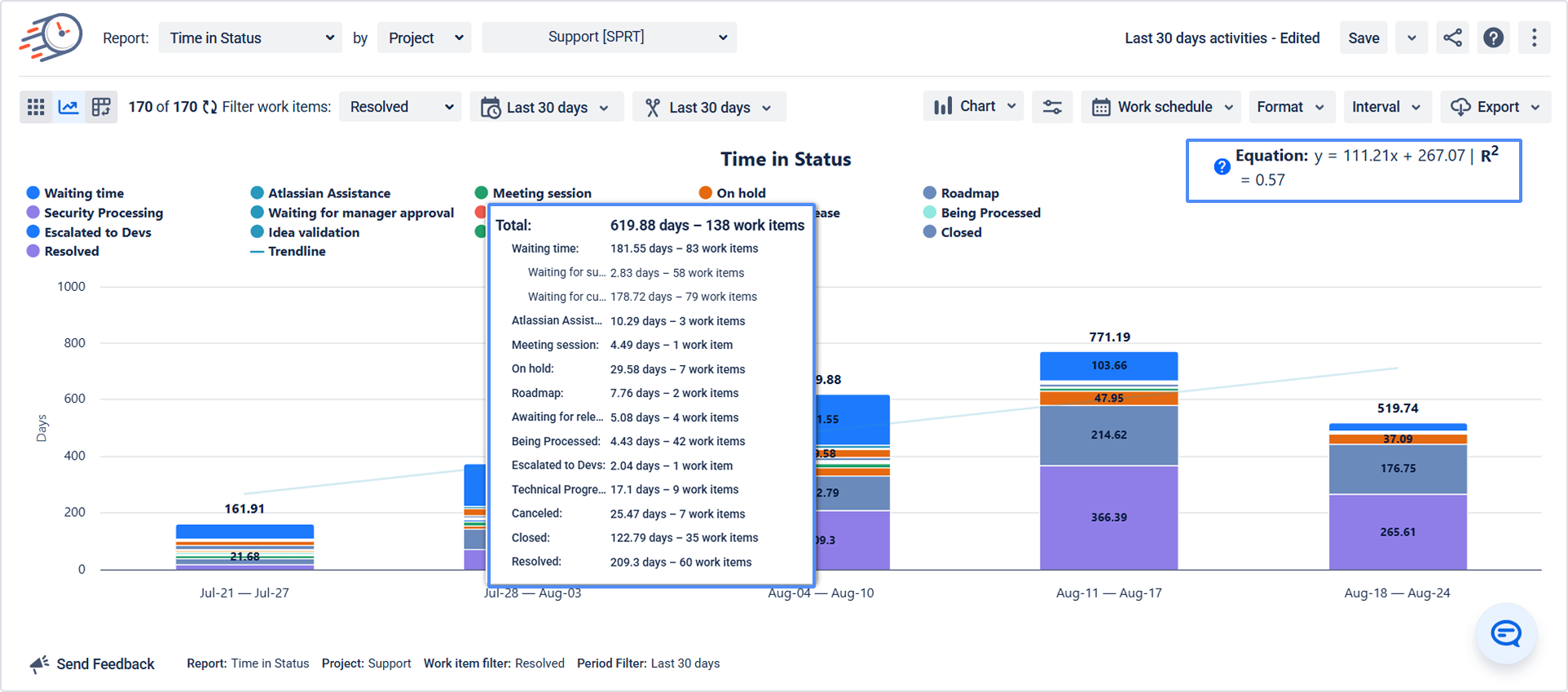
Question: Are we getting faster, slower, or just noisier? Instead of counting tickets, measure how long it takes for similar work to move from start → done (cycle) and from created → done (lead). Trends expose when teams are slipping before the deadline arrives.
What to do with it:
- Compare distributions, not just averages (outliers matter)
- Track trends by work type and by workflow phase
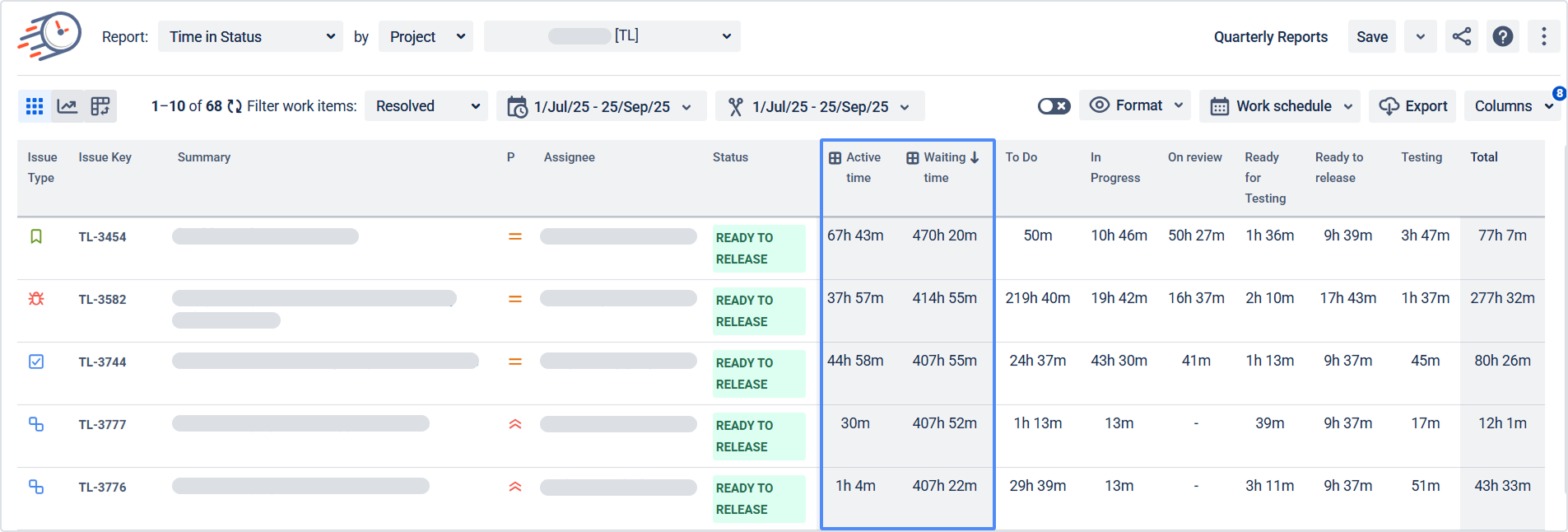
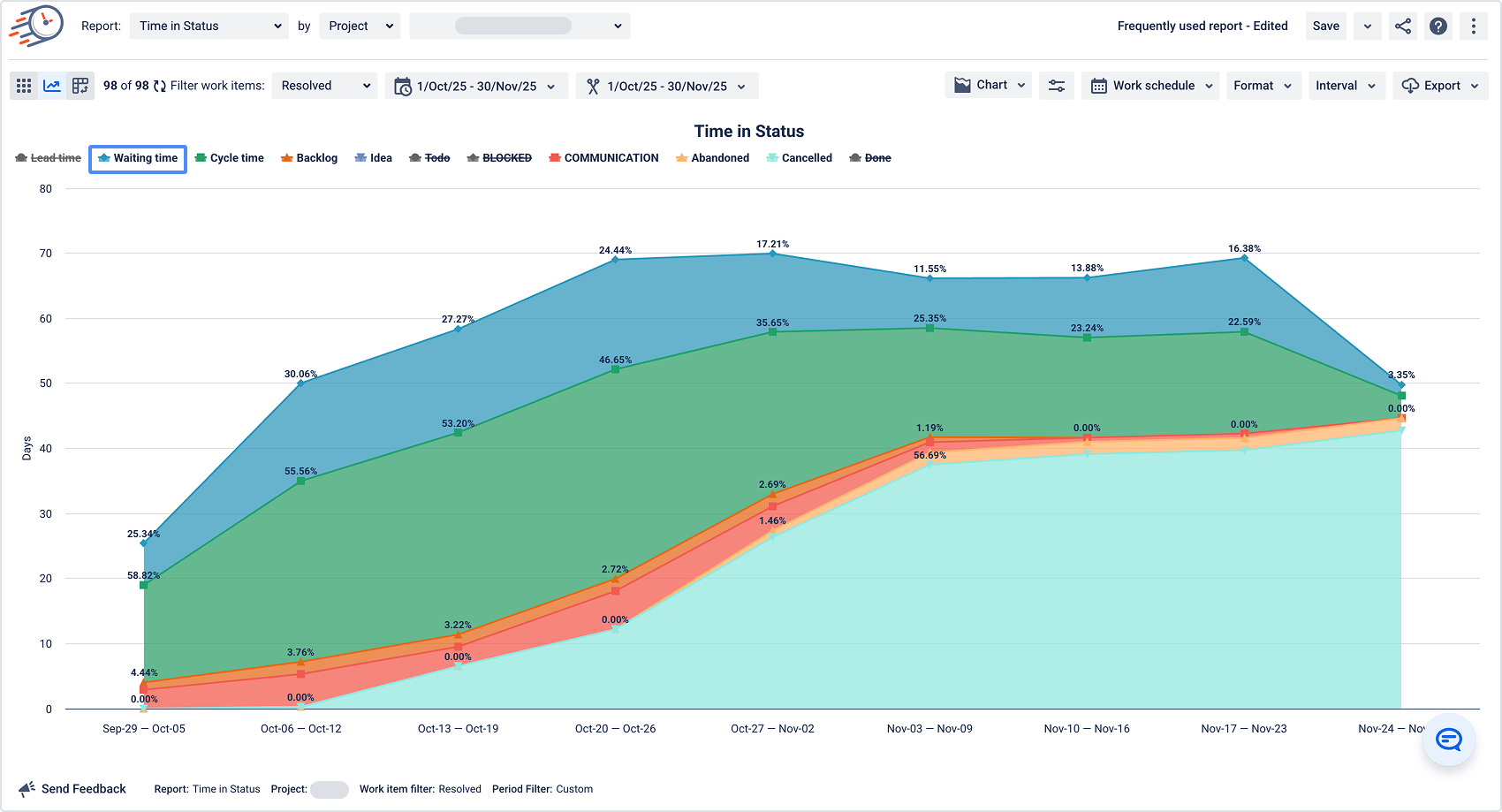
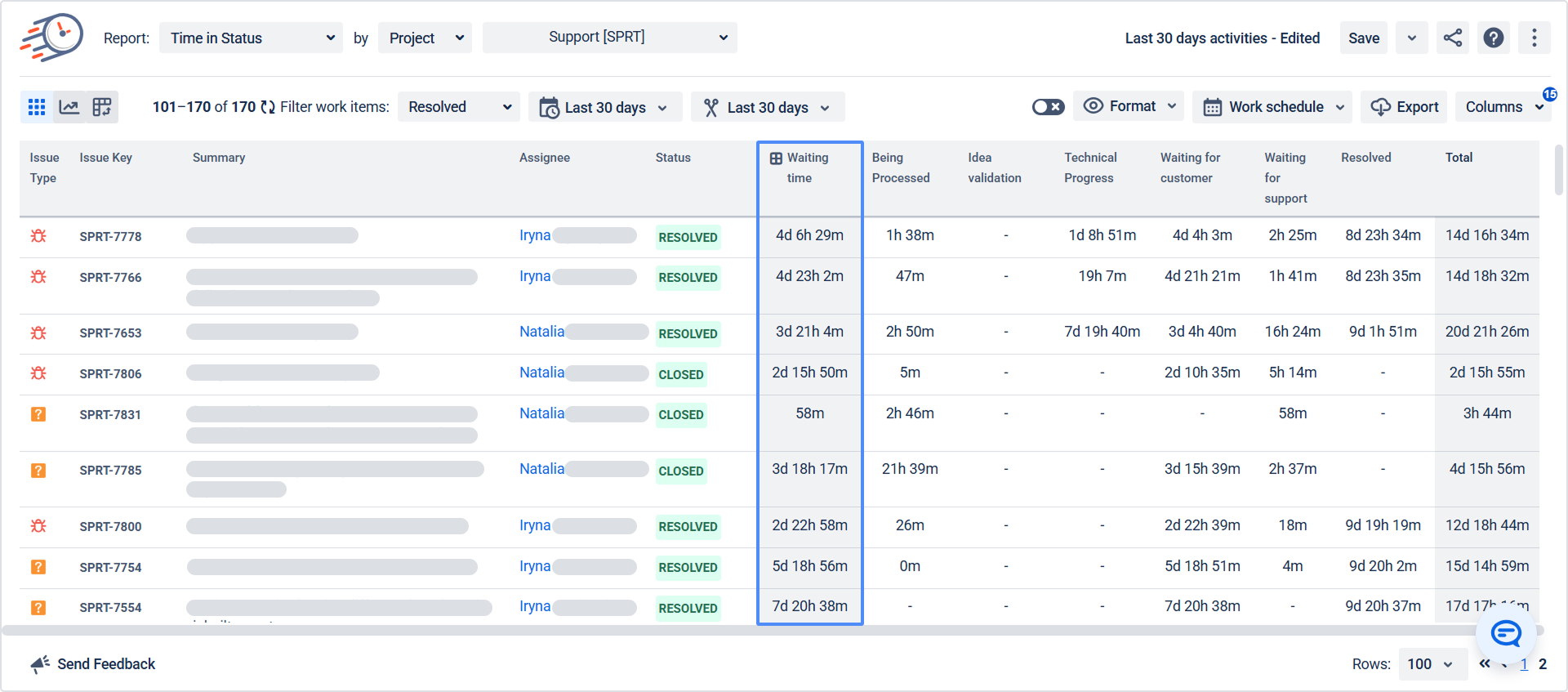
3) Working vs Waiting (the bottleneck truth)
Question: How much time is active work vs queues / handoffs / blockers? This is the most important “teamwork signal” because it reveals if the constraint is inside the team or in dependencies.
What to do with it:
- Group statuses into “Working” and “Waiting” (review, QA, blocked, external dependency)
- Watch Waiting grow week over week—then fix the handoff, not the team
4) Rework / loops (how much time you spend “almost done”)
Question: How often does work bounce between states (e.g., In Review ↔ In Progress)?
Loops explain why teams “worked hard” but delivered little.
What to do with it:
- Tighten Definition of Ready / Done
- Improve review checklists
- Fix unclear ownership at handoffs
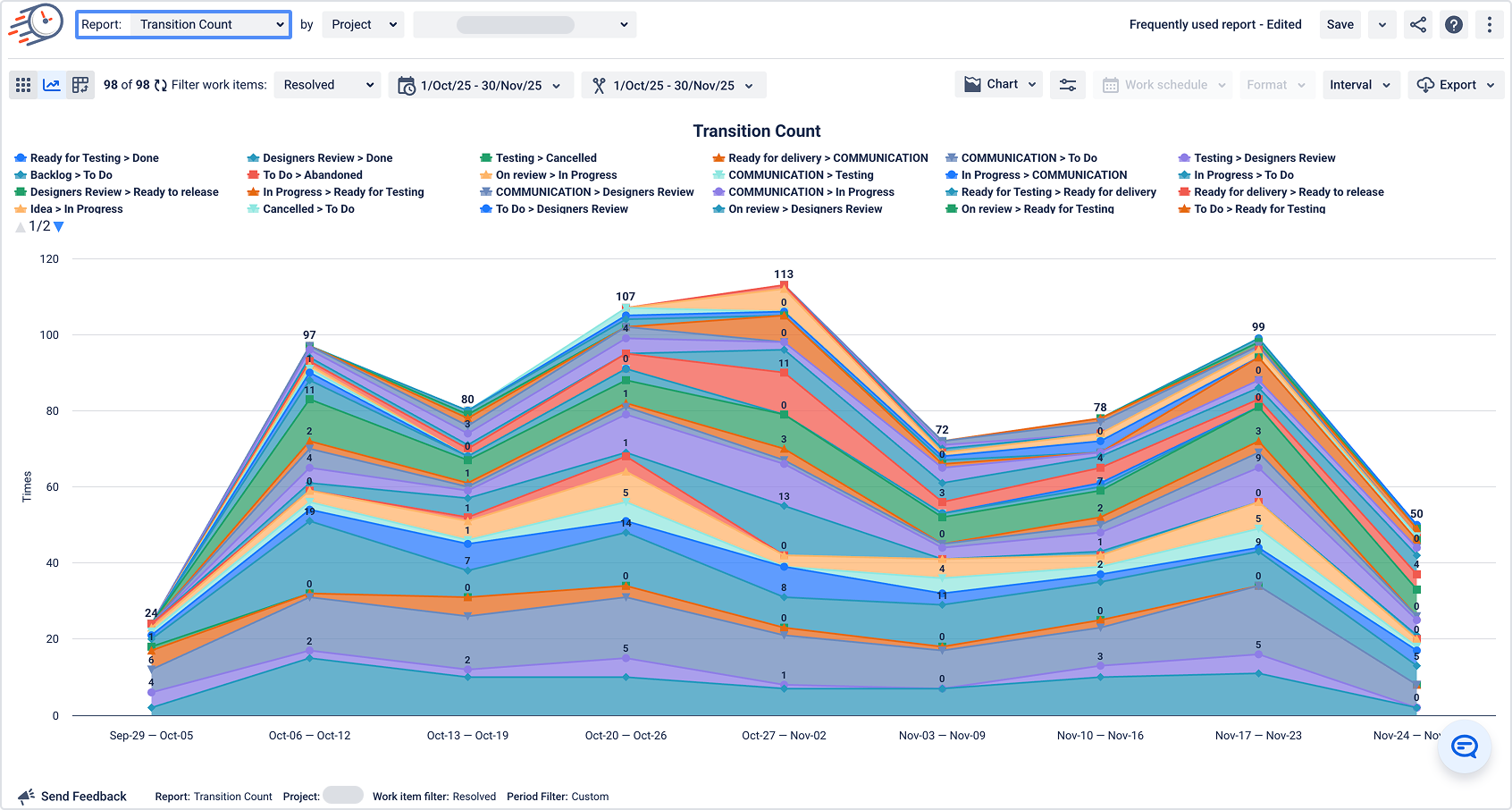
5) Where time accumulates (the queue map)
Question: Which workflow step is swallowing time right now—review, QA, waiting for input, blocked? This converts gut feelings into a concrete improvement target.
What to do with it:
- Measure time per status group over time.
- Use it as the agenda for retros: “we didn’t slip—Review grew 2×”
Where Time in Status fits
This is exactly where Time in Status shines:
- Reads Jira status history and calculates time spent in statuses
- Uses Status Groups so metrics stay comparable across messy workflows
- Supports business work schedules so global teams can report in business time, not raw elapsed time
- Surfaces insights on Jira dashboards and can be shared into Confluence pages
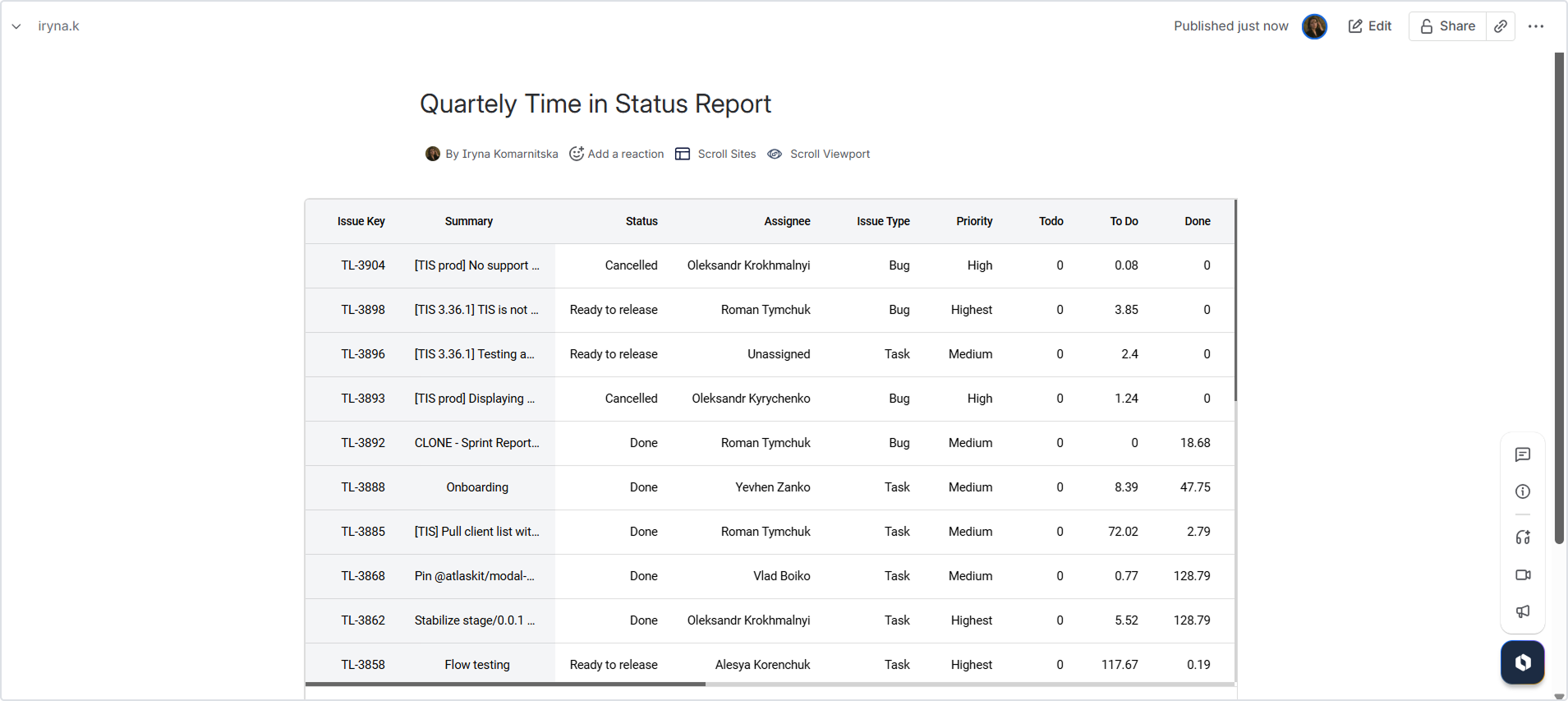
That last point matters for every team type: trust increases when the same numbers show up everywhere—no spreadsheets, no manual exports.
Part 2: What to measure in Confluence (so knowledge actually drives outcomes)
Confluence isn’t “a docs tool.” It’s where decisions either become reusable… or get lost.
1) Decision freshness
Question: Are key decision pages updated often enough to reflect reality? Examples:
- Strategy pages older than a quarter
- Runbooks older than the last incident change
- Decisions missing “what changed since last review”
Action:
- Create decision review cadences (monthly/quarterly)
- Assign page owners (not “teams”)
2) Runbook readiness
Question: Are runbooks complete, findable, and used under stress? A runbook that exists but isn’t used is a liability.
Action:
- After major incidents, update runbook + link to Jira ticket
- Embed key dashboards and timing trends (Time in Status embeds are perfect here)
3) Decision traceability
Question: Can someone trace a decision to its evidence and tradeoffs? Without traceability, orgs re-litigate decisions and lose months.
Action:
- Add a short “Decision summary” block
- Link to Jira epics/issues representing execution
- Capture what you didn’t choose (and why)
4) Knowledge reuse
Not pageviews—reuse. Signals include:
- Templates adopted across teams
- Repeated linking to canonical policy pages
- Fewer repeated “how do we…” questions
Action:
- Standardize 3–5 templates (planning, retro, incident review, RFCs)
Part 3: What to measure in Loom (so communication reduces work, not adds noise)
Loom helps teams share context without meetings. But “more videos” doesn’t mean alignment.
1) Update latency
Question: When something changes, how quickly does the right audience know? Slow context creates rework and escalations.
Action:
- Establish update moments (after planning, before release, after incident)
- Link Loom updates to Jira/Confluence “source of truth”
2) Meeting displacement
Question: Are recurring meetings shrinking because async updates work? This is a clean “communication ROI” signal.
Action:
- Replace one recurring sync with Loom + comments
- Check if decisions get faster or slower
3) Clarification churn
If every Loom update triggers follow-up threads, the update isn’t clear—it’s just async noise.
Action: standardize structure:
- what changed
- what decision is needed (if any)
- what you need from others
- link to Jira/Confluence
The real unlock: cross-surface signals that eliminate debates
Signal A: Decision latency → delivery risk
If decisions in Confluence take longer than usual, Jira delivery slips—regardless of team effort.
How to operationalize:
- Track time in “Review/Approval” (Time in Status)
- Ensure the decision page exists and is linked
- Use Loom to align on tradeoffs early (not at the end)
Signal B: Waiting growth → handoff friction
When Waiting grows, the fix is rarely “work harder.” It’s usually:
- unclear intake requirements
- missing context
- dependency ownership confusion
- review bottlenecks
Time in Status makes Waiting measurable. Confluence captures the fix. Loom spreads the behavior.
Signal C: Rework loops → definition problems
Loops often mean definitions aren’t clear: Definition of Ready, acceptance criteria, ownership boundaries, review standards.
Track loops in Jira. Write standards in Confluence. Broadcast via Loom.
Segment-specific recommendations
Segment 1: Large enterprises (multi-team, compliance-heavy, global)
What matters most: comparability, fairness, auditability. Recommended signals:
- Working vs Waiting by value stream (Time in Status)
- Calendar-aware reporting (business time)
- Bottleneck trends by workflow phase
- Decision freshness on key Confluence pages
- Dependency waiting trend across programs
Avoid:
- ranking teams without normalizing workflows
Segment 2: High-growth scale-ups (fast change, messy process)
What matters most: reduce chaos without slowing delivery. Recommended signals:
- Where time accumulates (review/QA/blocked trends)
- Aging-in-status thresholds (early warning)
- Bounce loops (rework)
- Loom update cadence replacing recurring syncs
- A single embedded “source of truth” dashboard in Confluence
Avoid:
- adding process too late (scaling chaos)
Segment 3: Distributed / async-first orgs
What matters most: keep context moving so work doesn’t stall. Recommended signals:
- Update latency (Loom)
- Waiting time caused by “needs input” / review (Time in Status)
- Decision traceability in Confluence
- Aging alerts for items with no movement
Avoid:
- confusing “async updates” with alignment
Segment 4: Cross-functional business teams using Jira (marketing, ops, HR, finance)
What matters most: fairness + clarity across approvals and dependencies. Recommended signals:
- Business-hour lead time (calendar-aware)
- Waiting on approval vs Working split
- Where time accumulates in approval chains
- Runbook/policy freshness in Confluence
Avoid:
- measuring only “done” volume (doesn’t reveal bottlenecks)
What Time in Status adds to Teamwork Collection
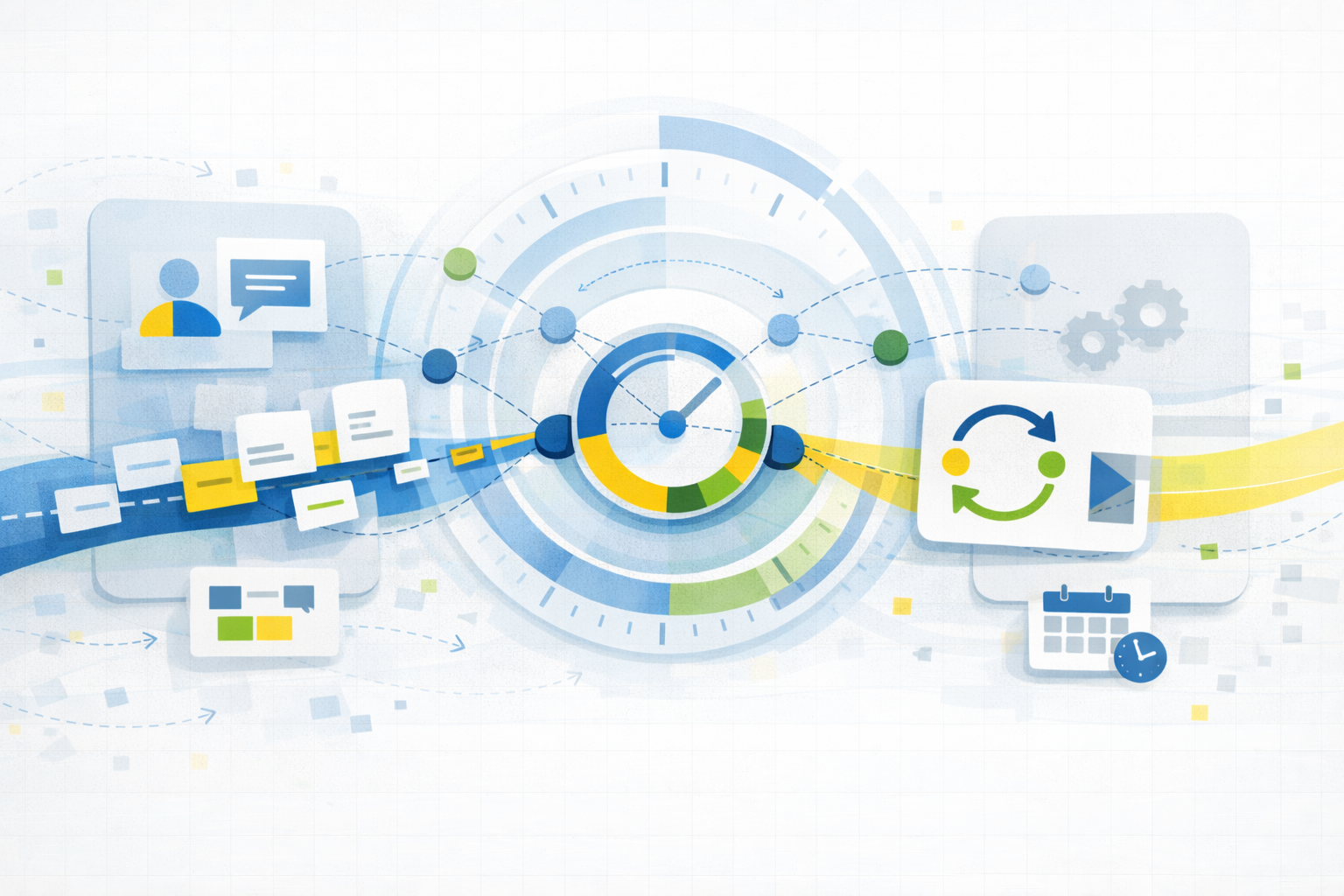
Teamwork Collection connects work, knowledge, and communication. Time in Status adds the timing layer that makes those connections decision-grade.
In practice:
- Converts Jira history into tempo signals (cycle/lead time, working vs waiting, bottlenecks, loops)
- Makes signals shareable: Jira dashboards and embedded Confluence reports
- Normalizes across teams using Status Groups and business calendars
That’s how organizations stop running on anecdotes and start running on shared reality.
Measure what changes behavior
If your metrics don’t change behavior, they become a reporting ritual—and then a debate.
The best Teamwork Collection measurement isn’t “more dashboards.” It’s a small set of shared signals that:
- show where time is going
- make tradeoffs visible
- reduce status-chasing
- turn improvement into a repeatable loop
Jira shows how work moves. Confluence shows what you decided. Loom keeps context moving. Time in Status makes tempo measurable—so planning becomes grounded, and teams start fixing flow instead of chasing updates.