Service Level Agreements (SLAs) are meant to bring clarity, trust, and predictability to delivery. In reality, many teams experience the opposite. SLAs feel arbitrary, are frequently missed, and often create tension between teams and stakeholders.
Why does this happen?
In most cases, SLAs are defined without a clear understanding of how work actually flows through the system.
In this article, we’ll explore:
-
why SLAs often fail,
-
what “realistic SLAs” really mean,
-
and how Time Metrics Tracker helps teams set, monitor, and continuously improve SLA performance using real workflow data.

Why SLAs Fail Before They Start
Many SLAs are created top-down:
-
“Critical bugs must be resolved in 24 hours.”
-
“Requests should be completed within 5 business days.”
-
“QA turnaround should not exceed 2 days.”
The problem isn’t the intent — it’s the lack of evidence.
Without understanding:
-
time in status,
-
waiting time,
-
handoffs,
-
rework cycles,
SLAs become aspirational targets, not achievable commitments.

SLAs vs. Reality: The Hidden Time Problem
Most teams track:
-
issue counts,
-
resolution rates,
-
logged work.
Very few track:
As a result:
-
SLAs are missed unexpectedly,
-
root causes remain unclear,
-
teams react instead of improving.
This is where time-based metrics change everything.

What Makes an SLA “Realistic”?
A realistic SLA is:
-
grounded in historical data,
-
aligned with how the team actually works,
-
measurable in real time,
-
adjustable as processes evolve.
To define such SLAs, teams need answers to questions like:
-
How long do issues typically spend in each status?
-
Where does waiting occur?
-
How much variation exists?
-
What’s normal — and what’s exceptional?
These answers don’t come from effort tracking. They come from flow metrics.
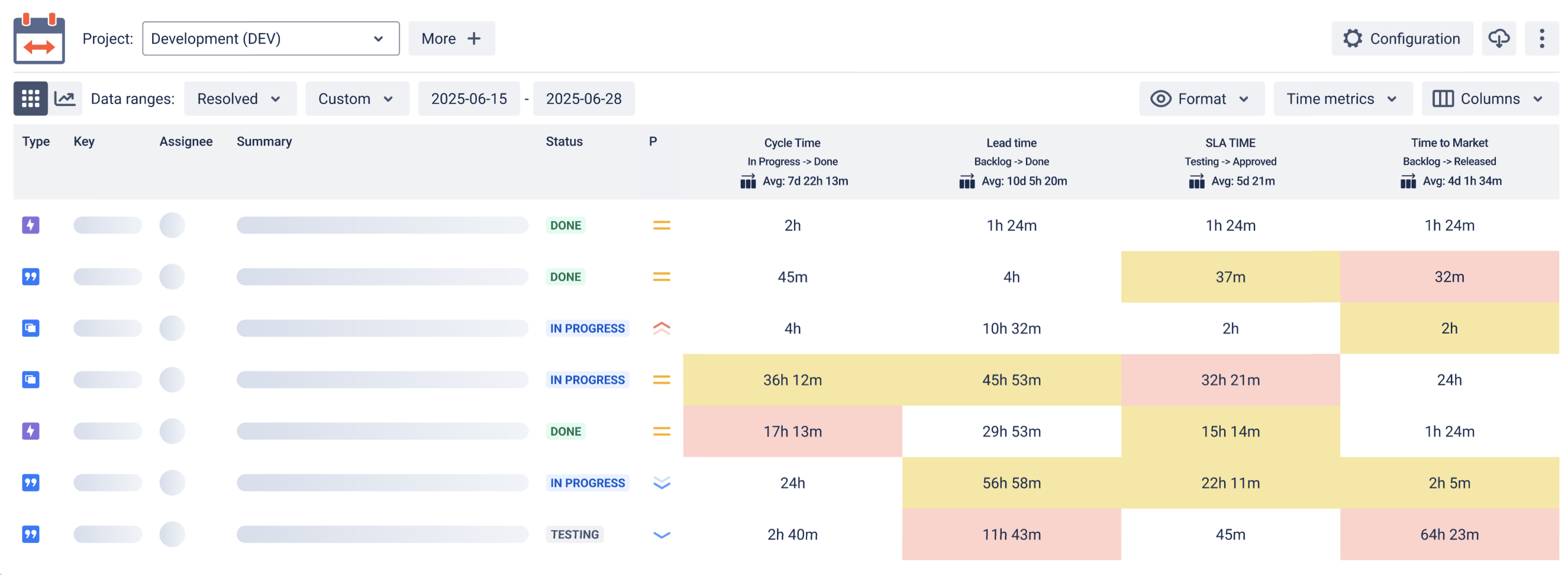
Time Metrics Tracker is a Jira Cloud app designed to measure time-based workflow performance, not just task effort.
It tracks:
-
Time in Status
-
Cycle Time
-
Lead Time
-
Wait Time
-
Resolution Time
- or any custom based statuses group.
And makes those metrics visible through:
This creates the foundation for evidence-based SLA management.
Setting SLAs Based on Real Data
Step 1: Understand Current Performance
Before defining SLAs, teams use Time Metrics Tracker to analyze:
-
average and median time in key statuses,
-
historical resolution times,
-
variation and outliers.
This answers the critical question:
“What do we actually achieve today?”
Step 2: Define SLA Thresholds That Reflect Reality
With real data in hand, teams can define:
For example:
These thresholds are no longer guesses — they’re informed by actual performance.
Step 3: Monitor SLAs in Real Time
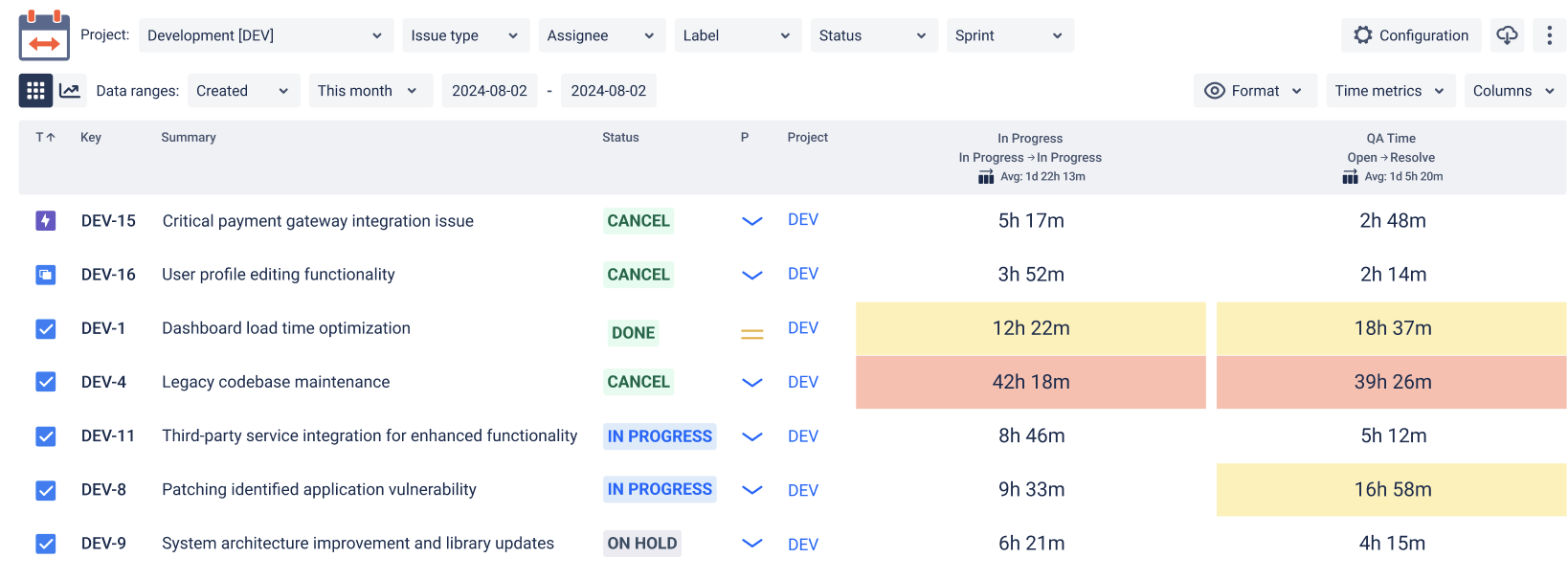
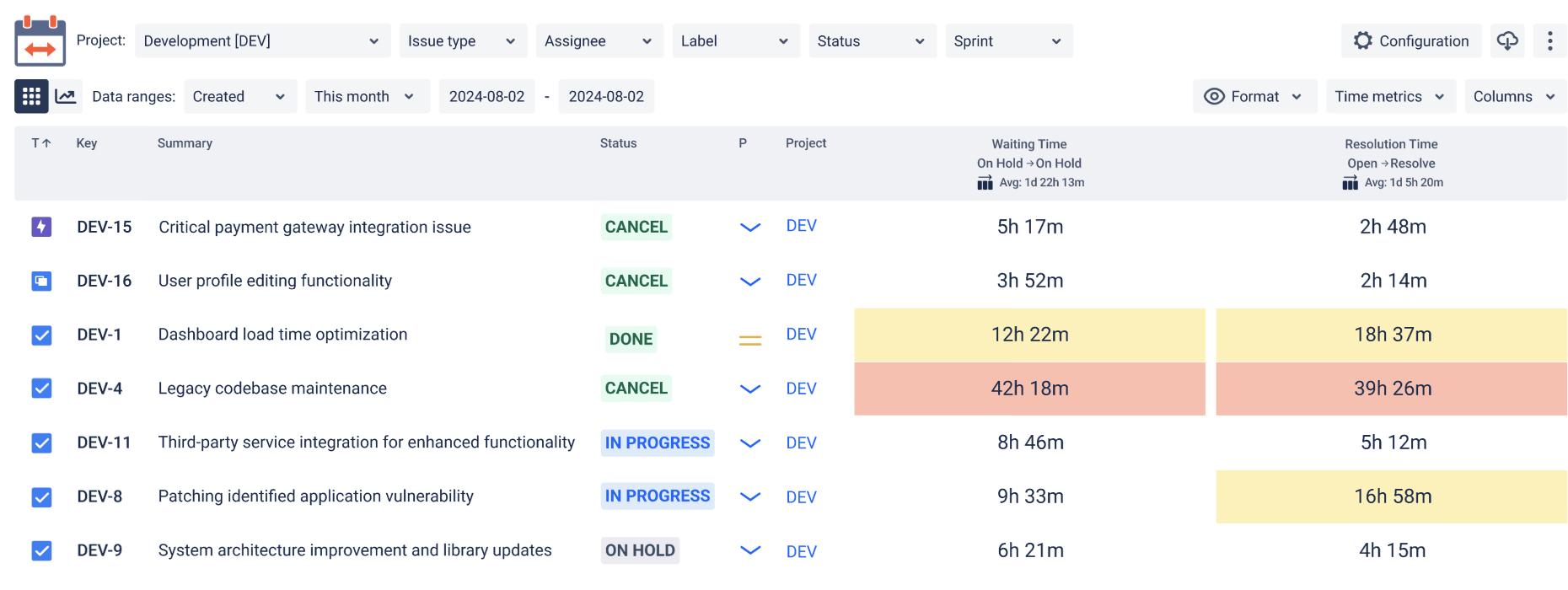
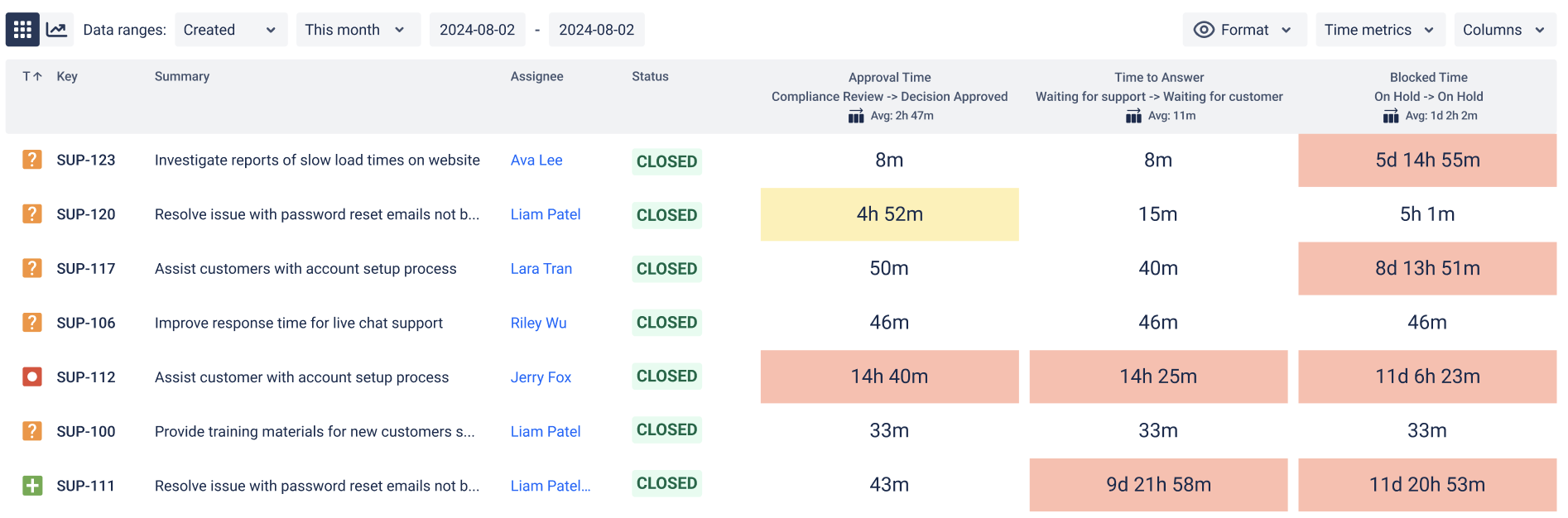
Time Metrics Tracker uses color-coded indicators to make SLA risks visible instantly:
Teams no longer need to run reports or wait for escalations.
Issues at risk surface automatically.
From SLA Monitoring to Performance Improvement
The biggest shift happens when teams move from:
“Did we meet the SLA?”
to:
“Why are we missing it?”
Time Metrics Tracker enables:
Instead of blaming individuals, teams fix process issues.

SLAs as Feedback Loops, Not Punishment
When SLAs are supported by time metrics, they become:
-
learning tools,
-
prioritization aids,
-
improvement signals.
Teams can:
-
adjust workflows,
-
rebalance capacity,
-
reduce waiting,
-
limit WIP,
-
improve predictability.
SLAs evolve with the process — instead of breaking it.
Common SLA Use Cases Powered by Time Metrics Tracker
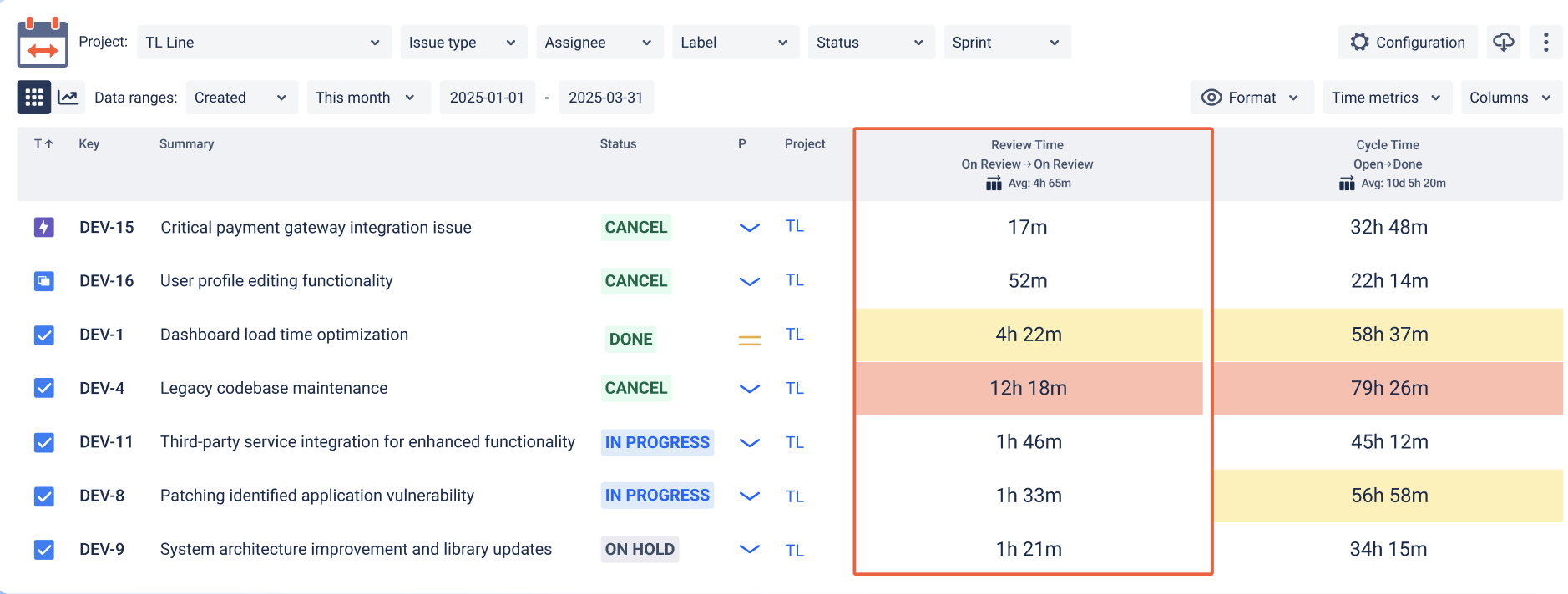
Bug Resolution SLAs
-
Track time from Open → Done
-
Identify delays in QA or Review
-
Prevent release-blocking issues
Support and Ops SLAs
Internal Team SLAs
-
Cross-team handoffs
-
Dependency resolution
-
Review turnaround time
Why Jira Alone Isn’t Enough for SLA Management
While Jira Service Management offers SLA features, many teams:
Time Metrics Tracker fills this gap by:
-
working directly with Jira workflows,
-
supporting custom time definitions,
-
enabling SLA-style monitoring without rigid constraints.
The Cultural Impact of Transparent SLAs
When SLAs are:
-
visible,
-
fair,
-
data-driven,
teams feel:
-
more ownership,
-
less pressure,
-
more clarity.
Stakeholders gain:
-
realistic expectations,
-
predictable delivery,
-
trust in the process.
That’s performance improvement at both a technical and cultural level.
Final Thoughts: Better SLAs Start with Better Metrics
SLAs don’t fail because teams don’t care.
They fail because teams lack visibility.
Time Metrics Tracker provides that visibility — turning SLAs from promises into manageable systems.
If your SLAs feel stressful, unpredictable, or unfair, the problem isn’t commitment.
It’s measurement.
👉 Install Time Metrics Tracker , define realistic SLAs, and turn performance tracking into continuous improvement.
Because when teams see time clearly, they perform better.
