There’s a moment every December when teams gather around their Jira boards like it’s a fireplace.
Everyone leans in, squinting at what’s left in the sprint, what quietly slipped into “Later,” and what absolutely must be finished before the year ends.
And as always, someone asks the question that makes the entire room hold its breath:
“Can we realistically deliver this before the holidays?”
It’s never a simple question.
Not because the team lacks skill.
But because estimates don’t fall apart in the doing —
they fall apart in the uncertainty around what the work even is and where it gets stuck.
🎄 Where estimation goes wrong (and why it feels personal)
Most estimation “misses” aren’t about poor judgment. The problem isn’t the ritual — it’s the visibility.
Most teams don’t suffer from bad estimations.
They suffer from hidden work, incomplete requests, and missing context.
They stem from two universal problems:
1. Work starts with missing or unclear information
Half-filled descriptions, unclear acceptance criteria, inconsistent bug reports —
the kind that look fine until you actually start working on them and discover three dependencies no one mentioned.
2. Teams don’t have visibility into how long things actually take
You might think development is slow…
when in reality review cycles, handoffs, and “In Waiting” statuses are doubling the timeline.
Good news: neither of these issues requires a new framework or ritual.
They just require better inputs and better insight.
This is where tools like Smart Forms for Jira and Time in Status quietly transformed how teams handled the chaotic end of the year.
✨ How teams finally stopped guessing: a story of inputs and insight
1. Intake stopped being a scavenger hunt
Teams using Smart Forms noticed something subtle:
Requests started arriving with everything included — the right fields, attachments, context, priority, links, logs, screenshots, reproduction steps.
Not because people suddenly improved at writing requirements,
but because the form guided them.
Conditional logic made forms feel lightweight:
people only saw questions relevant to their request.
Required fields prevented incomplete submissions.
And when submissions landed in Jira, the details weren’t locked inside the form —
they were already mapped to Jira fields, ready for triage, automation, and estimation.
Instead of:
“Before I estimate this, can you clarify…?”
…teams started with clarity and moved straight into planning.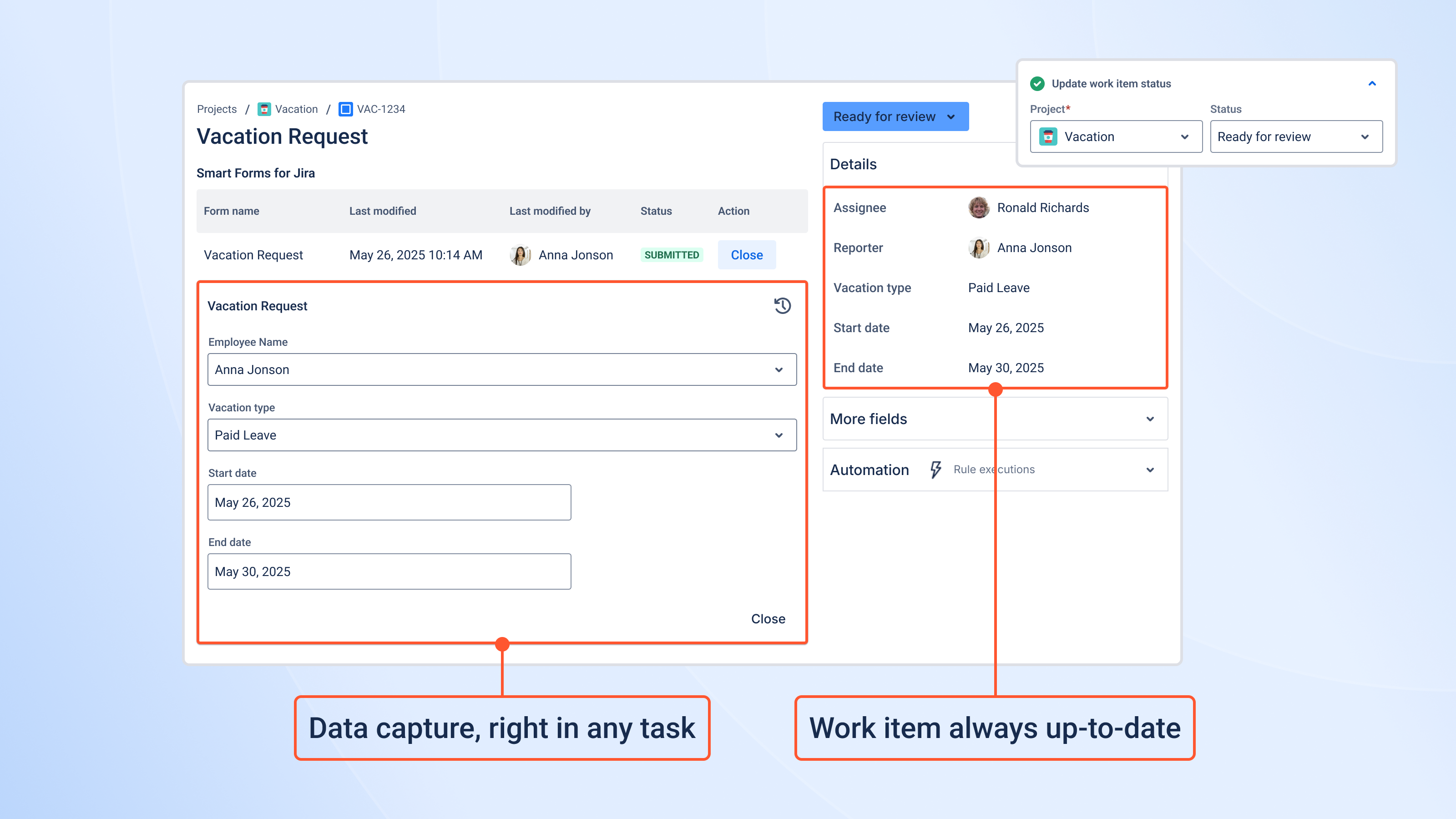
2. Automation cleaned up the mess quietly in the background
Instead of manually fixing missing fields or guessing priorities, Smart Forms used:
-
mapped fields
-
Smart Values
-
auto-attach rules
-
issue-creation triggers
This meant that as soon as the form arrived, the issue landed in the right project, with the right fields filled, and often even the right workflow status.
The team didn’t lose half a day correcting sloppy intake or chasing information.
Estimates got smaller not because the work changed —
but because the overhead around the work finally disappeared.
3. Estimation stopped relying on optimism and memory
Then came the second half of the transformation.
Teams started using Time in Status to see the truth behind their workflow:
-
How long issues actually stay “In Progress”
-
How many hours disappear into “In Review”
-
Which initiatives repeatedly stall in “Waiting for Input”
-
How long similar tasks took in previous sprints
-
Which team handoffs consistently created delays
Estimation shifted from:
“Last time this seemed quick.”
to:
“Tasks of this category spend ~2 days in development, ~1.3 days in review, and ~5 hours waiting for someone’s approval.”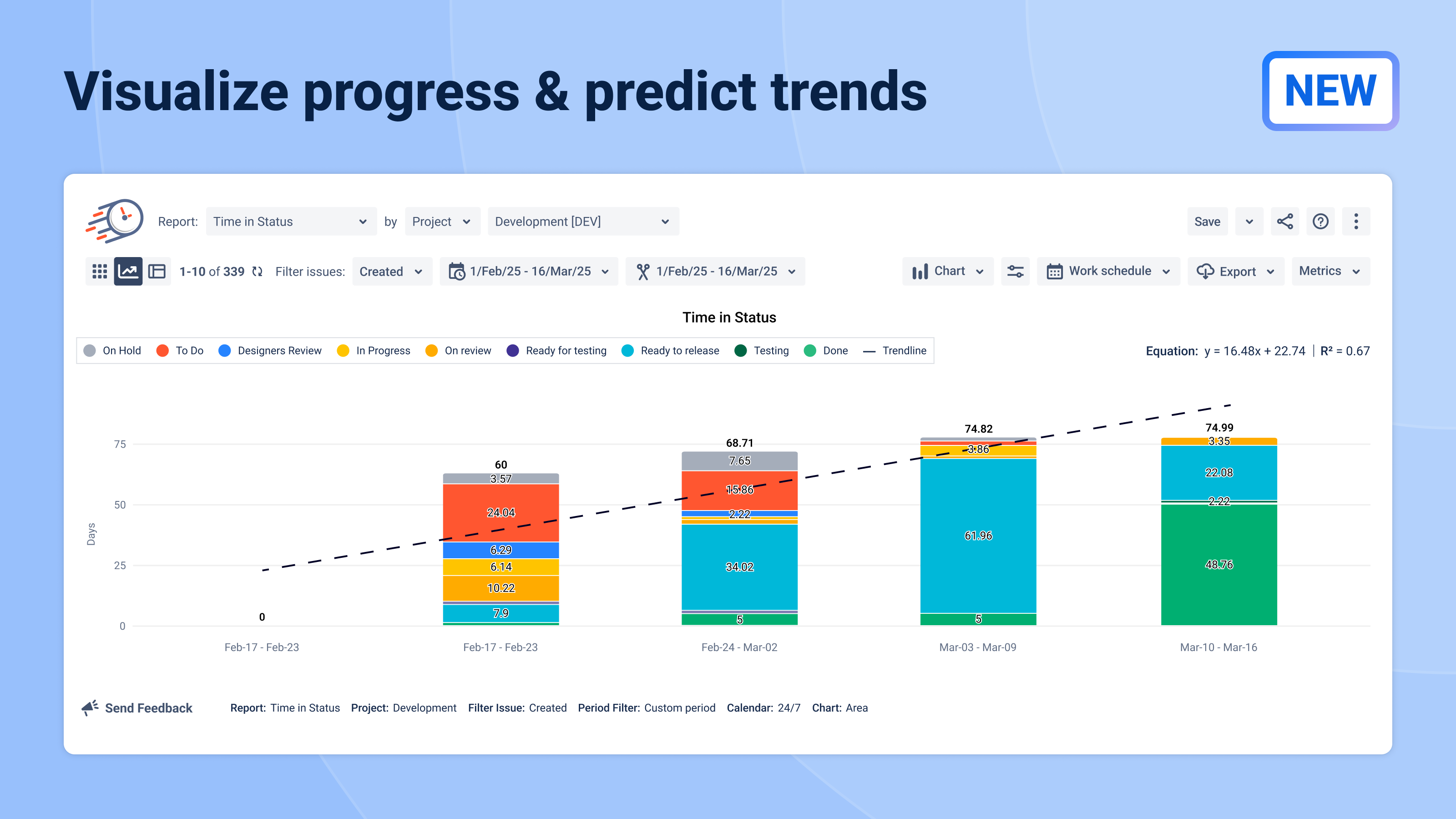
Not opinions.
Not optimism.
Patterns.
Suddenly the estimation ritual had real footing — not a crystal ball.
4. Teams saw bottlenecks before they derailed the sprint
With Time in Status on dashboards, planners could spot patterns instantly:
-
Review queues growing before the deadline
-
A developer overloaded because work kept boomeranging between statuses
-
Tasks cycling back to “To Do” after QA found missing requirements
-
Hidden wait times that inflated cycle time more than anyone expected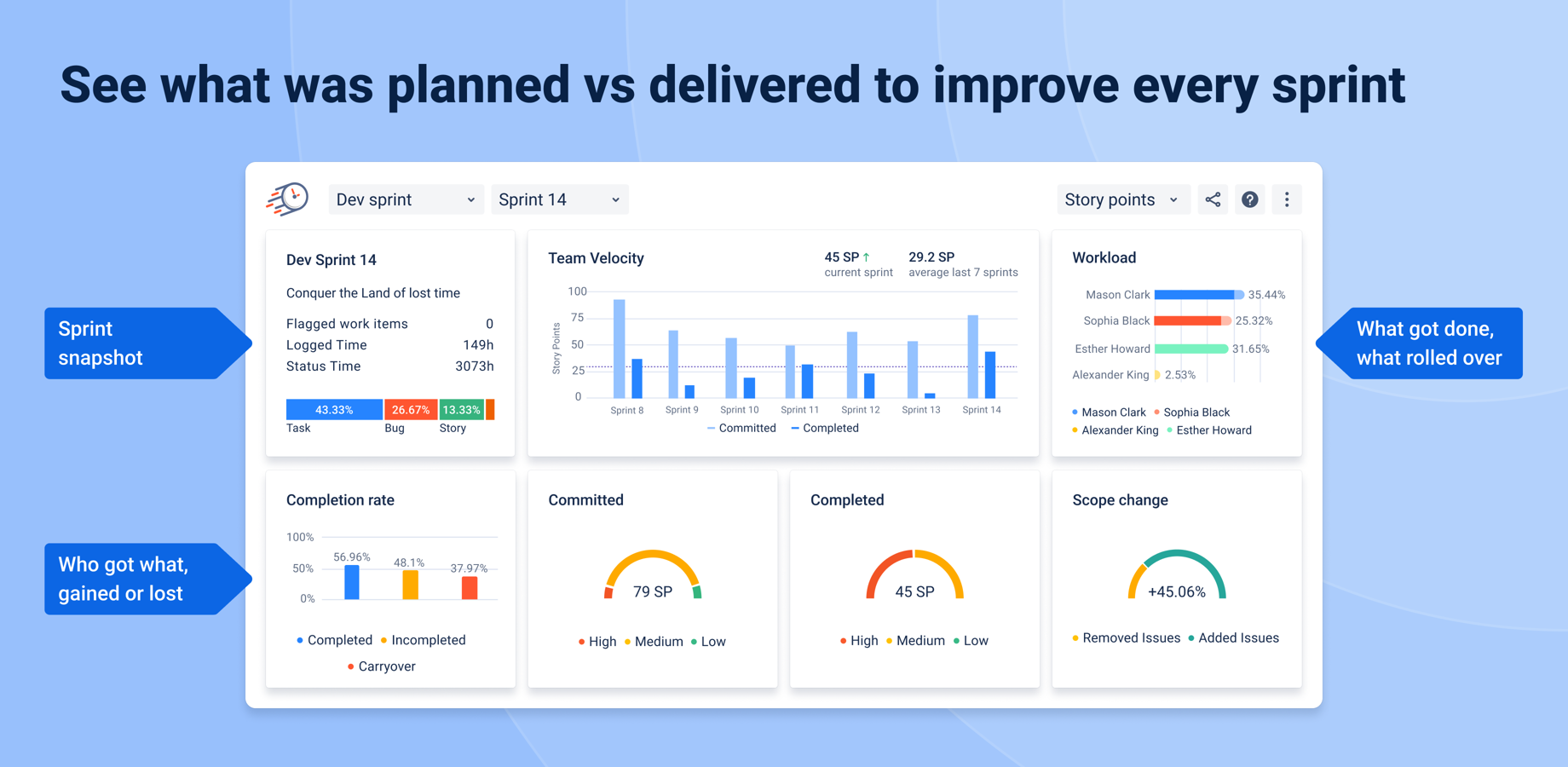
And with those insights, conversations changed from:
“Why did this take so long?”
to:
“We see where it slows down. Let’s plan around it.”
Visibility removed the drama.
🎁 The Result: Estimation Became Honest, Calm, and Predictable
When you put the two sides together —
clean, structured inputs and transparent workflow insights —
the year-end planning ritual becomes less about stress and more about clarity.
Teams can say:
-
“We know what we’re getting.”
-
“We know how long each part usually takes.”
-
“We know where risks live in the workflow.”
-
“We can plan with confidence, not hope.”
You can almost feel the December air get lighter.
✨ A final note for the season
May your last sprint be peaceful,
your input data complete,
your reviews efficient,
your bottlenecks visible,
and your estimates finally feel grounded.
Because when teams stop guessing —
they start delivering without fear of the calendar.
