In 2025, most businesses are looking for ways to run their IT operations more efficiently while keeping expenses under control. Free IT asset management software offers a tempting option: a way to monitor devices, track software licenses, and organize resources without paying for expensive tools.
But is “free” always a smart choice? Can these tools truly deliver the reliability, security, and scalability a modern business requires? Or are they a risky shortcut that could cost more in the long run?
Let’s take a closer look at the benefits and limitations of free IT asset management software, and when it might be the right fit (or not) for your organization.
What Does Free IT Asset Management Software Actually Do?
Free IT asset management software helps organizations keep track of physical and digital assets. That includes things like laptops, desktops, printers, and software licenses. Most free tools come with basic features like inventory lists, license tracking, and simple reports.
Some software for IT asset management is open-source, while others are ad-supported or offer limited versions of paid products. They don’t charge upfront, which can seem like a great deal, especially for small companies. However, the real value depends on your team’s needs and what kind of support you’ll require in the future.
When Free IT Asset Management Software Can Work in Your Favor
There’s no denying the appeal of free software, especially for organizations that are just getting started or working with limited budgets. Here are a few reasons businesses choose it:
1. No Purchase Costs
The most obvious benefit is that the software itself doesn’t cost anything. For a small team, avoiding subscription fees can free up budget for other things. For example, a 10-person company could easily save several thousand dollars a year by using a free tool instead of a commercial platform.
Why It Matters: For startups and nonprofits, spending less on tools means more flexibility in other areas.
2. Covers the Basics
Many free ITAM tools include enough features for small teams. If you only need to know who’s using which device or whether software licenses are still valid, the basic tools often do the job.
Why It Matters: You don’t have to pay for advanced features you’re not going to use.
3. Community-Driven Help
Many free and open-source tools have active communities where users share advice, updates, and fixes. If your team has some technical skills, you may be able to get by without formal customer support.
Why It Matters: If you’re comfortable managing things in-house, community help can fill in some of the gaps.
Why Free IT Asset Management Software Isn’t Always the Best Fit
While the no-cost option sounds attractive, it often comes with limitations that can create more work, or even risk, later on. Here are some of the challenges to watch for:
1. Limited Advanced Features
Free ITAM tools usually don’t offer more advanced capabilities like automated alerts, reporting dashboards, or integration with other business systems. You might find yourself doing extra work to fill in the gaps.
2. Limited Support
Most free IT asset management software don’t come with dedicated support. If something breaks or you run into a bug during an important task, your options may be limited to forums or online documents. For example, a retail business could face delays during a compliance check because they can’t get timely help to resolve a system issue.
3. Security Responsibilities
Open-source tools often rely on users to apply updates and handle server maintenance. If your team doesn’t keep up, the software could become vulnerable to attacks or data breaches.
4. Hidden Cost
Even if the software is free, running it isn’t. You’ll need server space, regular updates, and time from your IT team. Self-hosted tools require server infrastructure, maintenance, and IT expertise, which can add up. Even ad-supported tools may push premium upgrades to unlock essential features.
5. Performance Limits
Some free tools work well with small asset lists but may slow down or fail when handling larger volumes. If you reach that point, switching to another system can be disruptive. For instance, a growing e-commerce company might need to replace its free ITAM tool after hitting performance limits, wasting earlier time and effort.
When Free IT Asset Management Software Makes Sense
There are situations where free tools can be a good fit. You might consider using one if:
- You’re a small business or nonprofit with a manageable number of devices (under 50)
- Your team has the technical skills to install, configure, and maintain the tool
You’re in the early stages of building your IT process and want to test a system before committing to a paid version
When to Look Elsewhere
Free IT asset management software aren’t ideal in every case. You may want to avoid them if:
- You’re managing a large number of assets or multiple office locations
- You work in a regulated industry where compliance and data protection are top priorities
Your team doesn’t have the time or skills to manage software updates, servers, or security
Free vs. Paid ITAM Comparison:
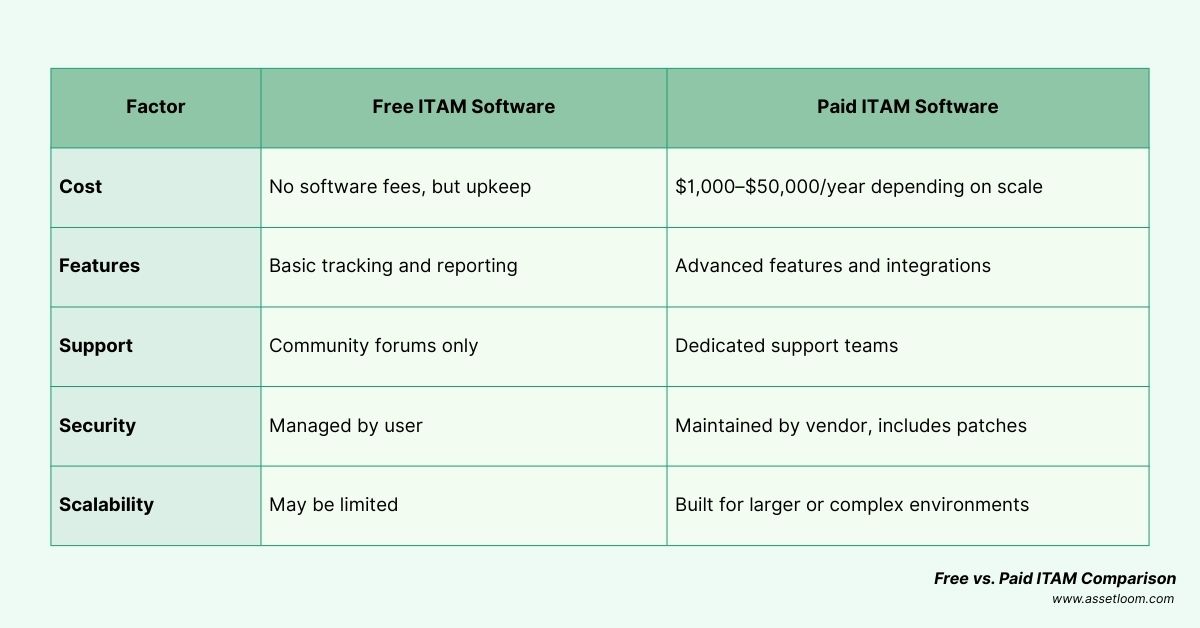
Bottom Line: Free tools can work well for small teams with basic needs, but they may not be enough for larger or more complex setups.
How to Get the Most from Free IT Asset Management Tools
If you choose a free option, here are some ways to reduce the risks and get more value:
- Know what you need. Decide whether basic tracking is enough or if you’ll need features like depreciation or reporting integration.
Focus on security. Pick tools that are regularly updated and follow best practices for securing self-hosted software.
- Use community support. Join forums and groups where users share plugins, updates, and troubleshooting tips.
Test at a small scale. Start by tracking a few assets to make sure the tool works well before expanding.
- Plan for real costs. Include hosting, maintenance, and IT time in your budgeting, even if the software itself is free.
- Start with a trial when possible. Some ITAM platforms offer free trials of their full solution. This allows you to test enterprise-level features before deciding whether to invest in a paid plan.
Final Thoughts
Free IT asset management software can be a practical option for the right kind of organization, especially those just starting out or trying to manage a small number of devices. With a bit of technical skill, you can get value from a free tool without committing to a paid platform right away.
But it’s important to weigh the long-term needs of your business. Free tools may lack the features, support, and security that larger or regulated organizations rely on. Before making a decision, take time to understand what your team really needs and what resources you have to manage the software yourself.

