The Atlassian Marketplace has experienced significant fluctuations in app releases over the past five years, marked by an initial surge followed by a subsequent decline.
In 2018, 447 apps were released, but by 2021, that number had more than doubled to a whopping 1,059. However, the good times didn't last, and the number of apps released has steadily declined. So, what gives?
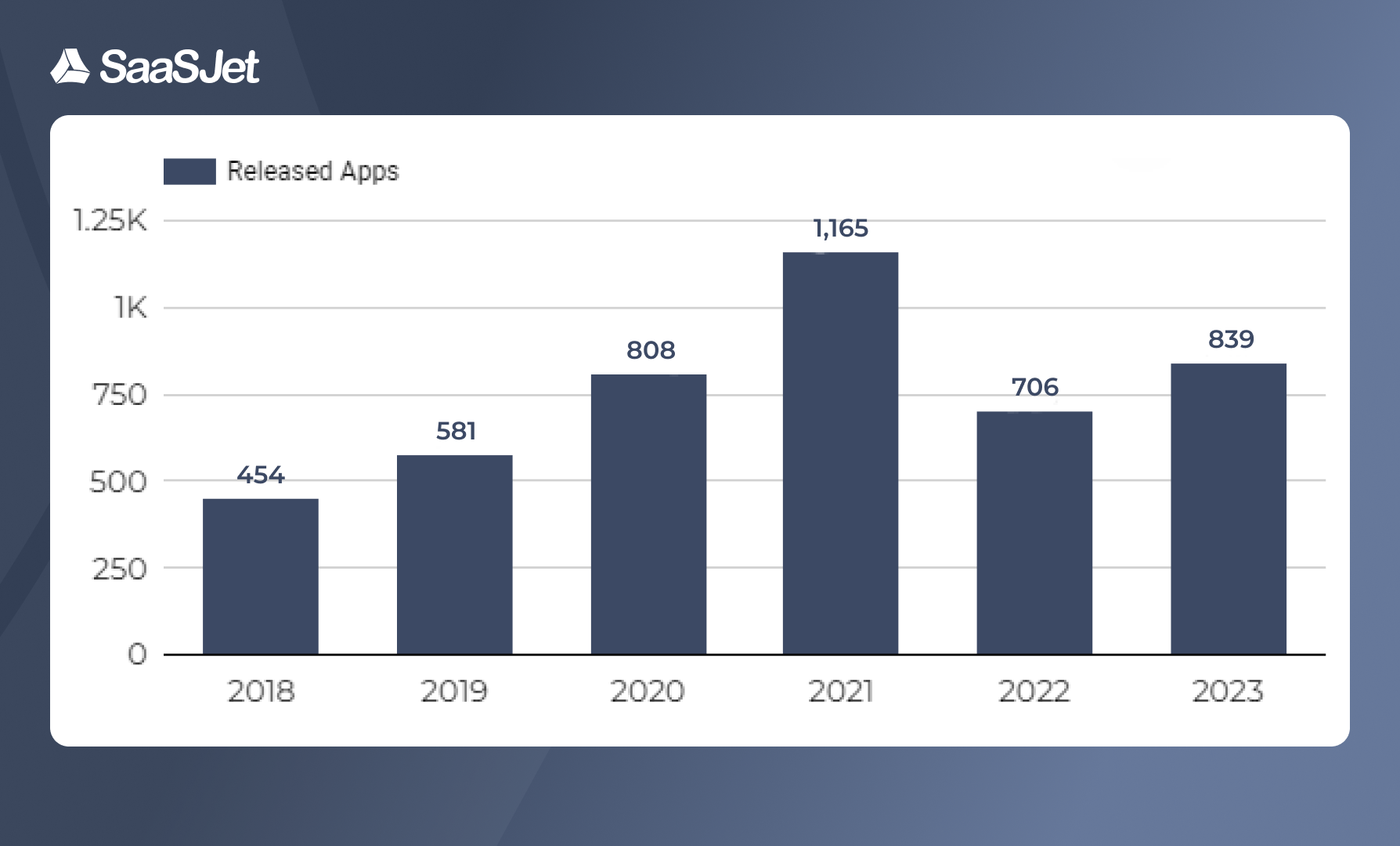
There are a few possible explanations for this rollercoaster effect:
- market saturation, when vendors find that user needs are already met by existing apps and the development of others is impractical, creating a barrier to entry;
- post-covid consequences that were caused by economic slowdowns on the global world crisis, having an indirect impact and forcing companies to reduce the cost of developing new products
- changing technological trends, which led to the use of not only the Atlassian ecosystem but also others; it should be noted that the emergence of new competitors is still ongoing
- Atlassian's strategy to introduce stricter quality standards for app development
The main driver of app growth, however, was the COVID-19 pandemic. As teams were forced to work remotely, they needed a variety of tools to collaborate effectively. This led to a surge in demand for apps that addressed these needs, and many of these apps were released between 2019 and 2021.
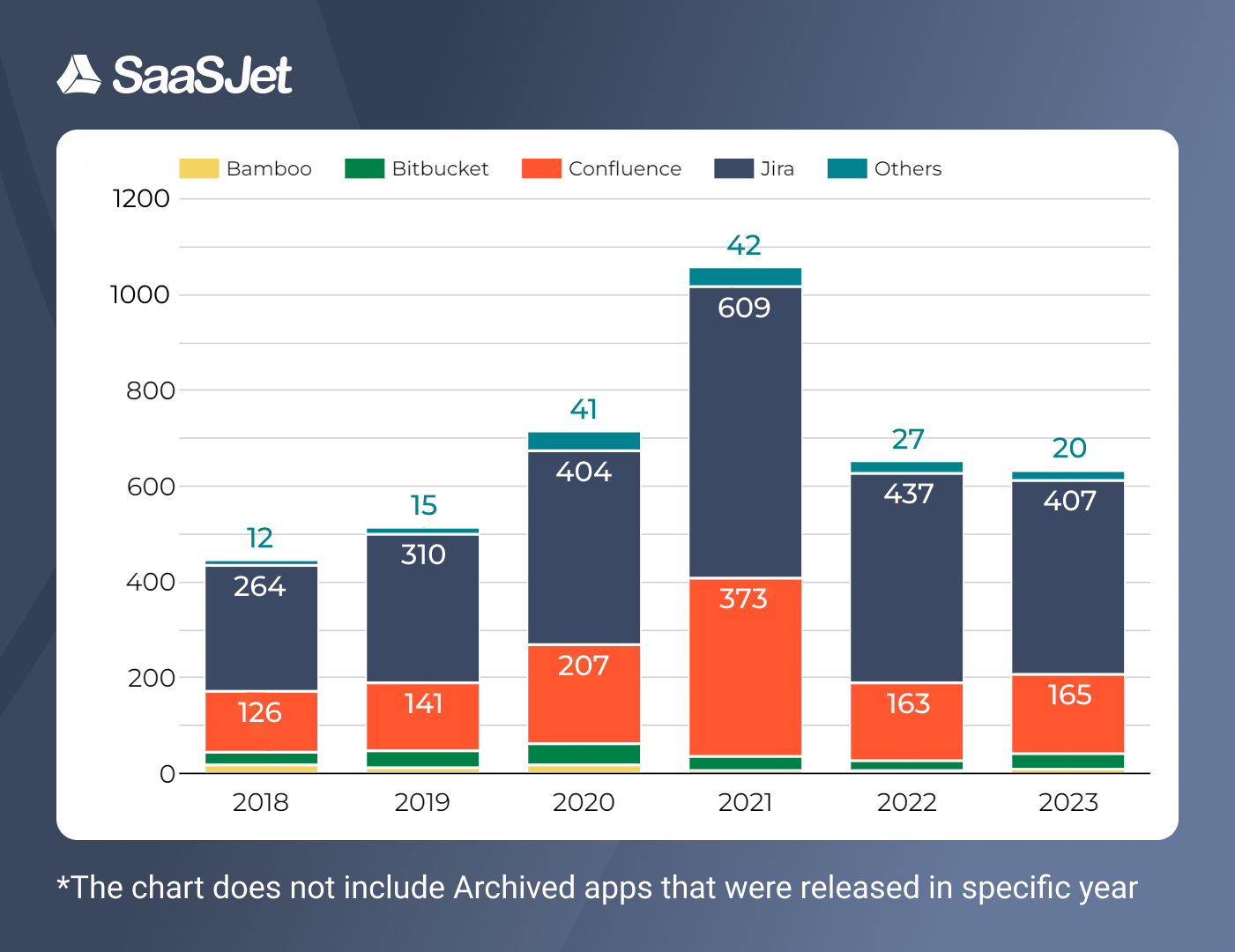
Despite the recent decline in app releases, the Atlassian Marketplace remains a vibrant hub for innovation and collaboration. As teams continue to adapt to the ever-evolving work landscape, the demand for robust and user-friendly apps will persist. Atlassian's focus on quality, coupled with its commitment to understanding the evolving needs of teams, positions the marketplace well for continued growth and exciting developments in the years to come.
💺So, buckle up and enjoy the ride! 😉


