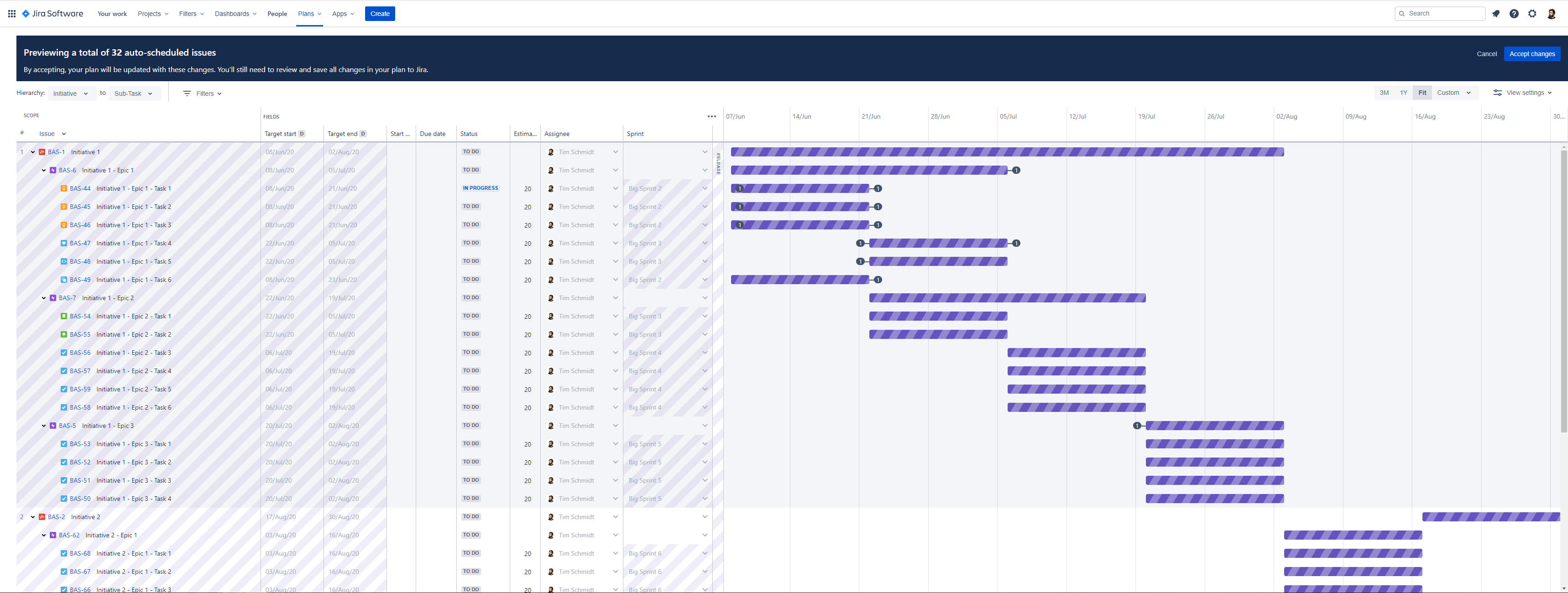
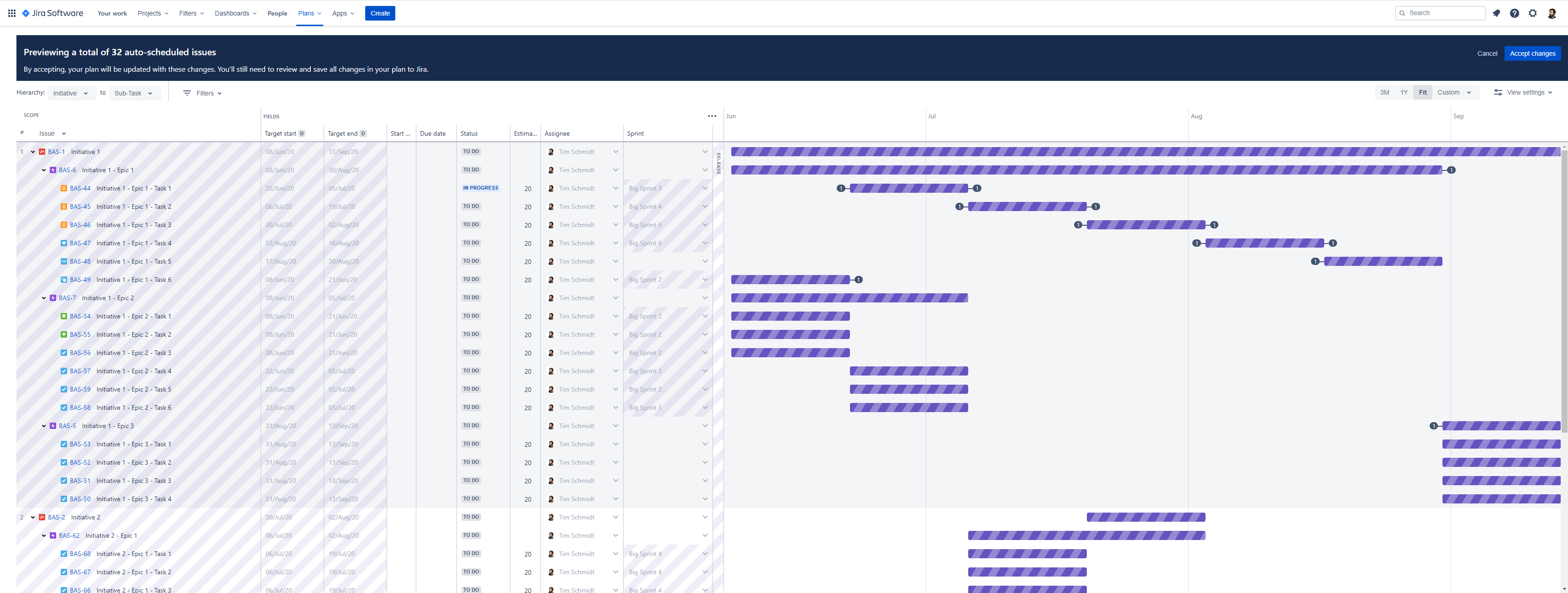
Im testing out Jira with the intention of migrating my company to using it on future projects so I have admittedly minimal experience with Jira and Advanced roadmaps but im getting some scheduling behaviour that doesnt make sense to me.
When trying to auto schedule I have found that the option to schedule sequentialy does not make sense. It does nothing for Kanban Teams and for Scrum Teams it is not enforcing that tasks are completed one after the other, it is enforcing that they are completed in sequential sprints. This does technically force them to be sequential but not in the way it is implied. Im not sure if I am just not understanding the intended design or if this is not working as expected. At the moment I cannot see how forcing dependant tasks into sequential sprints would be benficial, especially if they are small 2h tasks that just need to be done in order.
It seams like this is an unintended result of the issues being allocated to take the entire sprint duration for scrum teams (which is another thing that I dont understand the point of, as this makes it impossible to view dependency based scheduling issues within an active sprint). But if this IS the intended design, I feel like the menu needs to explain this better as currently it just says it will force them to be one after the other, there is no mention of it forcing them to be in sequential sprints.
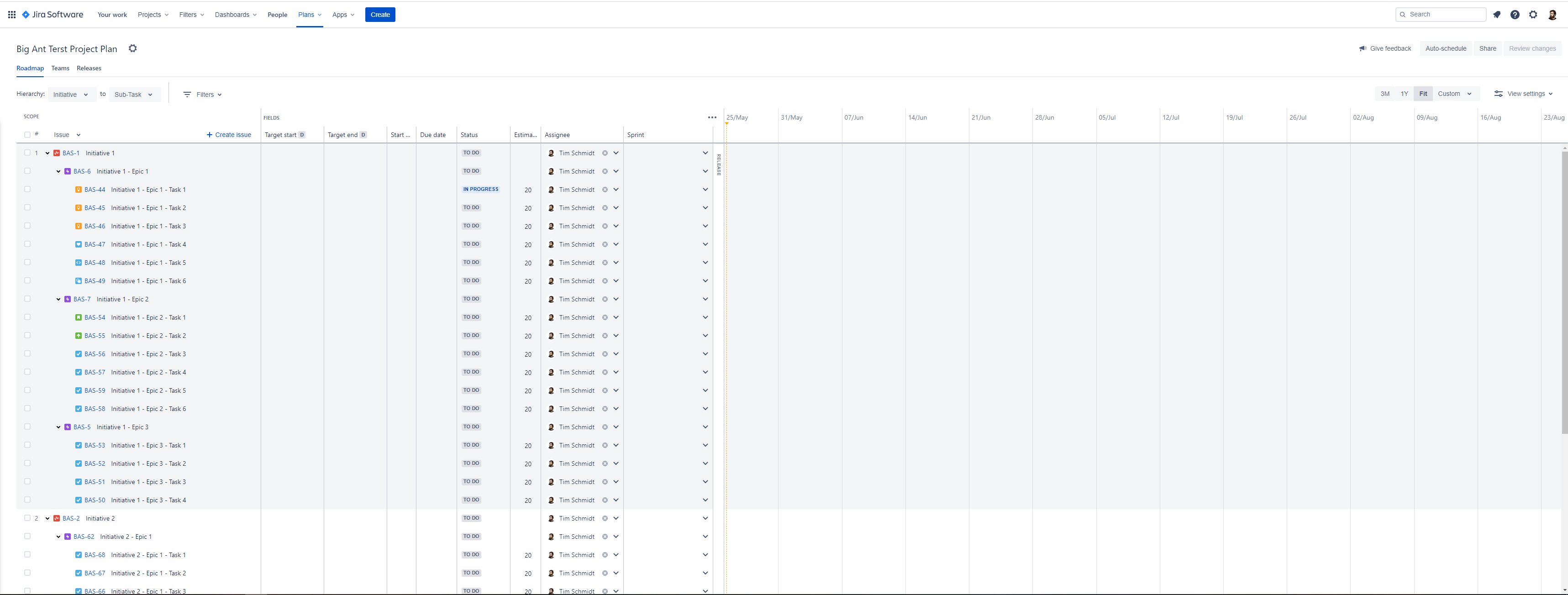
In my following example images i have 6 issues as children of "initiative 1 epic 1" with dependencies set up. I also have more issues set up inside other epics but the problem I am experiencing is noticable with the child issues of "initiative 1 epic 1".
- Task 1 depends on task 6
- Task 2 depends on task 1
- Task 3 depends on task 2
- Task 4 depends on task 3
- Task 5 depends on task 4
When changing the "configure" settings for advanced roadmaps, in the Scheduling tab there is the option to schedule dependent issues either concurrently or sequentialy.
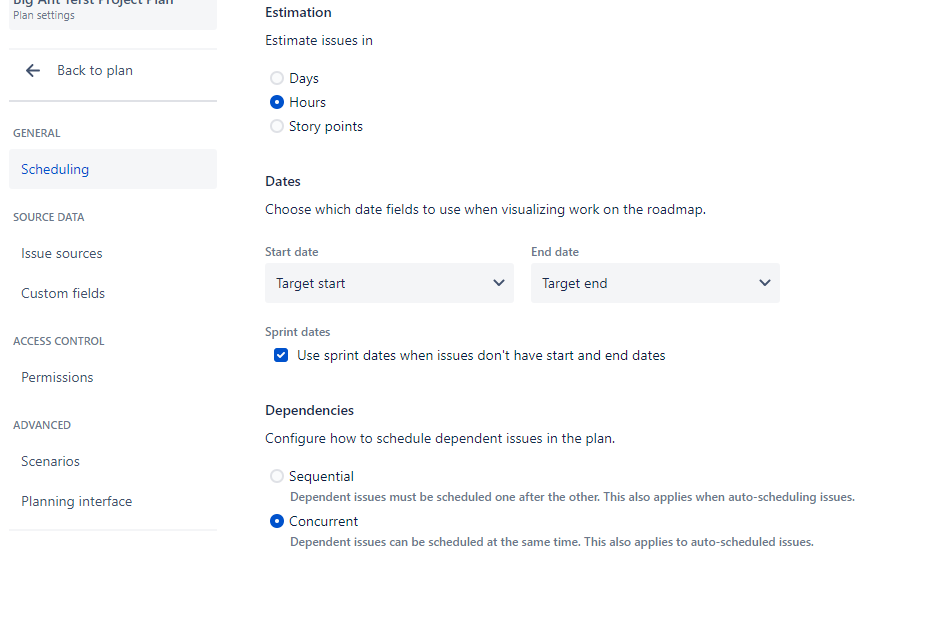
If the team is set to Kanban, this has no effect.
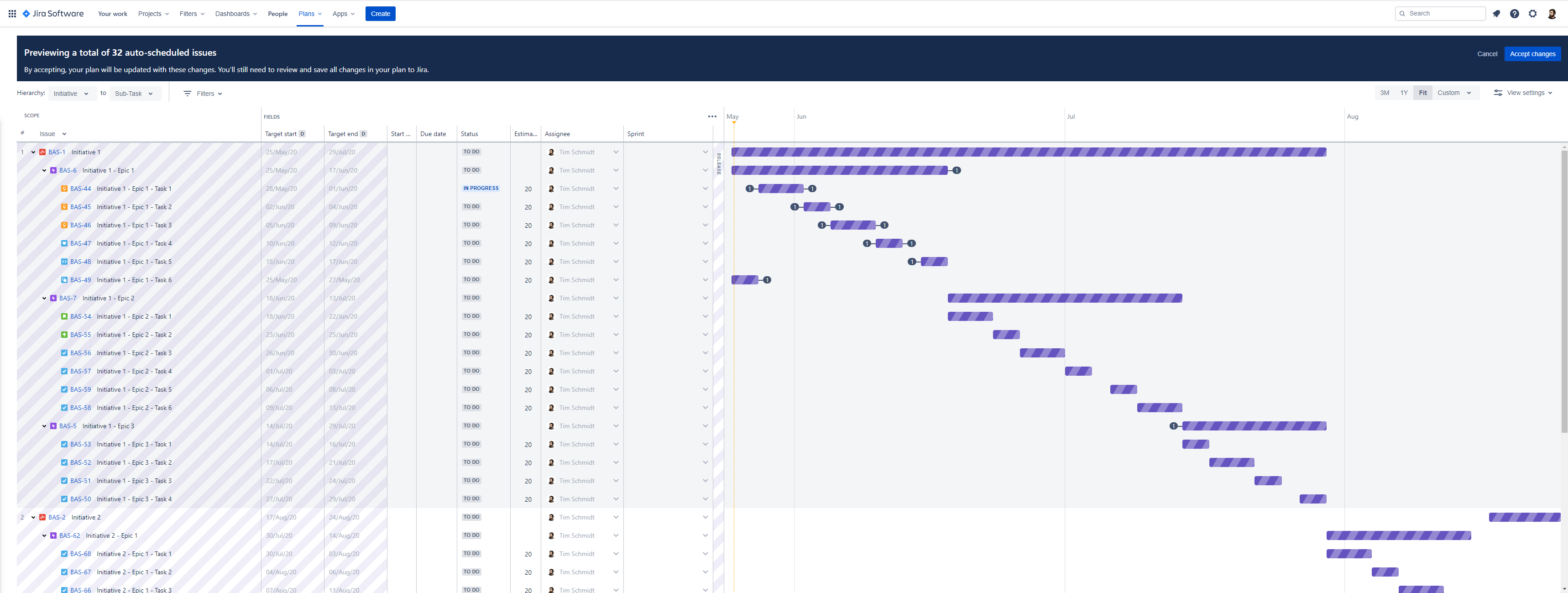
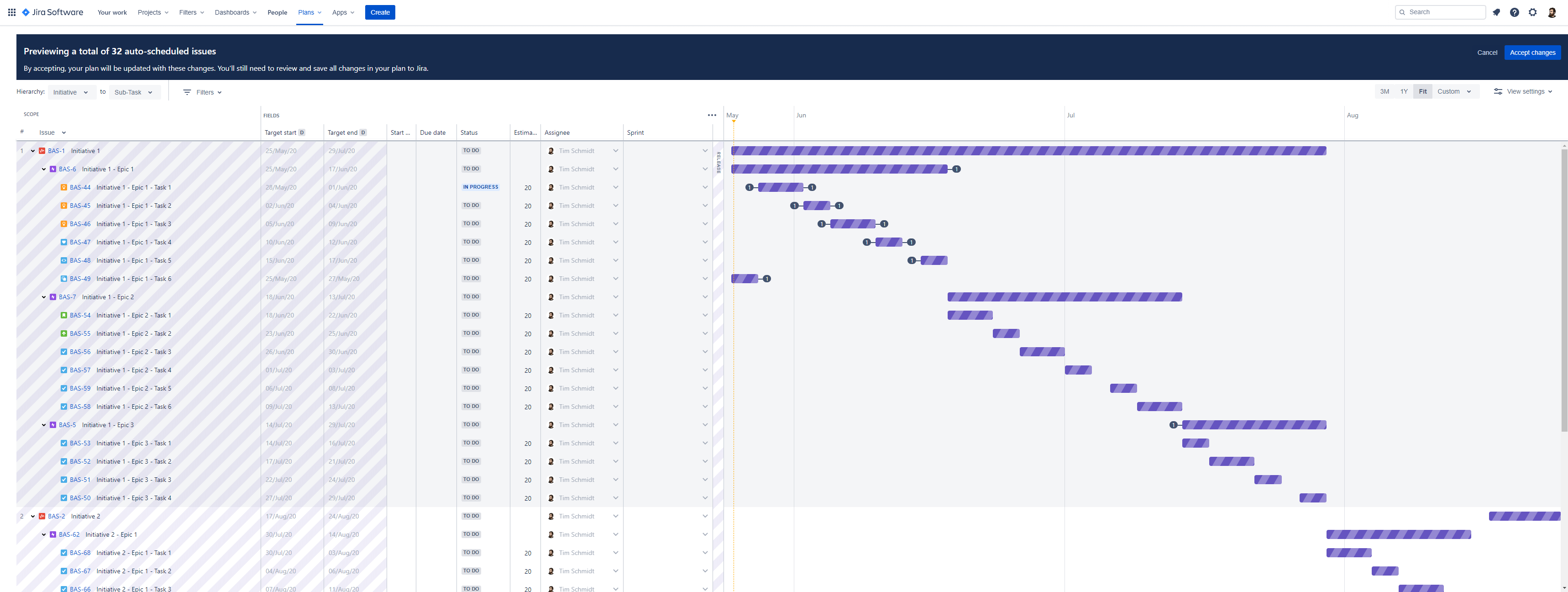
When the team is set to scrum the concurrent mode still orders them sequentially but allows multiple dependant issues in the one sprint so long as they all fit within the sprint. The sequential option on the other hand forces each issue to be completed in sequential sprints.