Let’s face it: most of us have too many meetings on our calendars. And few things are a bigger waste of time than recurring meetings that no longer provide any value to attendees (or the business). In fact, the average worker feels a full 50% of their meetings are wasted time! No wonder we spend meetings daydreaming, doing other work... even sleeping.
But wait. It gets worse.
If you add up all those wasted minutes and factor in attendees' salaries, pointless meetings cost businesses $37 billion annually in the U.S. alone! Yes: that's "billion" with a B.
It’s easy to fall into the trap of viewing meetings as the one and only way to collaborate. That knee-jerk tendency is what gets us into trouble and what gives meetings a bad name. If your calendar is packed with back-to-back meetings and you're feeling overwhelmed AF, give yourself permission to reassess whether all those meetings are really necessary. This little flowchart should help.
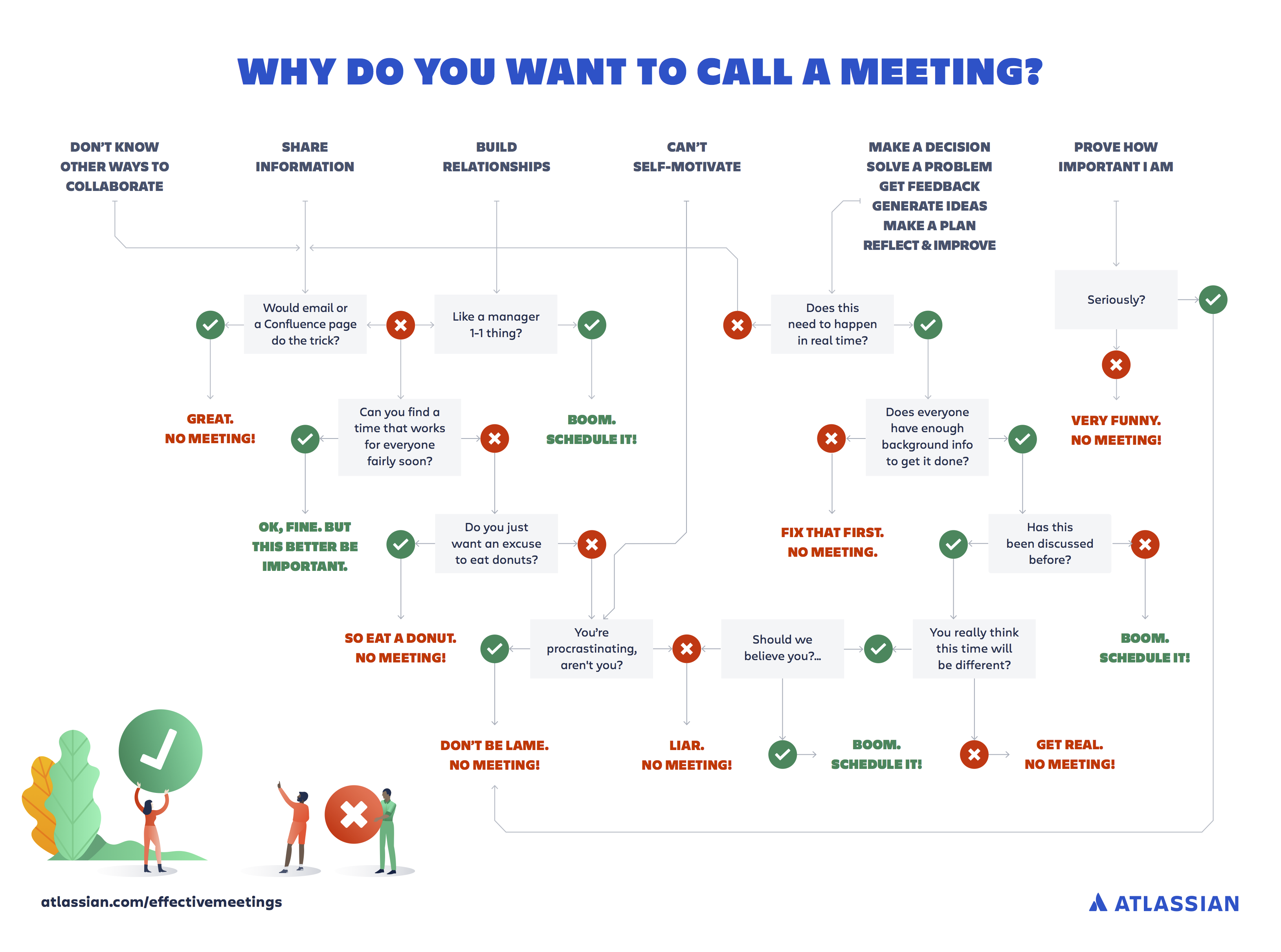
(If you want to share or print this flowchart, download the high-res PDF version here.)
Some types of meetings are legit, others aren’t. Meetings should never be held for the sole purpose of sharing information. That’s what email, chat, and company intranets (like Confluence) are for.
In the best case scenario, a meeting’s purpose is to make a decision or create something collaboratively. Project planning, mapping out customer journeys, setting goals, solving a problem, choosing X vs. Y… all these are situations where holding a meeting is probably the most effective way to get it done.
At the very least, a meeting should center on a discussion that will be more effective in real-time than asynchronously via emails or comment threads – team or project retrospectives, brainstorming, and 1-on-1 meetings between managers and their direct reports, etc.
So... which meetings do you think add value? What are some meetings you'd like to send into a black hole, never to return? Let's discuss!