A Champions Slack discussion started when @Ciara Twomey Nielsen noticed something unexpected while trying to create a new page.
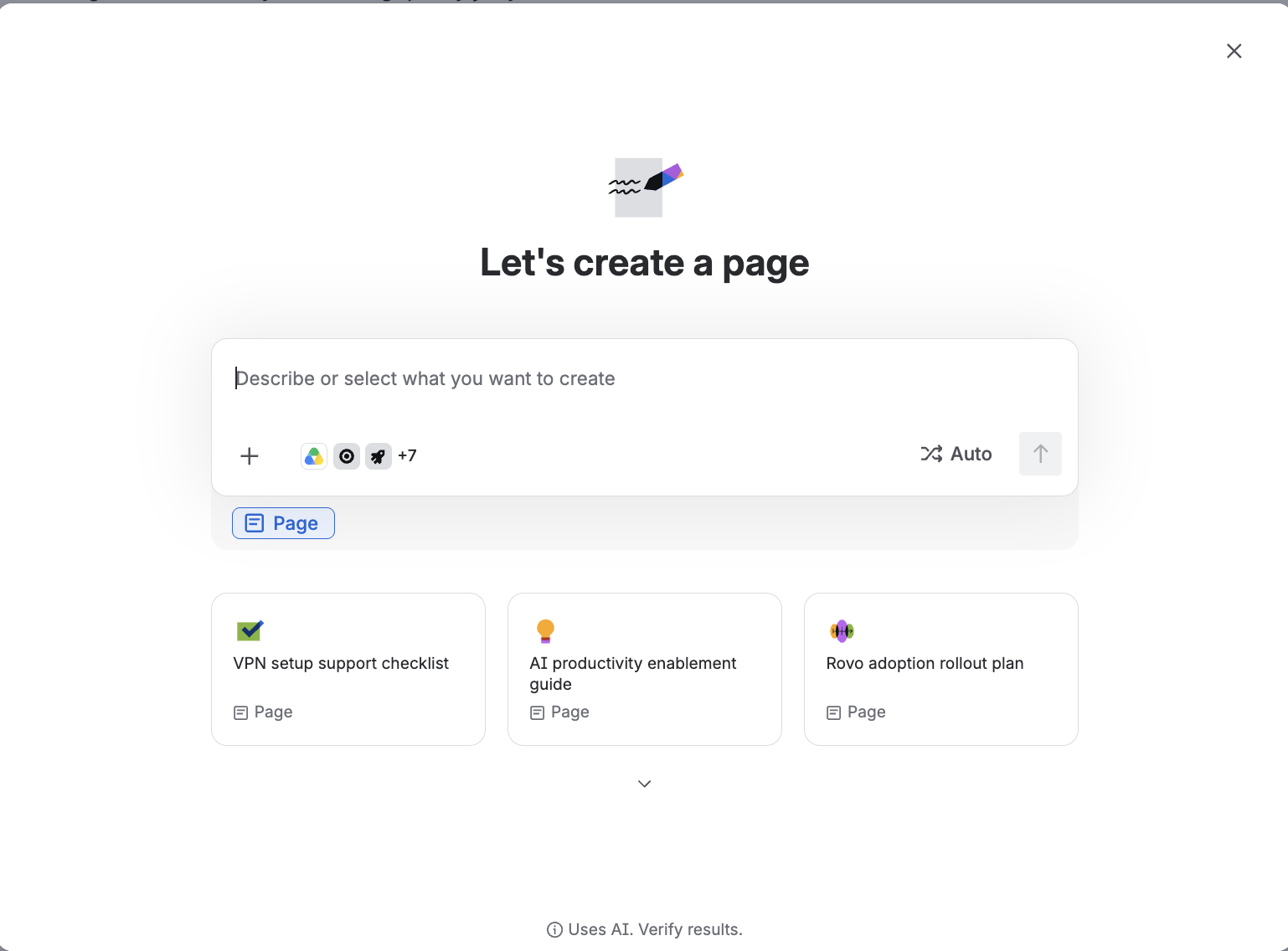
Instead of getting a blank page option, she was presented with a "Create with Rovo" experience. At first glance, this looked like a minor user interface change but it raised a bigger question:
When AI usage is tied to credits, quotas, or future overage costs, should core workflows be redesigned to encourage more AI usage?
What Triggered the Concern?
The concern wasn't that AI-assisted page creation existed. Most people in the discussion actively use Rovo. The concern was that creating a blank page—a fundamental Confluence workflow—appeared to be routing users through an AI experience first. Several Champions questioned whether users should have to:
- Dismiss an AI overlay
- Navigate additional clicks
- Enter an AI-assisted workflow
just to create a standard blank page. The concern was the placement of AI and the potential implications.
Why This Matters More Than It Seems
Under most software models, changing a workflow is primarily a usability decision. AI changes the equation. Many AI products now include:
- Usage quotas
- Credit consumption
- Tiered limits
- Consumption-based pricing
That means interface decisions can directly influence spending behavior. If a workflow encourages users to invoke AI more often, usage naturally increases. Whether intentional or not, administrators eventually have to account for that usage.
The Enterprise Concern
Several Champions raised a concern that many administrators are quietly wrestling with. Organizations are being asked to:
- Promote AI adoption
- Train users
- Encourage experimentation
while simultaneously trying to understand:
- Future costs
- Consumption patterns
- Governance controls
- Budget implications
The challenge becomes harder when administrators don't yet have mature tools to forecast, govern, or limit AI consumption. In that environment, even small workflow changes can attract attention.
This Isn't Just About Atlassian
Every major AI platform faces the same temptation. Product teams naturally want:
- Greater adoption
- More engagement
- More usage
The easiest way to increase usage is often not a better model. It's changing the workflow. Move AI closer to users. Make it more visible. Make it the default. Reduce the friction required to invoke it.
Those decisions can increase adoption dramatically.
Champion Takeaway
When a new button increases usage of a free feature, few people care. When a new button increases usage of a metered feature, administrators tend to pay much closer attention. That's where governance, budgeting, and product design begin to intersect.
In the age of consumption-based AI, user experience design isn't just a usability decision anymore. It can become a budget decision as well.
Please Note: The UX discussed in this article was distributed in a limited release and may or may not ever appear in your environment. It was used to illustrate a growing AI interface design trend and discuss questions user should consider.


