A great question came up in Champions Slack from @Darryl Lee:
If an agent has the “Comment on work item” skill, why doesn’t it actually post the comment?
It looks like a bug—but it usually isn’t.
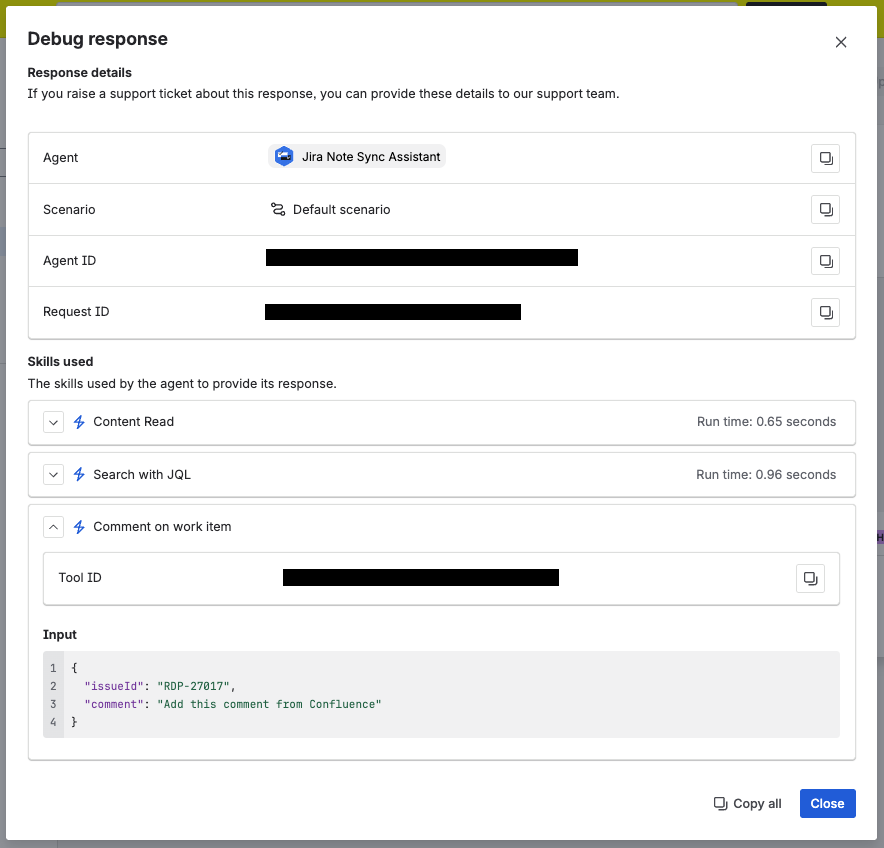
The Short Answer
Write actions depend on how the agent is triggered.
- Rovo Chat → often behaves as read-only
- Scenarios, automation, action cards → where write actions can execute
So even with the right skill enabled, the agent may not post a comment in Chat.
What Happened
In this case, the agent:
- correctly analyzed a Confluence table
- matched Jira issues to notes
- avoided duplicates
But returned:
“I don’t have the ability… to post a new comment”
That’s your signal: the context didn’t allow the write action, not that the skill failed.
Why This Is Confusing
Because the UI suggests:
Skill enabled = action will happen
In reality: Skill available ≠ execution guaranteed
Execution depends on context, which isn’t always obvious.
What Works Today
For more reliable results:
1. Let Rovo handle the analysis
- identify issues
- detect changes
- return structured output (JSON/CSV)
2. Let Automation handle the action
- parse the output
- post the comment
- enforce consistency
It’s less elegant—but far more predictable.
One More Gotcha
Even this approach can hit limits.
Example raised in the thread:
- “Comment on work item” exists in Confluence Automation
- But may not allow specifying a Jira issue key
That creates friction when trying to complete the workflow end-to-end.
This isn’t just about one missing comment.
It highlights a broader pattern:
- AI handles interpretation well
- Systems still handle execution more reliably
Until those layers are tighter, separating the two will give you better results.
