We've started an EAP for the new integration with Jira Plans
Many of you asked us how to use Jira Product Discovery alongside Jira Plans. We've been working on an integration that brings these two closer together.
Update on 18 July:
We've given early access to about 100 customers who asked on this post up until a few days ago (if we could locate your site based on the URL you provided). If you have access you should see a notification about it in JPD when you open an idea. To give us feedback about the integration: you can just add a comment to this article.
Limitations:
- Ideas are not editable in Plans, only via JPD
- Idea preview on hover only show issue key and summary, not other fields yet
- Up to 1000 Ideas are supported in a Plan, not a single more
- Group by Idea: Idea header might be empty if the data inaccessible
- Group by Idea: groups are not alphabetically sorted
- PNG export: Ideas might be missing in preview
For everyone else: once we're done with this round of testing, we'll progressively roll it out to everyone. Thank you for your patience.
How it works
Here's how it works in a nutshell:
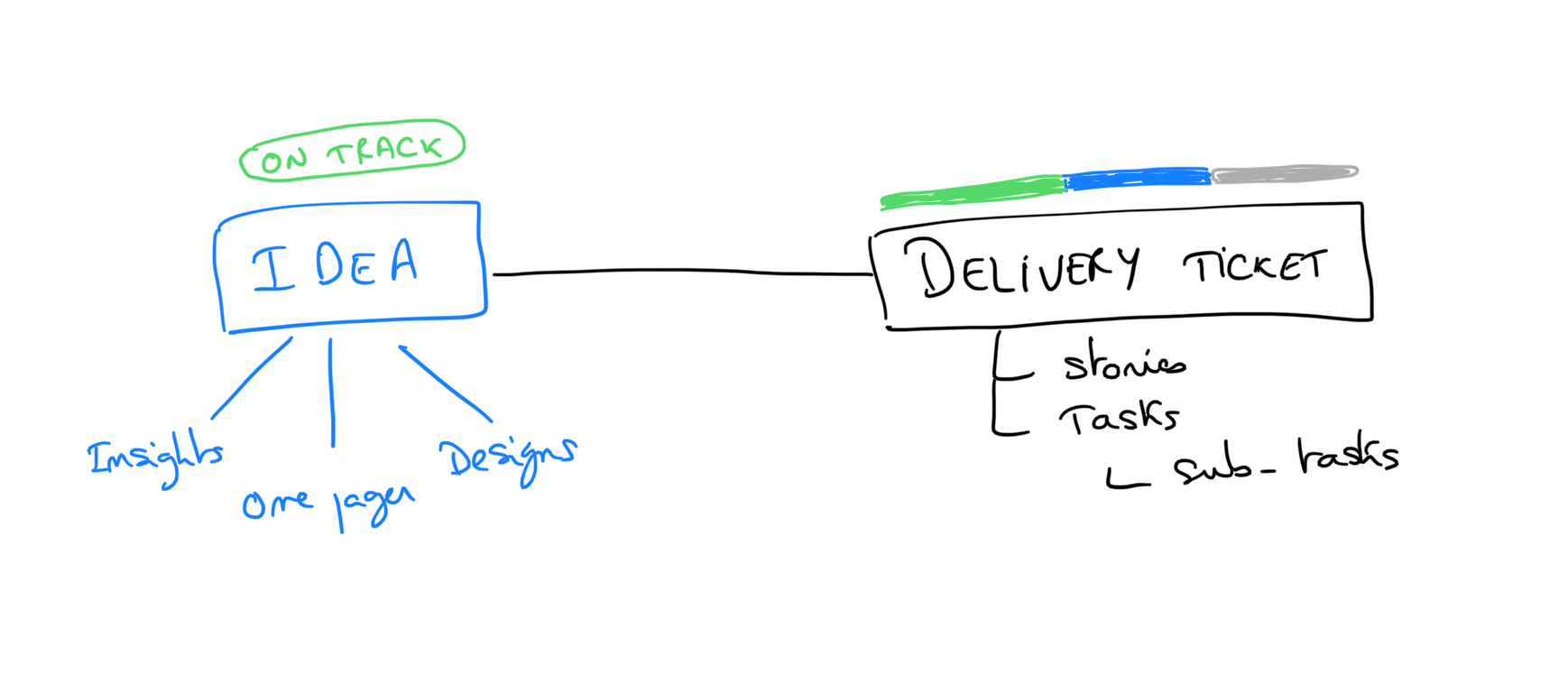
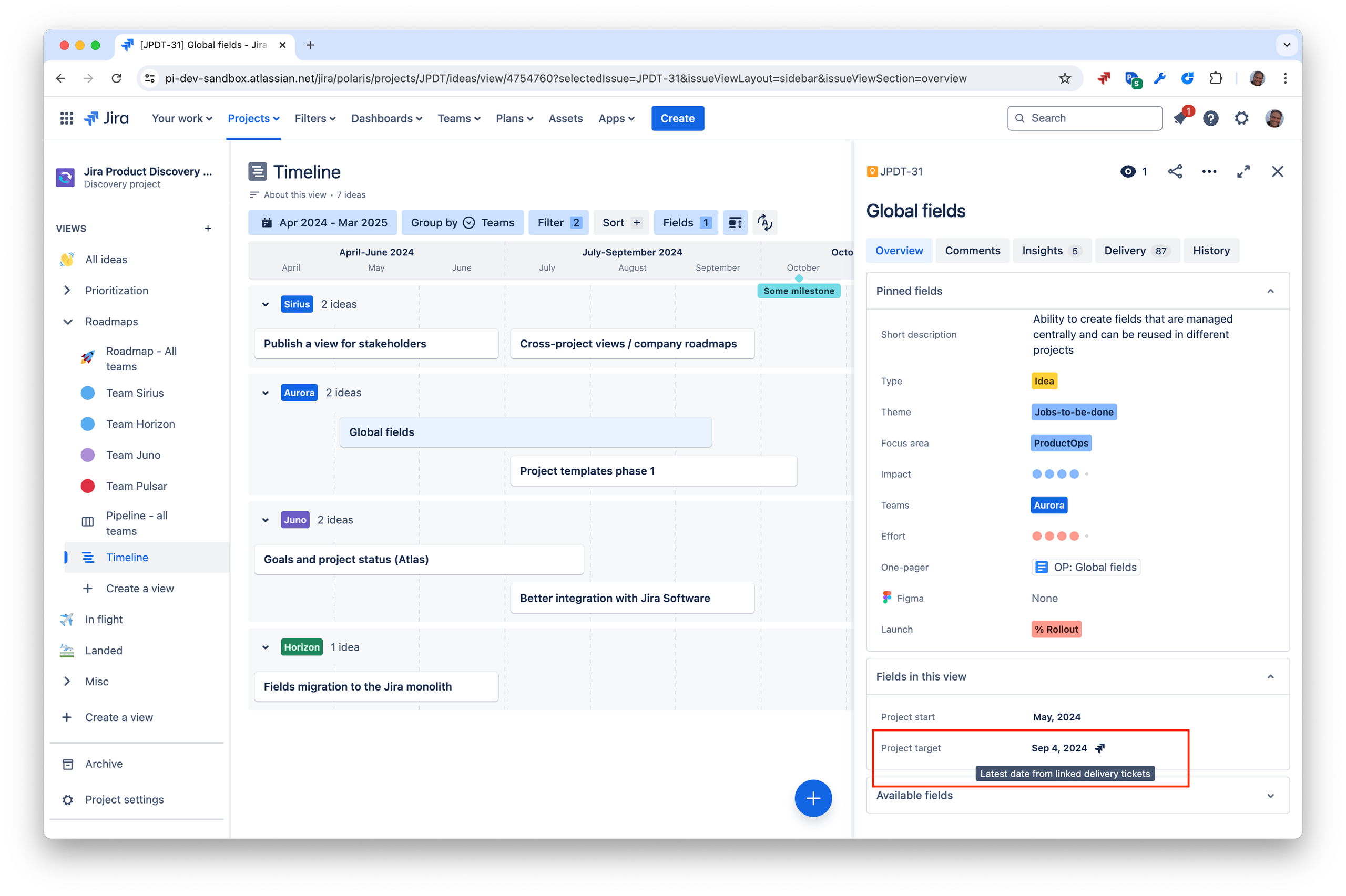
- When you're ready to start delivery for an idea, you link the idea to delivery tickets from Jira (in the idea's Delivery panel)
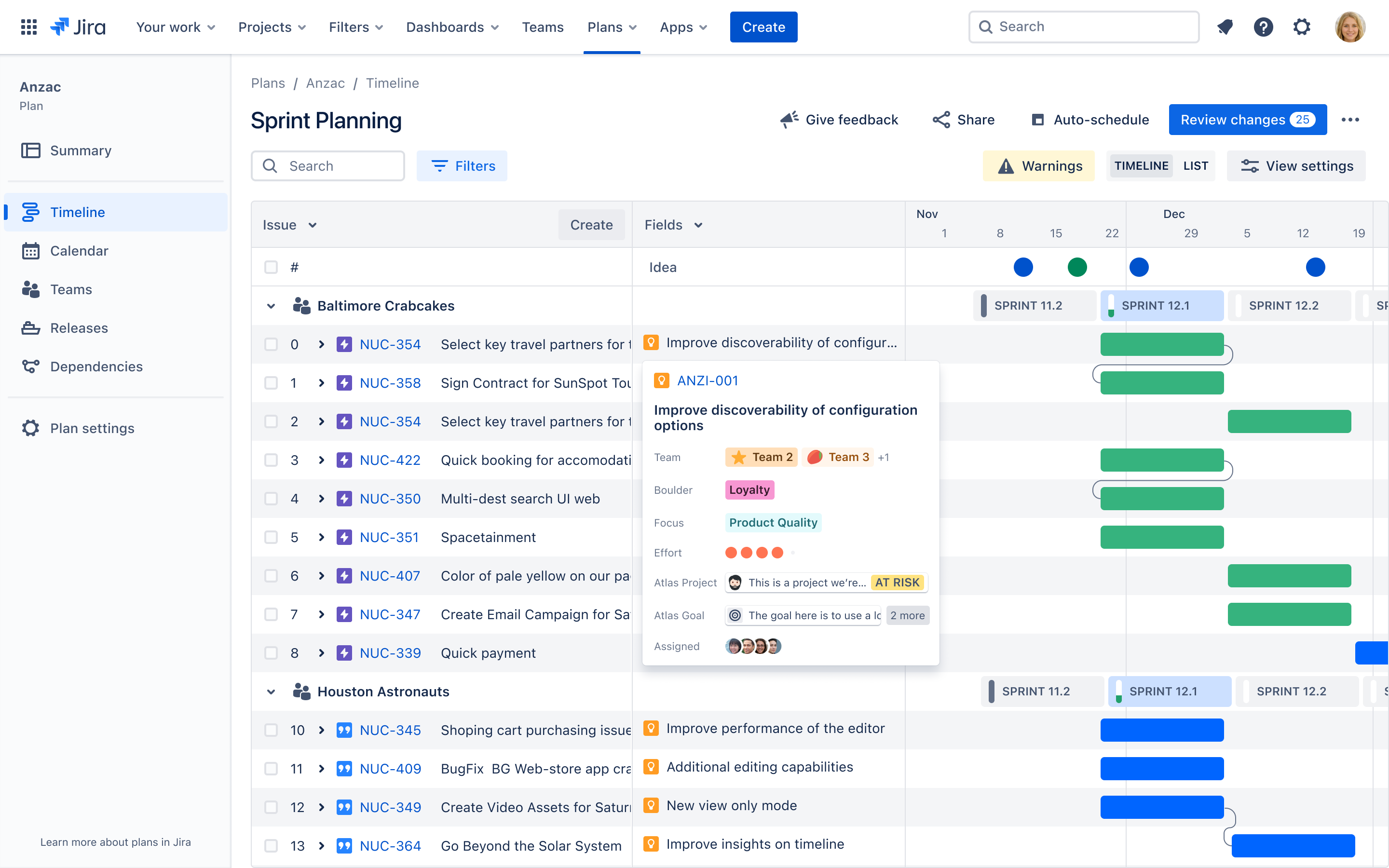
- Which means that you can filter and group by that field:
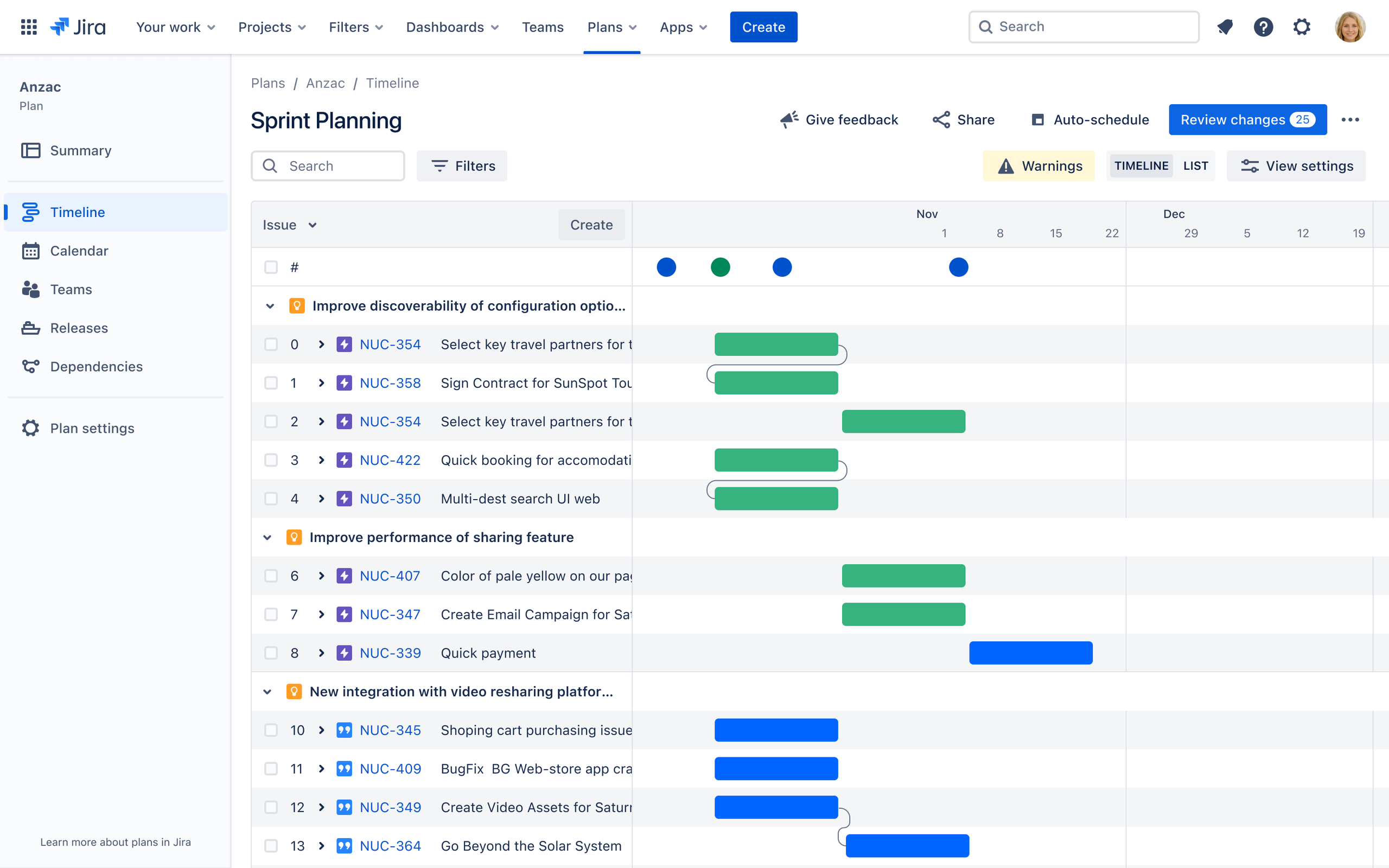
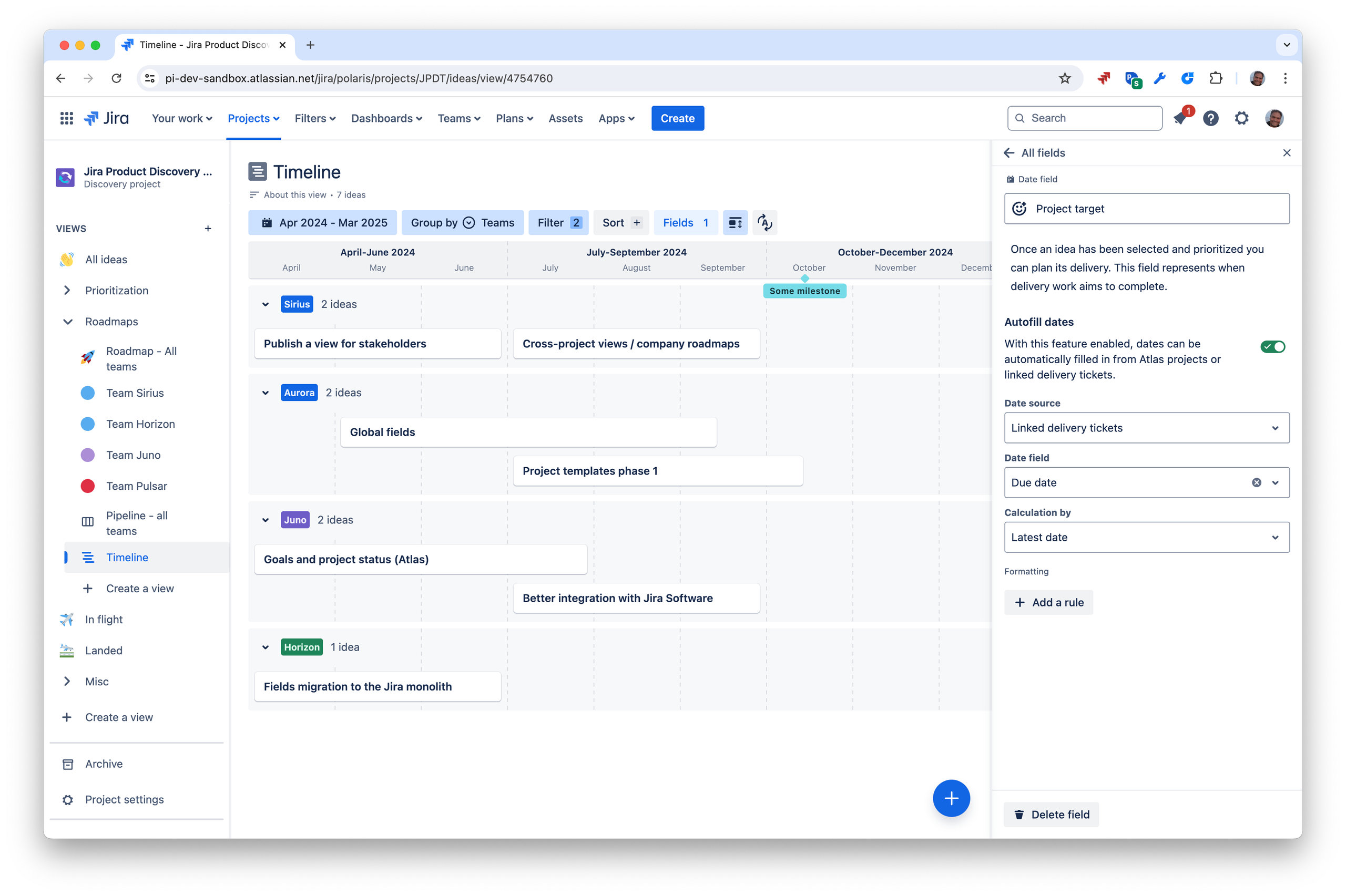
- You can then keep the dates on the delivery ticket and on the idea in sync. To do that you configure the idea’s date fields to be automatically overridden by the epic/initiative’s date fields once the idea has corresponding delivery tickets. This way, any change on the epic coming from the team’s work will be immediately reflected back on the timeline:
When to use a roadmap, when to use a plan
Here's how we've designed the model:
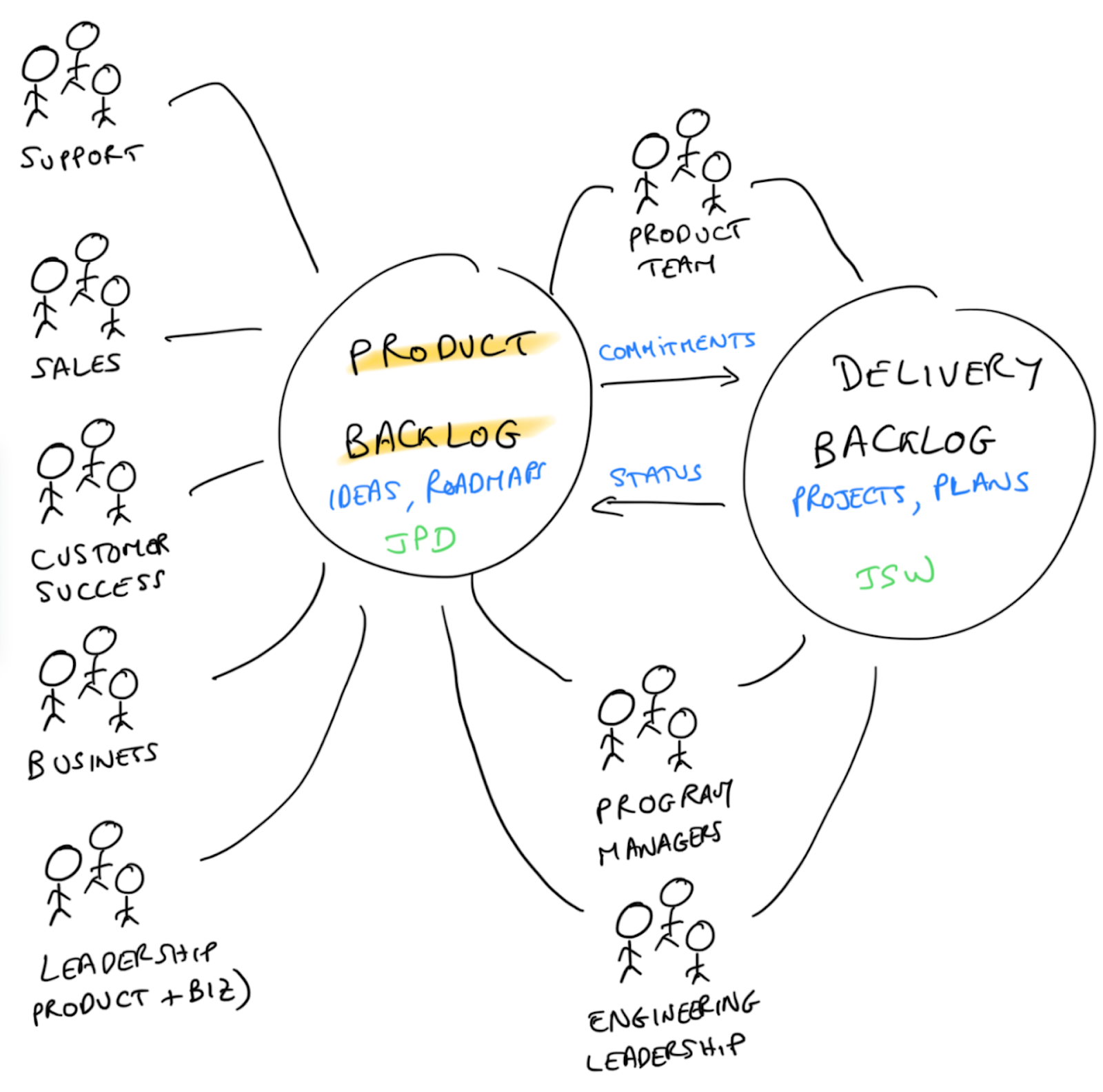
In Jira Product Discovery you handle your product backlog, prioritize ideas and create roadmaps. These roadmaps communicate how and why each idea was prioritized. You can easily share these roadmaps with everyone in your company, your customers and partners.
When it comes to delivering these commitments, you use the rest of Jira. You create corresponding epic(s)/initiative(s) for each idea, you break them down in user stories, tasks and subtasks, and try to map out how everything will fit together in Jira Plans - dependencies, team constraints, estimations, more detailed planning if the sequencing is tricky, etc.
Timeline view
You can use dates and visualise ideas on a roadmap using the timeline view in JPD. To be honest, we’re not big fans of this approach in the JPD team. We much prefer the Now/Next/Later format as we find it sets up better conversations with stakeholders and “when is X going to ship?” is rarely the most useful topic to discuss with them. That being said, every company is different and we know that for some of you it’s not an option.
We recommend you use a timeline view with a high level of granularity: focus on the important ideas, don’t go too granular - the goal is to help you communicate a high level roadmap to your stakeholders, without going in the details tasks and sub-tasks.
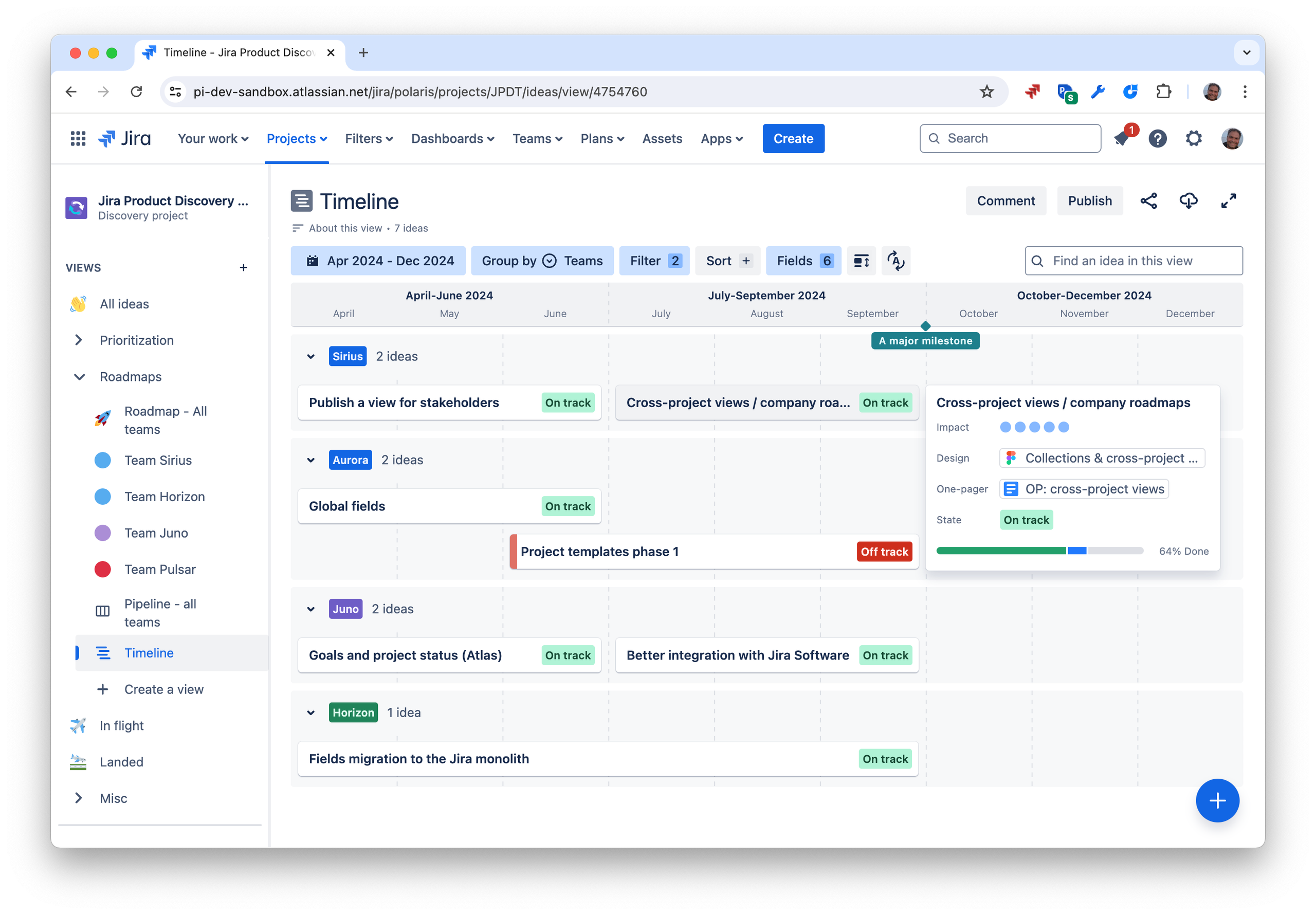
Before you ask: the dates on this view are completely made up - we don't use timelines in the JPD team 🙂
How to use Now/Next/Later with timelines
Time-based roadmaps can be useful when other teams depend on your work or when sharing information with marketing and key account executives, as long as they understand how to communicate the level of confidence and commitment. However when the view is not designed properly, it may project a sense of certainty far into the future and set the wrong expectations.
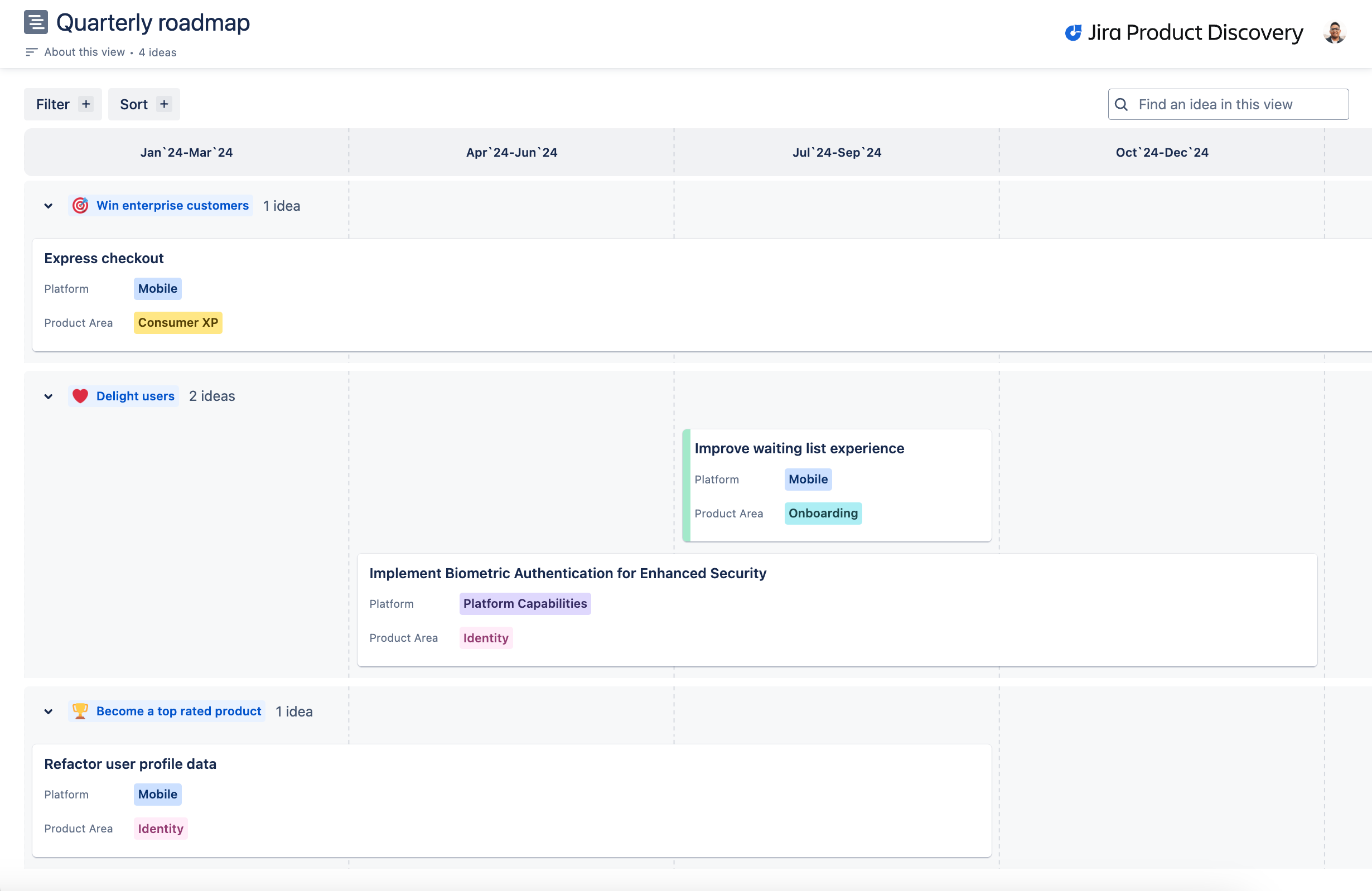
For example, this roadmap is most likely misleading: big projects far into the future - the team probably has a good idea of what’s going to happen in the next 3 to 6 months, but that certainty goes down over time:
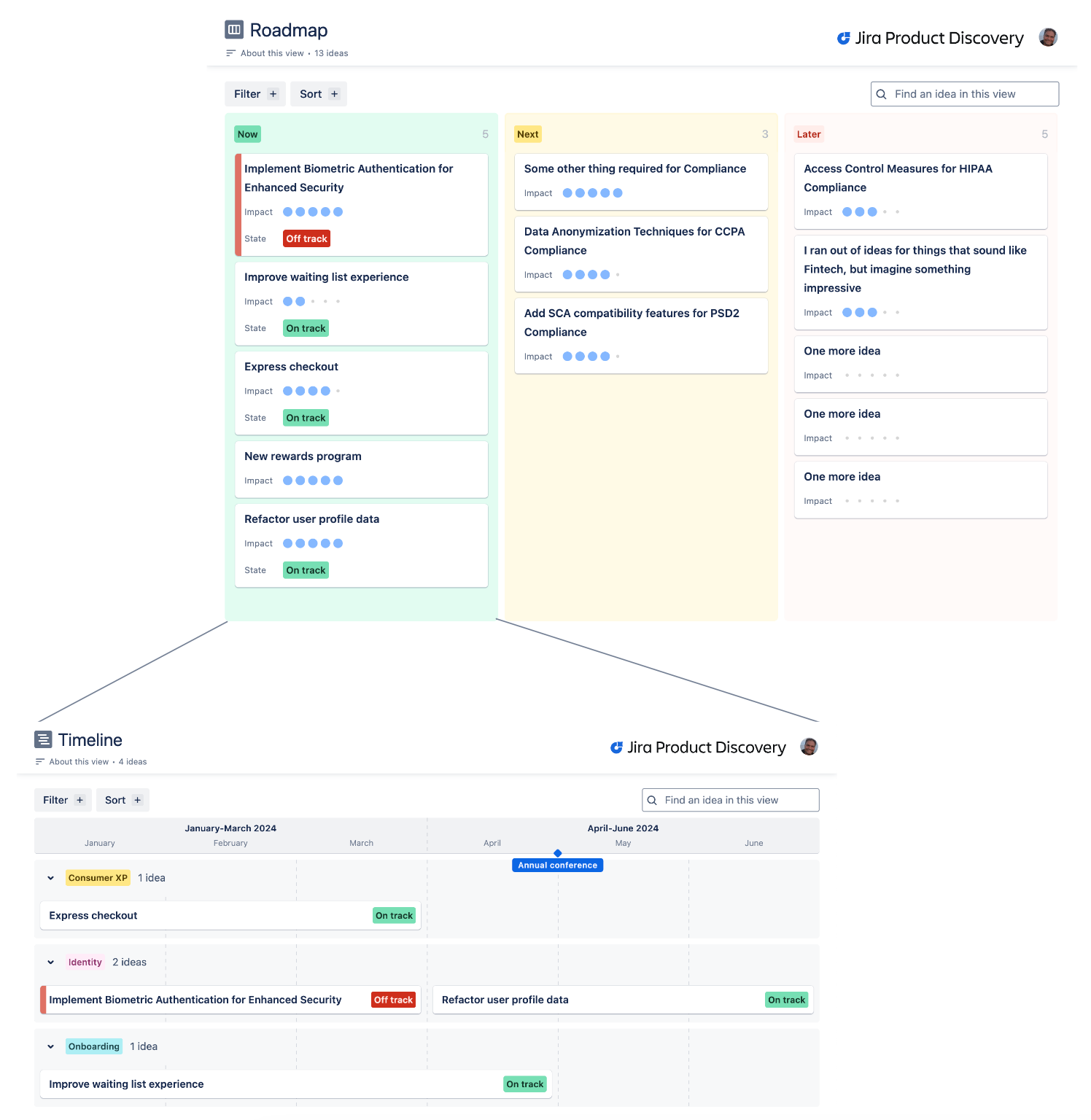
We recommend combining a Now/Next/Later roadmap with a timeline roadmap to tell a more honest story.
-
The Now/Next/Later roadmap makes it clear what is currently committed with enough certainty
-
Every idea in the “Now” column is plotted on a timeline view to give a rough idea of when it’s going to land (month or quarter)