Introduction
While studying for my ACP-100 exam (Jira Administration for Data Center and Server, at the time of writing this article), I came across the names of 3 different Jira workflow transition types (there may be more!), outside of the usual one status -> transition -> one status. I had a hard time tracking down much documentation on them. So I thought I would share what I found for others studying for an exam or for those who just want to learn more about transitions.
3 Special Transition Types
1. Common
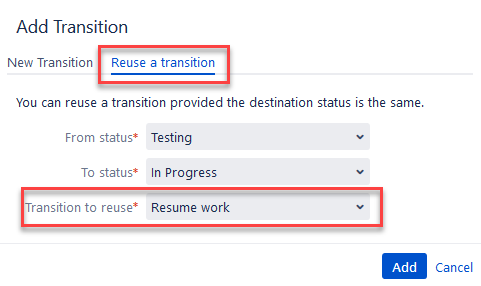
A common transition is one that two or more statuses use.
This one you've probably seen before. When you add a transition, you click the Reuse a transition tab and select an existing transition to reuse.
2. Global
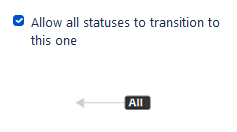
A global transition is one that can be transitioned to from any status in the workflow.
You've also probably seen this one but didn't know that it was called a global transition. This transition is created by checking the box next to Allow all statuses to transition to this one.
3. Self-reflecting
A self-reflecting transition, transitions back to itself, not a different status.
You probably have not seen this one too often. It took some digging to figure out what this transition does. Some use cases for the self-reflecting transition are when you:
- Don't want the status to change
- Want to prompt the user to input data on a transition screen
- Want to put a post-function on the transition
I suppose that you could also use a self-reflecting transition if you didn't want to add more statuses to Jira but wanted to prompt the user to complete a step. The transition won't be recorded in the issue history, just that the status went back to itself.

You could get creative in how you implement a self-reflecting transition!
Sample Workflow
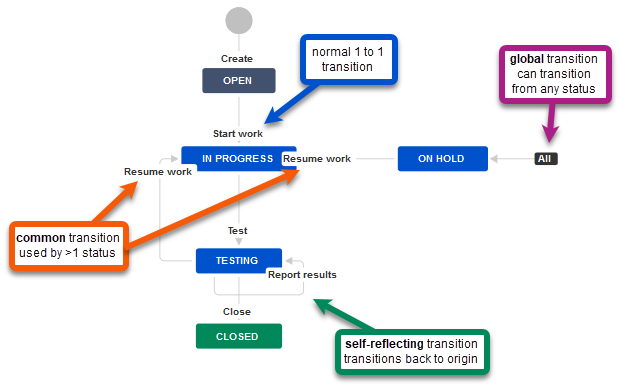
Here they all are together in a workflow with my added notes:
Conclusion
Now you know the names of those transitions you've been using.
I hope you found this article to be helpful. If you did, please Like it!
And remember me when you get the question on the exam right. 


