I was inspired to try the Health Monitor play with a couple of years ago when a hard copy kit for this play arrived in the office after Summit 2018.
The kit included the list of 8 attributes for 3 different team types and six sets of rating cards. We used the Health Monitor Confluence template to record our meetings.
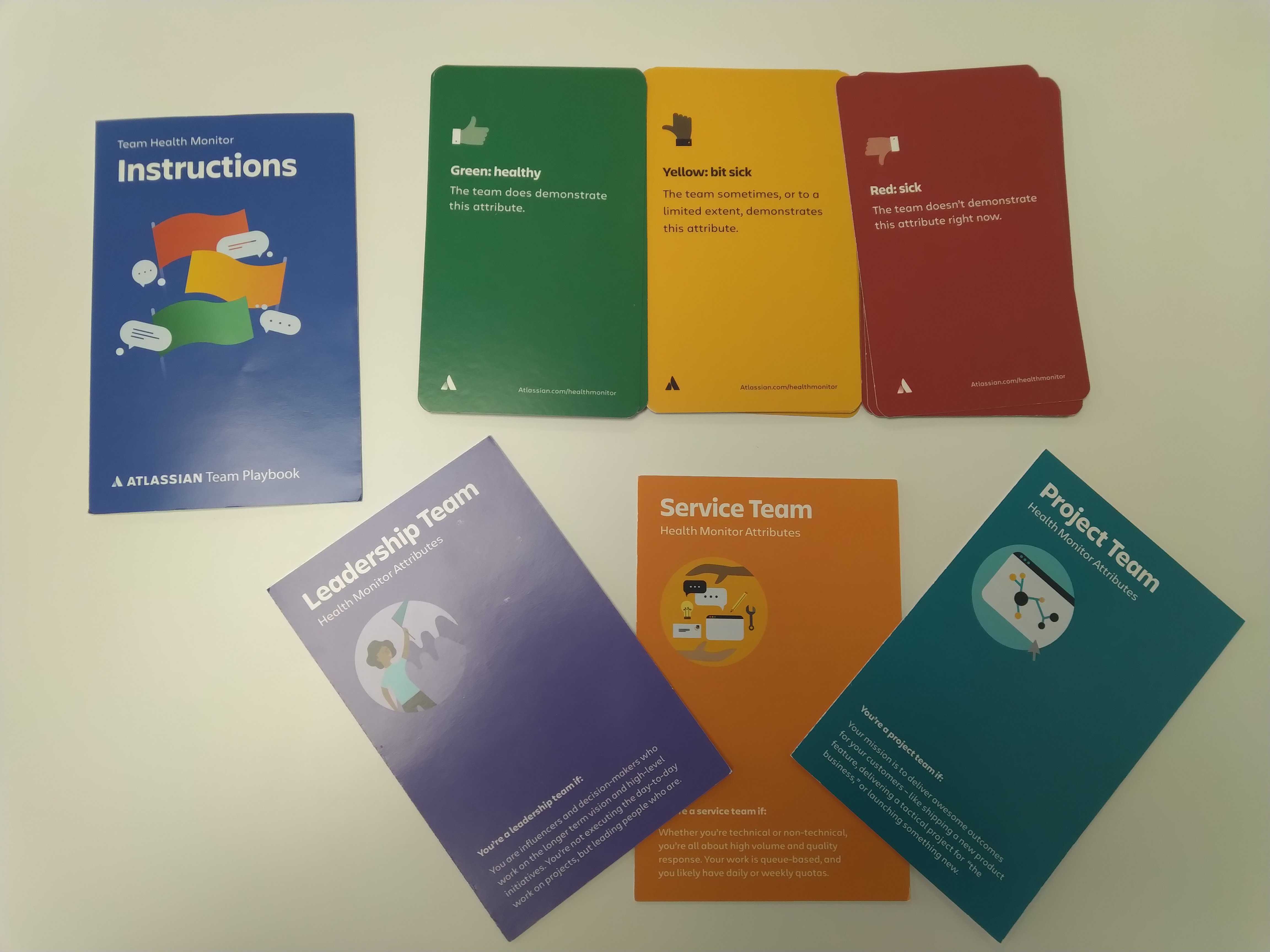
My experience focuses on the Service Team Health Monitor with the attributes: team leadership, balanced team, service mandate, service levels, customer centricity, tools and processes, effective partnerships, and reporting and analytics.
The target was an support team who knew things could be better but struggled to articulate what was wrong or to suggest (and implement) improvements that were within their ability to make. My role was there as a facilitator and an advocate for change in the wider company.
The first meeting was held to set the scene. I talked through the Health Monitor play and showed them the resources we had. The team decided to start with weekly meetings and use the rating cards periodically to track progress.
The feedback and action items (by week) looked something like this:
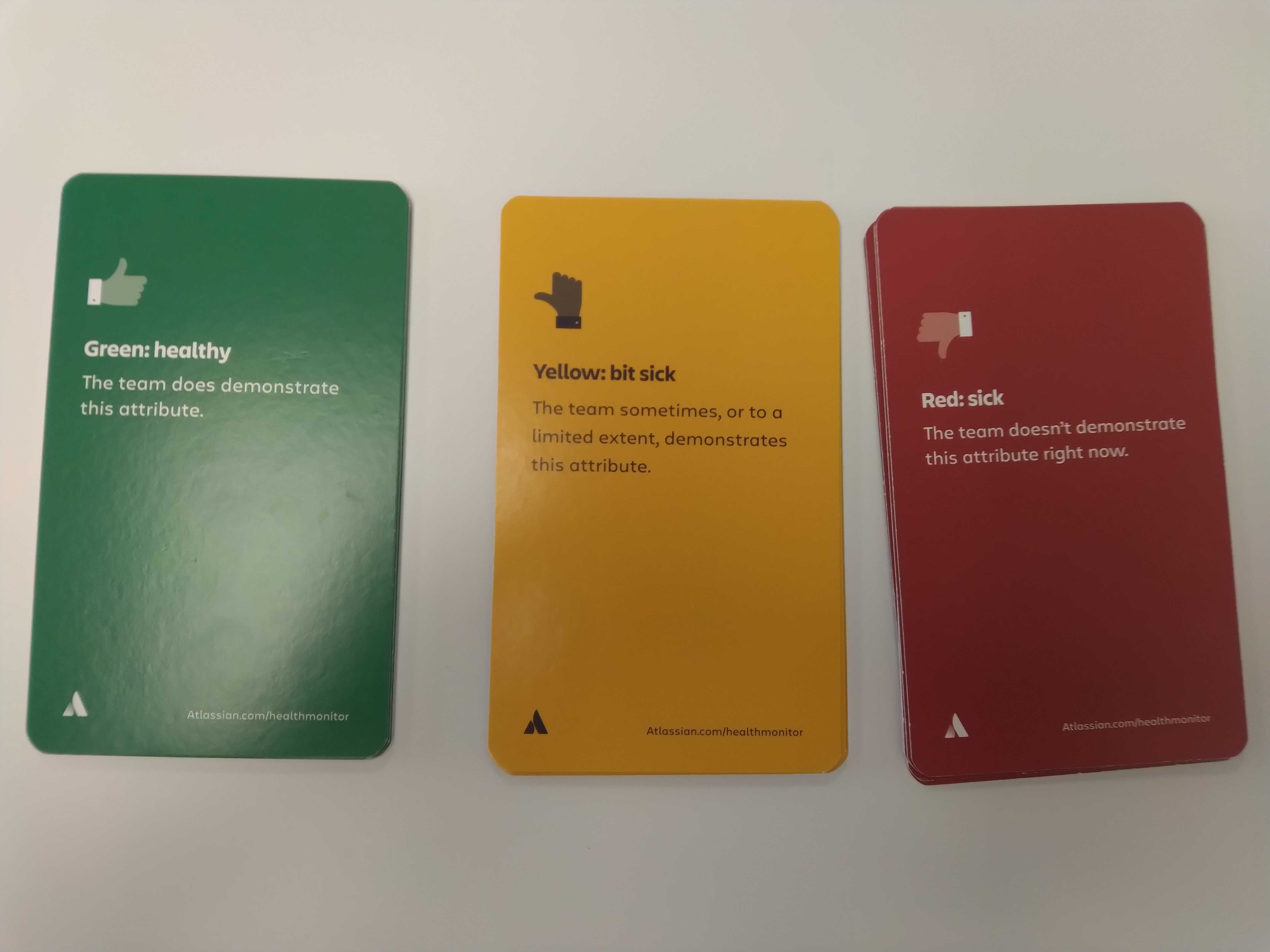
- We completed the health monitor for the first time. Results: 0 'Healthy', 4 'Bit Sick', 4 'Sick'
- We need objective measures to track improvements and implement SLAs by contract type in Jira Service Desk.
- Starting daily catch-ups to review new tickets and backlog to set the day's priorities.
- Regular catch-ups between team members, the (ideal) support process has been documented and is going well. Work on SLAs is still in progress.
- We agreed to run the health monitor to record ratings the following week. Regular monitoring tasks for customers were re-implemented.
- We completed the health monitor for the second time. There were significant improvements in two areas. Results: 1 'Healthy', 4 'Bit Sick', 3 'Sick'
- A new status was added for tasks scheduled for a future date. More processes were documented and shared with the team for review.
- The team decided the maintenance process needs focused attention. Security practiced were improved. The CIO attended to provide context for why we undertake maintenance activities for our customers and why it is valuable.
- The support team toolbox is being updated regularly with links to the tools the team uses. There was a request from the wider company for the support team to provide a short session to everyone outlining what is being achieved with maintenance tasks i.e. examples of the issues identified. The team planned to use one of the suggested plays by Atlassian to strengthen the Service Mandate area.
Sadly, there was no week 10 meeting and this inspection activity came to a halt due to lack of time, team changes, and increased workloads.
Despite this, there were long-lasting improvements as a result of this series of meetings. The team was able to see the effects of incremental changes and leant more about identifying areas of improvement and prioritising actions.
Have you tried this play? Will you try it now reading about this experience?


