Thank you to everyone contributing as Rovo adoption continues to mature. Since my June review, questions have increasingly focused on MCP implementation, agent reliability, Rovo Dev, and more.
🌟 Top Contributors
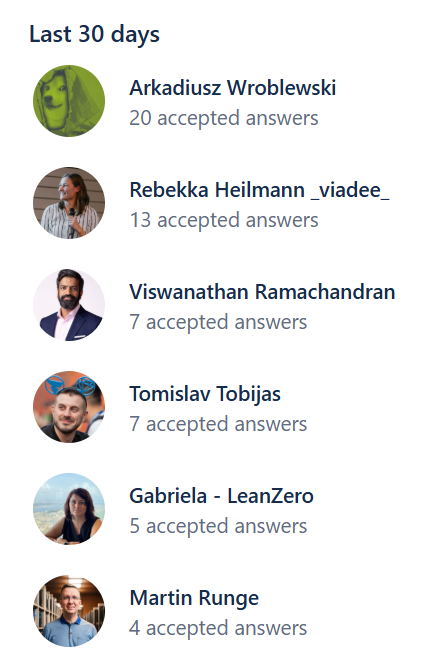
🏅 @Arkadiusz Wroblewski — holding the top spot with guidance across MCP, agents, administration, troubleshooting, integrations, and platform behavior.
🏅 @Rebekka Heilmann _viadee_ — a leading voice on agents, connectors, governance, implementation considerations, and practical Rovo usage.
🏅 @Viswanathan Ramachandran — contributing across Rovo Dev, MCP, authentication, APIs, troubleshooting, and implementation questions.
🏅 @Tomislav Tobijas — helping users navigate administration, automation, activation, integrations, and troubleshooting.
🏅 @Gabriela - LeanZero — providing detailed technical guidance around MCP, API scopes, authentication, and automation behavior.
Key Themes
MCP Moves Deeper Into Implementation
MCP remains one of the busiest areas of discussion, but the questions are getting more technical. Common discussions include:
- OAuth and API-token authentication
- Claude and other external AI clients
- API scopes and 401 errors
- GitHub MCP authentication
- Attachment and image access
- Native connectors versus MCP
- Service accounts and enterprise controls
A useful distinction emerged: native connectors index external knowledge into the Teamwork Graph, while MCP provides on-demand access to context and actions.
Agents: Better Instructions Aren't Always the Answer
Agent questions increasingly involve complex workflows: creating defects, transitioning Jira work items, following document chains, generating reports, and executing multi-step processes. A recurring lesson is that adding more instructions doesn't necessarily make an agent more reliable.
A stronger pattern is emerging:
- Rovo for reasoning and classification
- Automation for workflow execution
- APIs/actions for deterministic operations
- Humans for validation when needed
This is especially relevant when agents are invoked through Automation, where capabilities can differ from interactive Chat.
Context, Retrieval, and Knowledge Quality
Some of the most interesting questions focused on what happens before Rovo generates an answer:
- How does Rovo rank documents?
- What happens when sources conflict?
- How does it handle large amounts of retrieved content?
- Does organizational knowledge take priority over general model knowledge?
- Why does Rovo sometimes use the wrong Jira issue despite the correct Context being displayed?
These discussions reinforce an important point: AI quality depends heavily on knowledge quality. Outdated pages, duplicate documentation, conflicting instructions, and poorly structured content can quickly become AI problems too.
Rovo Dev and Platform Troubleshooting
Rovo Dev generated considerably more troubleshooting questions this round. Common issues included:
- CLI connectivity failures
- API tokens
- corporate proxies and certificates
- Live Preview availability
- credit confusion
- PR review access
- authentication and cached sessions
We also continued seeing activation, connector provisioning, browser-specific behavior, missing Rovo access, and intermittent failures. One takeaway: the visible error isn't always the root cause. Logs, timestamps, HTTP responses, and comparing working versus affected users often provide much better clues.
Governance Is Becoming More Sophisticated
Organizations are asking deeper questions about:
- Model providers and model selection
- Anthropic and supply-chain requirements
- OAuth and API tokens
- MCP permissions
- Rovo access controls
- Chat retention
- credits and usage
- enterprise deployment
The conversation is moving beyond “Can we enable Rovo?” toward “What can it access, what can it change, which models process our data, and how do we govern it?”
That's a healthy sign of adoption maturing.
💡 How You Can Help Keep the Community Strong
- Search first; your question may already be asked & answered
- Upvote helpful answers so the best solutions rise to the top
- Accept answers once resolved—so others can quickly find what worked
As always, thank you for your curiosity, patience, experimentation, and willingness to help others. Every question, accepted answer, and shared workaround helps the ecosystem learn faster and adopt Rovo more effectively. 💙
This post marks the end of the Q’s I’ve reviewed in this round.

